
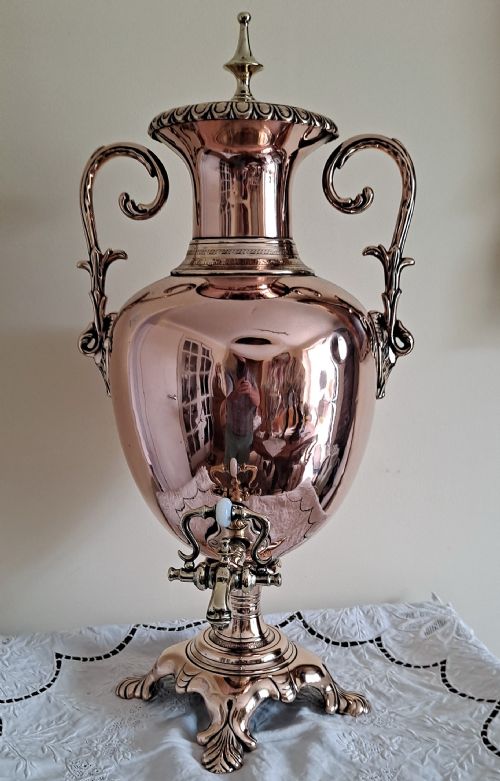


Antique Brass Spigot Urn
These antique brass spigot urn pieces are heavy metal vessels designed for heating and dispensing hot water, prized for their warmth and decorative presence.
Antique Brass Spigot Urn
An antique brass spigot urn is a functional beverage vessel designed to sit on a table or sideboard, with tea urns, coffee urns, and water urns forming the core of the items seen here. These pieces hail from the Georgian, Regency, and Victorian periods, with 19th-century examples making up the bulk of what buyers encounter.
The forms span classic samovars alongside hanging copper water urns and kettle samovars, reflecting formal hospitality from earlier centuries. Most examples incorporate mixed metals such as copper and bell metal alongside brass taps, combining utility with distinct period aesthetics.
Makers of the era produced these vessels in distinct regional styles, including English Georgian designs and Dutch Regency toleware variations. Buyers find everything from large ornamental display pieces to working vessels fitted with original metal taps.
How they were made
The construction of these vessels relies on heavy-gauge copper and brass sheets beaten, shaped, and joined by hand, often incorporating bell metal components for internal or decorative elements. Artisans utilised durable metalworking techniques to ensure the bodies could hold boiling water safely over a heated core or internal chamber.
Fittings such as spigots, handles, and feet required precise casting and attachment, using durable metals that developed rich patinas over generations of use. Additional touches like ebonised wood handles or painted finishes on toleware examples added contrast and insulation against heat.
Antique Brass Spigot Urn Retail Price Guide 2026
Typical asking prices for brass spigot urn among the pieces listed under this phrase on Sellingantiques today, from the lower quarter to the upper quarter. They describe what is for sale here now, not the wider market.
Some kettle samovars still retain the faint scent of charcoal smoke trapped inside their metal chambers since the reign of George III.
What varies in quality
Quality in these vessels rests on the weight of the metal used and the crispness of the casting on handles, spigots, and pedestals. Superior examples display substantial gauge metal and careful proportions that separate utilitarian containers from highly decorative reception room pieces.
The survival of original fittings, such as the spigot tap and internal heating elements, elevates the integrity of a piece. Better specimens maintain their structural form without excessive distortion from heat and wear, retaining an honest metal surface across the body.
The Antique Brass Spigot Urn Glossary
- Samovar
- A heated metal urn traditionally used to boil and heat water for tea, featuring an internal vertical metal tube for solid fuel or a heating block in some regional variants.
- Spigot
- A tap or nozzle fitted near the base of the urn to control the flow of hot water into cups or teapots.
- Toleware
- Metalware painted and lacquered, often in dark or black tones with gilt highlights, popular for decorative domestic vessels during the early nineteenth century.
- Bell metal
- A hard alloy used for casting metal components and fittings, prized for its resonant properties and durability.
- Ebonised wood
- Timber treated to resemble ebony, frequently turned into insulated handles or finials on metal vessels to prevent burns during handling.
Antique Brass Spigot Urn: Frequently Asked Questions
What is an antique spigot urn used for?
These vessels served to heat and dispense water for tea or coffee during formal dining and social gatherings in past centuries. Hosts placed them on sideboards to provide a constant supply of hot water throughout a meal.
Today, they function primarily as decorative focal points in period interiors, bringing warmth and industrial character to a room.
How do I tell a Georgian urn from a Victorian one?
Georgian and Regency pieces often exhibit classical urn silhouettes with restrained neoclassical lines, crisp casting, and balanced proportions. They frequently date from around 1800 and lean towards architectural refinement.
Victorian examples tend to be larger, heavier, and sometimes more ornate, incorporating varied metal combinations like copper bodies with brass mounts and ebonised wooden handles.
Are the spigot taps on these urns original?
Many surviving pieces retain their original cast brass or bell metal spigots, which were threaded or soldered directly into the lower body of the vessel. Original fittings match the wear and patina of the surrounding metal.
Replacement taps do occur due to centuries of heavy use, so examining the junction point provides clues about the history of the piece.
How should I clean a copper and brass urn?
Maintaining these metals involves gentle dusting and preserving the natural dark patina that accumulates over decades of age. Aggressive polishing strips away the historical surface character that collectors value.
If cleaning is necessary, mild non-abrasive metal cleaners applied sparingly will remove active grime without erasing the subtle marks of manufacture.