
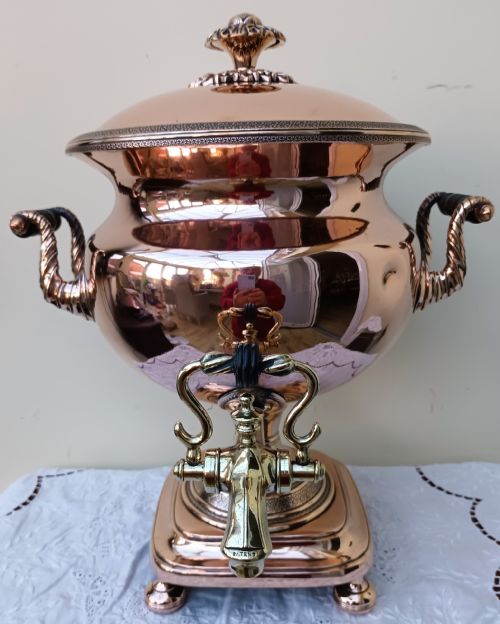
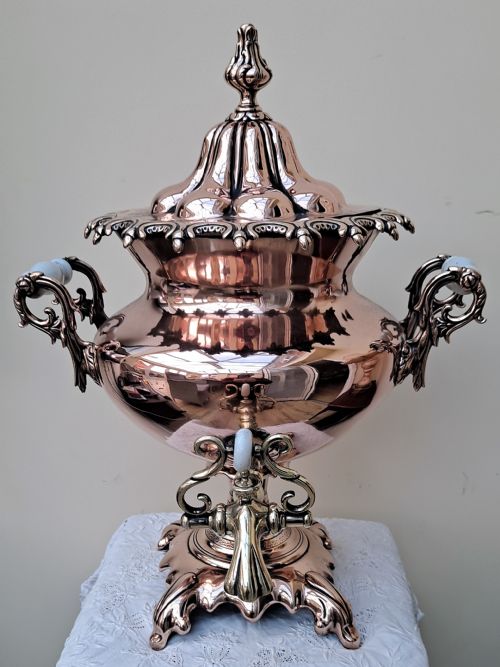
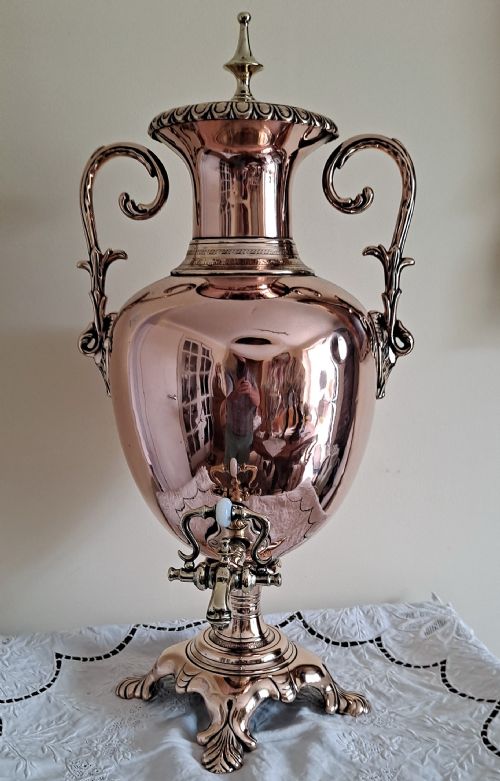


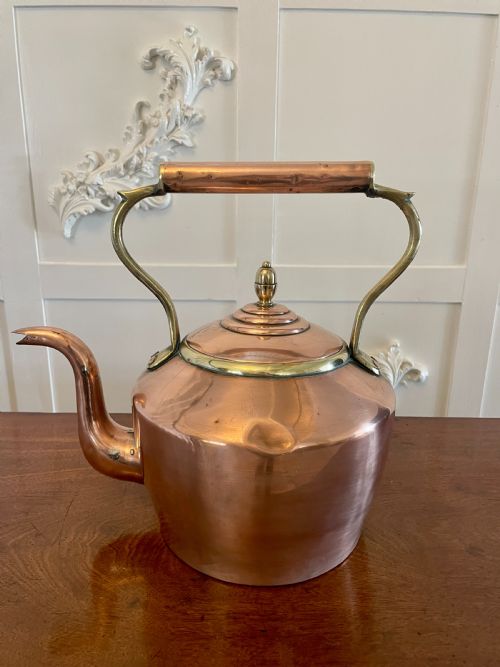


Polished Copper Tea Urn
A polished copper tea urn brings warmth and historic gravity to a room, functioning as both a striking vessel and a tangible piece of domestic heritage.
Polished Copper Tea Urn
A polished copper tea urn is a domestic vessel designed for heating and dispensing water, appearing primarily across Georgian and Victorian periods in English households. These pieces encompass both traditional tea urns, samovars, and related kettle forms that served central roles in formal hospitality.
The versions most frequently encountered on this page date from the nineteenth century, spanning George III, Georgian, and Victorian eras. They combine utilitarian water containers with decorative spigots, handles, and occasionally ceramic or ebonised wood elements.
Materials and construction
Makers shaped these vessels primarily from heavy gauge copper, often incorporating contrasting brass for handles, spigots, and pedestals. Bell metal also appears in specific elements, contributing distinct tonal qualities and strength to high-stress components like fittings.
Interiors and handles frequently integrate secondary materials such as ebonised wood, ceramic, and bone to provide insulation against heat during service. Construction relied upon skilled hand-beating, joining, and polishing techniques that left visible signs of individual craftsmanship.
Listings span the Georgian and Victorian eras, uniting heavy copper bodies with brass, bell metal, ceramic, and ebonised wood elements.
Factors distinguishing quality
Quality rests upon the weight and gauge of the primary copper body, alongside the crispness of detailing on cast brass handles and spigots. Superior examples retain their original fittings intact, showing harmonious proportions and careful finishing across every component.
Lesser items display simplified mounts, replacement hardware, or excessive thinning of the metal from generations of vigorous cleaning. The presence of original ceramic or ebonised elements unaltered by later repairs elevates the standing of an individual piece.
The Polished Copper Tea Urn Glossary
- Samovar
- A heated metal container traditionally used to boil and heat water in Russian and English domestic settings. These vessels typically feature an internal central tube for charcoal or a heated metal cylinder.
- Bell metal
- An alloy of copper and tin specifically formulated to produce a resonant sound and high durability. Makers utilised this dense material for specific structural fittings and tap components.
- Ebonised wood
- Timber treated with a dark finish to imitate expensive ebony wood. Craftsmen turned this material for insulating handles and finials on tea vessels.
- George III
- The period of British history spanning the reign of George III from 1760 to 1820. Pieces from this era display distinct neoclassical proportions and refined decorative restraint.
Polished Copper Tea Urn: Frequently Asked Questions
How did people use a tea urn?
A tea urn sat on the sideboard or tea table, filled with boiling water to replenish teapots during large gatherings. Servants or hosts operated the spigot to dispense water directly into cups or pots as needed.
Maintaining a constant supply of hot water without returning to the kitchen made these vessels essential for formal entertaining throughout the Georgian and Victorian periods.
How do I polish copper safely?
Cleaning polished copper requires a proprietary cream metal polish applied gently with a soft cloth to avoid scratching the surface. Avoid harsh abrasive pads that strip the historical patina from the metal.
Buffing the surface after cleaning restores the reflective finish without wearing away the underlying copper layer built up over centuries.
How do I tell Georgian from Victorian pieces?
Georgian pieces generally exhibit cleaner neoclassical lines, urn-shaped bodies, and restrained cast brass ornamentation typical of the late eighteenth and early nineteenth centuries. Victorian examples often introduce heavier proportions, bolder handles, and more exuberant surface decoration.
Examining the construction methods of the handles and spigots also helps distinguish the earlier hand-finished work from later nineteenth-century production techniques.
Can I use these urns for boiling water today?
Historical tea urns are primarily collected as decorative antiques and objects of industrial craft rather than for modern daily beverage preparation. Many retain internal heating elements or historical repairs that make them unsuitable for contemporary food use.
Displaying the vessel in a dry interior environment preserves the polished copper surface and fragile internal seams from unnecessary degradation.