


Copper Tea Dispenser
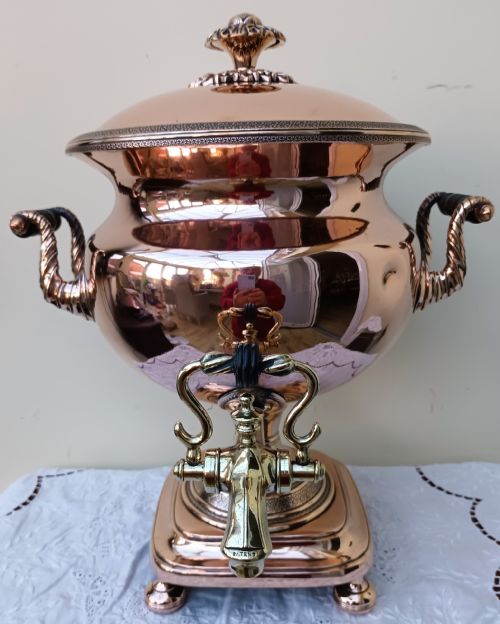
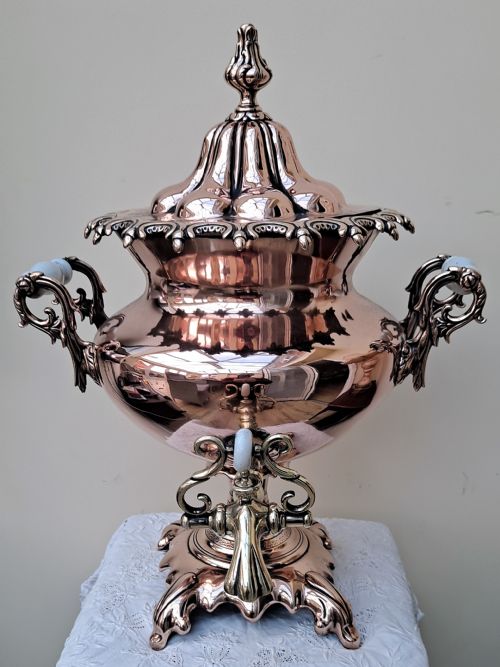
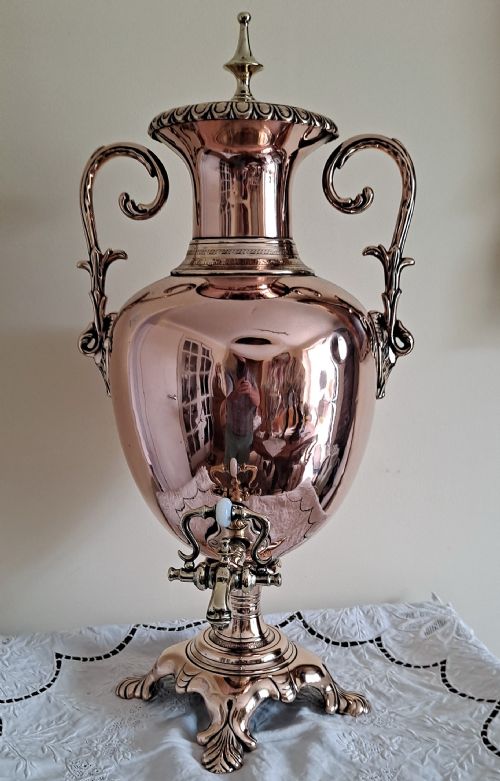
A copper tea dispenser, often known in these listings as a samovar or tea urn, brings heavy metal presence and period brewing tradition to a room.
Copper Tea Dispenser
A copper tea dispenser on this page primarily takes the form of a samovar or tea urn, designed for heating and dispensing water. These pieces emerge from the Georgian, Regency, and Victorian periods, reflecting centuries of English metalwork.
The objects span from large hanging water urns to smaller table samovars fitted with spigots. Most examples date from the nineteenth century, with Victorian and George III iterations appearing most frequently in the current selection.
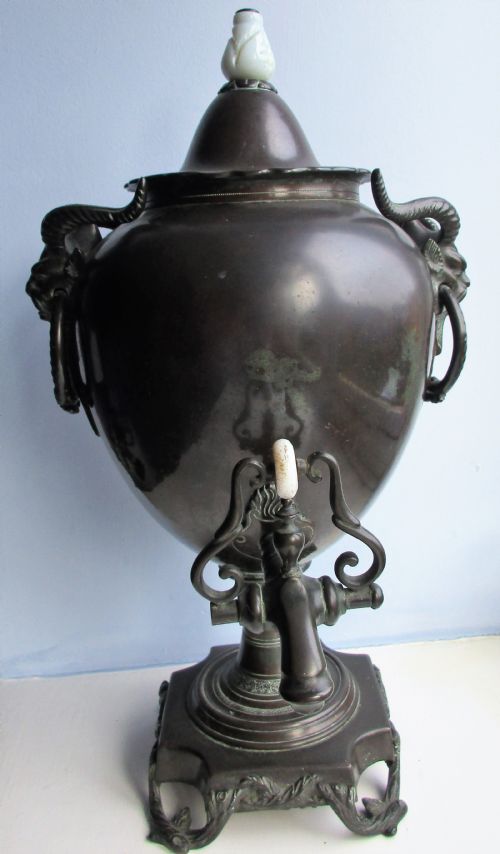
Makers such as Benetfink and Co of London contributed specialised variations like Pontypool Ware, offering japanned finishes alongside traditional burnished metals. The form bridges domestic utility with decorative display, serving as the visual centrepiece of a period tea service.
Assessing Quality and Execution
Quality rests in the weight of the metal, the crispness of the casting on brass mounts, and the preservation of original fittings. Pieces described as quality or large scale often exhibit superior thickness in the copper walls and more complex pedestal bases.
The integration of mixed metals, such as bronze accents on Regency pieces or bell metal components, elevates the ambition of the object. Surviving original taps, internal heaters, and bone insulators distinguish well-preserved specimens from altered or incomplete ones.
Listings span the nineteenth and late eighteenth centuries, capturing Georgian, Regency, and Victorian design shifts in copper, brass, and japanned metal.
Benetfink and Co London
The Copper Tea Dispenser Glossary
- Samovar
- A heated metal container traditionally used to boil and heat water for tea, featuring a central internal chimney and a spigot. These vessels form the majority of the current copper tea dispenser selection.
- Tea Urn
- A large standing vessel designed to hold hot water, closely related to the samovar but often lacking the internal charcoal cylinder. They date predominantly from the Georgian and Victorian eras.
- Pontypool Ware
- British metalware finished with a japanned lacquer technique, named after the town where the process originated. Benetfink and Co retailed notable examples of this finish in London.
- Bell Metal
- An alloy of copper and tin traditionally used for bells, employed here in specific tea urn components for its resonance and strength. It provides a distinct dark golden tone compared to standard brass.
- Japanned Metal
- A European imitation of East Asian lacquer work achieved through layers of dark varnish heat-cured on metal. This finish appears on specific nineteenth-century tea urns on this page.
Copper Tea Dispenser: Frequently Asked Questions
How do I use a copper tea dispenser today?
These vessels serve primarily as decorative objects or focal points in a dining room or kitchen. Using them for actual heating requires professional restoration of the internal components and seals.
Most owners display them unheated to preserve the patinated copper and brass surfaces. Regular dusting and occasional gentle cleaning keep the metal stable without stripping its age.
What is the difference between a samovar and a tea urn?
A samovar traditionally includes a vertical internal tube where charcoal was burned to heat the surrounding water. A tea urn typically holds pre-heated water rather than generating its own heat.
Both function as large dispensers via a small spigot near the base. In everyday antique terminology, the two terms often overlap.
How can I tell a Georgian tea dispenser from a Victorian one?
Georgian and Regency examples often feature restrained neoclassical lines, delicate pedestals, and refined bronze or brass mounts. They lean toward architectural proportions and restrained ornamentation.
Victorian pieces frequently scale larger, incorporating heavier brass handles and varied japanned or patinated finishes. The decorative vocabulary becomes more robust and eclectic as the nineteenth century progresses.
What does Pontypool Ware mean on a listing?
Pontypool Ware refers to metal objects finished with a specialised japanned lacquer process developed in Wales. This technique created a glossy, dark surface that resembles Asian lacquer.
Retailers like Benetfink and Co offered these distinctive finished urns in London during the nineteenth century. The dark surface provides a striking contrast to traditional bright copper.