



Brass Tea Urn
A brass tea urn brings warmth and historic gravity to a room, serving as a striking focal point with its lustrous metal body and period taps.
Brass Tea Urn
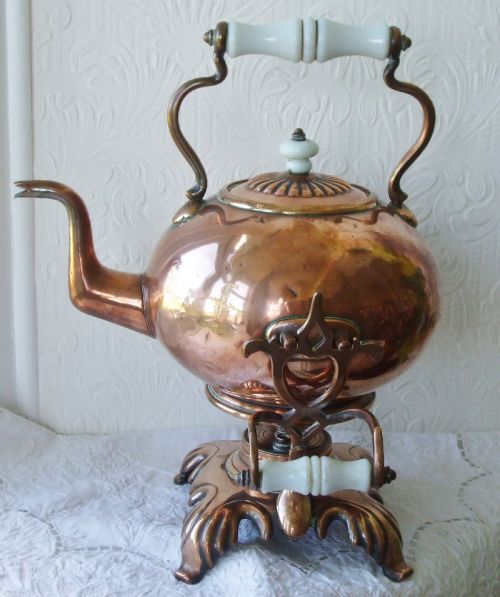
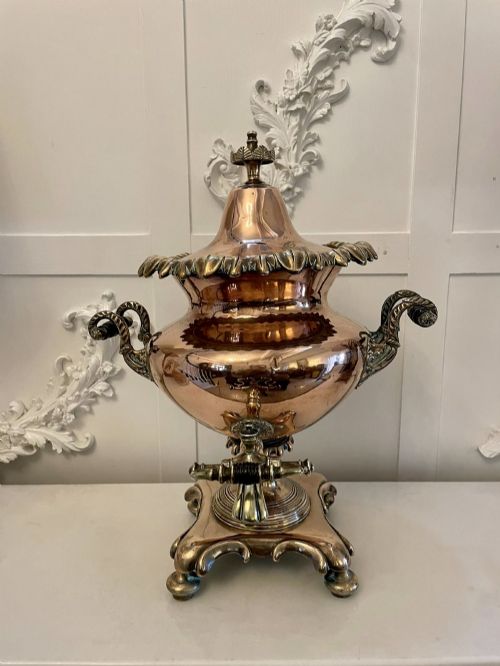
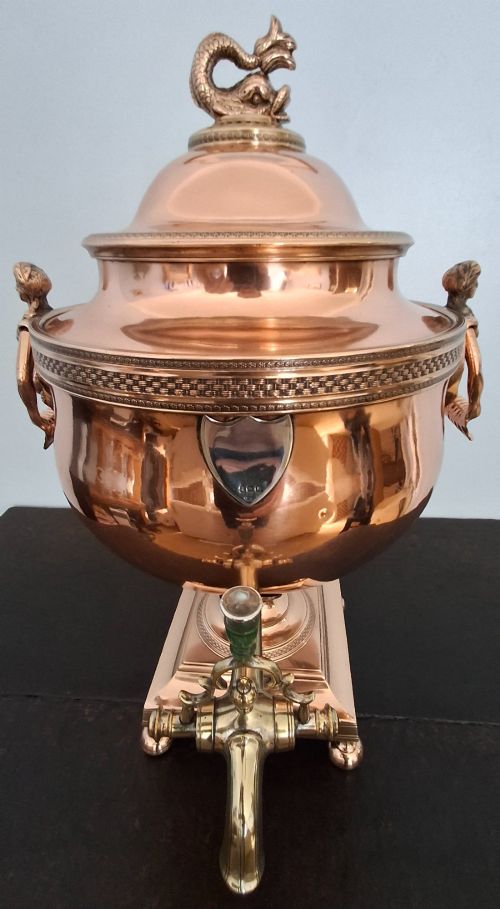
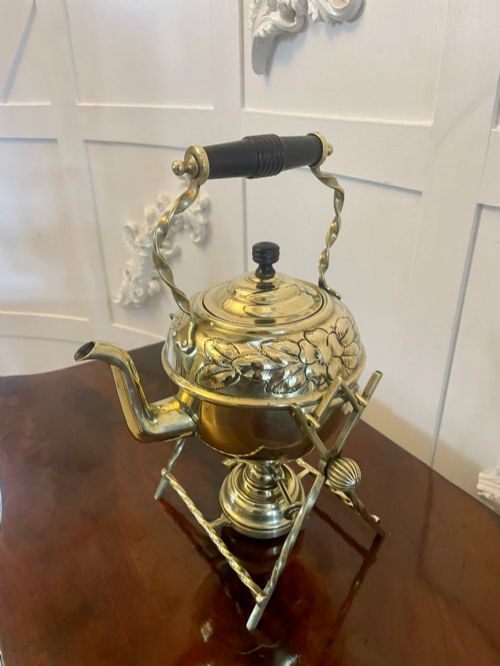
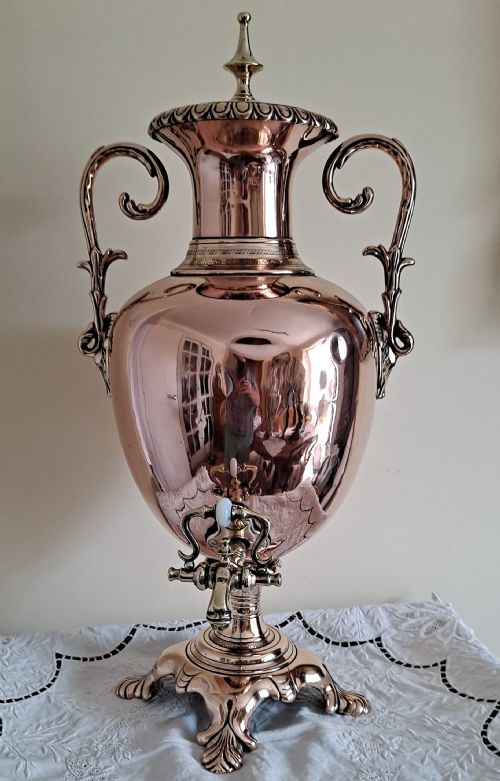
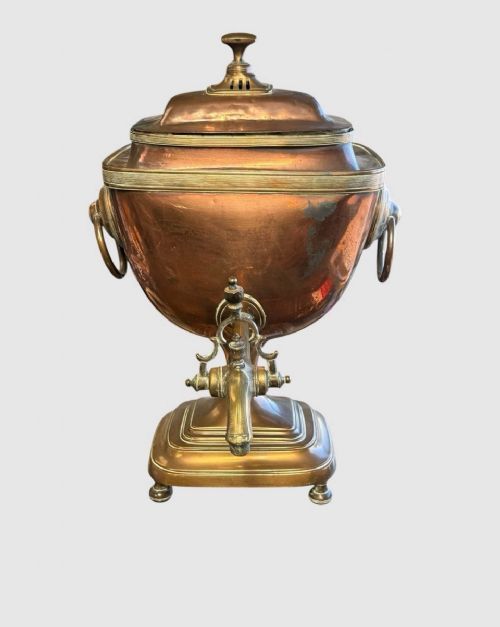
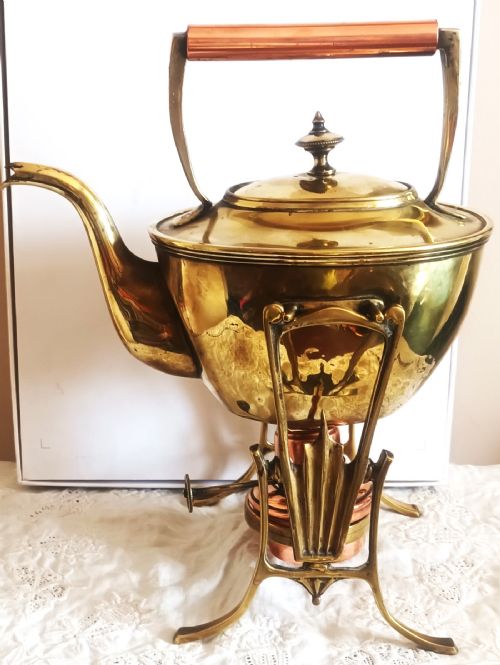
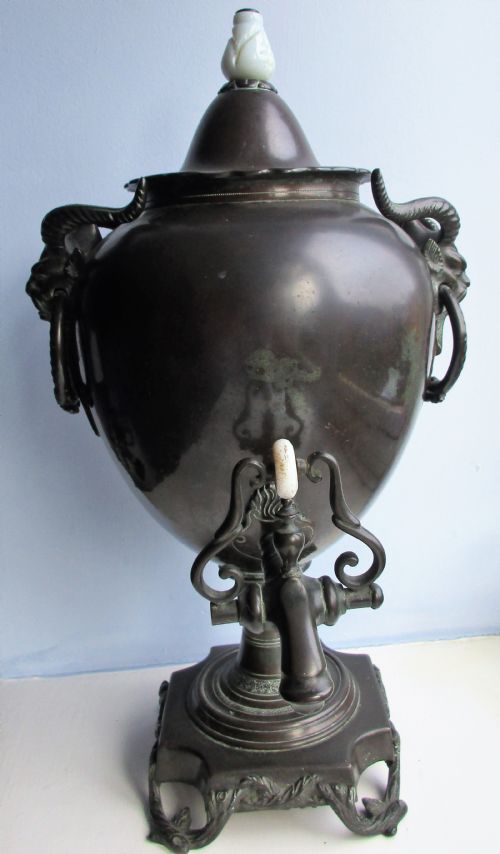
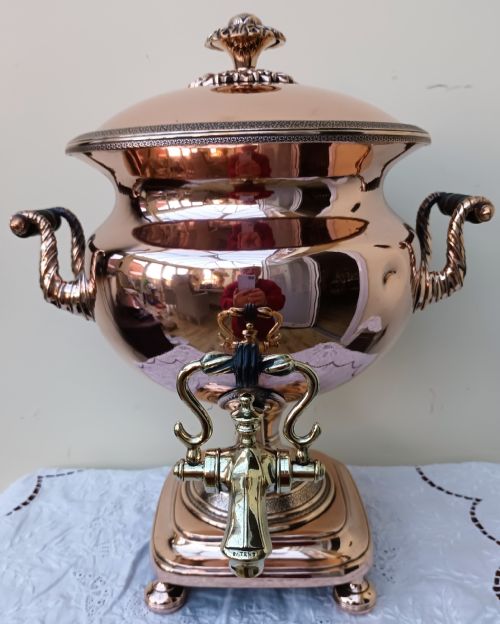
A brass tea urn is a heavy vessel designed for heating and dispensing water, appearing primarily across the Georgian, Regency, and Victorian periods. These pieces range from formal Neoclassical samovars to practical spirit kettles on stands.
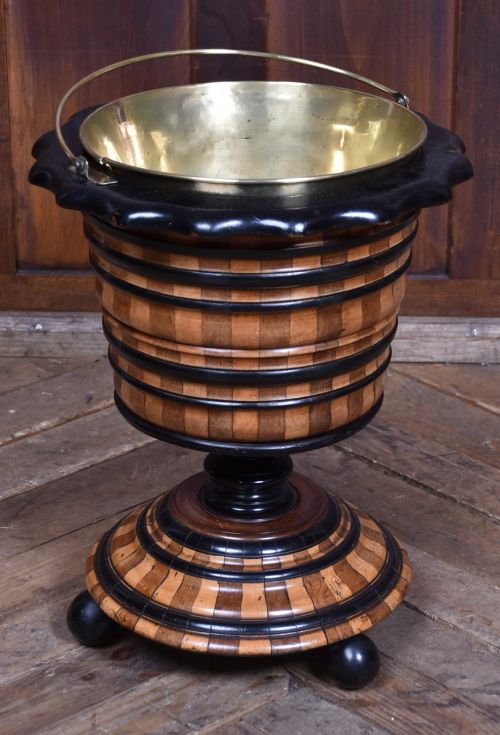
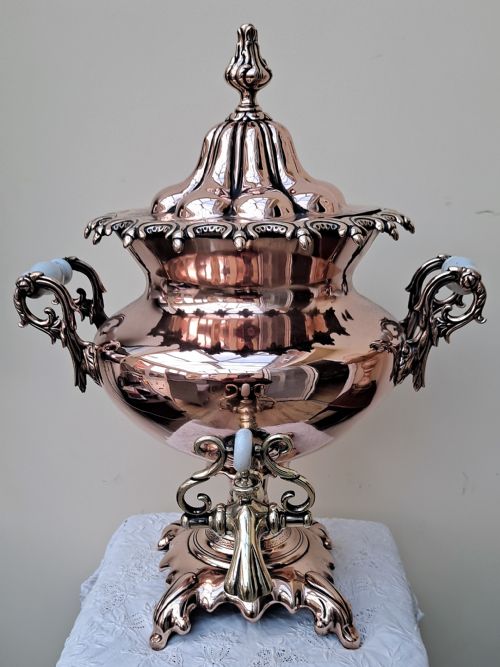
On this page, the most frequent forms are copper and brass samovars alongside spirit kettles resting on metal frames. Makers combined bright metals with ceramic or ebonised wood handles for contrast.
Surviving examples span from George III models to Edwardian designs, reflecting shifts in domestic hospitality. Buyers encounter variations that include tea stoves and hanging water urns alongside standard table models.
Materials and construction
Makers fashioned the bodies of these vessels from beaten copper and brass, often incorporating bell metal for resonant strength. Cast elements formed the spouts, handles, and decorative feet.
Internal components frequently included brass liners, while external details utilised bone, satinwood, and ebonised wood for insulated handling. Pontypool ware examples introduced specialised surface finishes to the metal body.
Stands and frames combined mixed hardwoods and brass, creating stable platforms for spirit kettles and tea stoves. Craftsmen joined sections with neat seams and fitted original taps with precision.
Brass Tea Urn Retail Price Guide 2026
Typical asking prices for brass tea urn among the pieces listed under this phrase on Sellingantiques today, from the lower quarter to the upper quarter. They describe what is for sale here now, not the wider market.
Several kettles arrive with their original spirit burners intact, ready for a Victorian tea party.
Distinctions in craftsmanship
Quality rests in the crispness of the cast mounts and the integrity of the original fittings, such as internal heaters and spigot keys. Heavier gauge metal indicates a more substantial vessel built for actual service.
Design nuance separates standard production from finer workshop pieces, particularly in Neoclassical proportions or Aesthetic Movement decoration. The presence of matching stands and original wooden handles elevates the integrity of a piece.
William Soutter And Sons·Edwards And Roberts·Benetfink And Co
The Brass Tea Urn Glossary
- Samovar
- A heated metal urn traditionally used to boil water for tea. These vessels feature an internal vertical tube for charcoal or a heated cylinder.
- Spirit kettle
- A portable kettle mounted on a metal stand above a small spirit burner. This setup kept water hot at the tea table.
- Bell metal
- A hard alloy of copper and tin used for casting bells and vessel parts. It provides a bright tone and durable structure.
- Teestoof
- A Dutch warming stove or foot warmer, sometimes fitted with a brass liner. These pieces held hot coals beneath a perforated top.
- Pontypool ware
- British japanned metalware known for its glossy lacquered finishes. It appeared on decorative domestic vessels during the Victorian era.
Brass Tea Urn: Frequently Asked Questions
What is a brass tea urn?
A brass tea urn is a historic metal vessel designed to hold and heat water for tea service. They range from tall George III samovars to smaller Victorian spirit kettles.
These pieces combine functional metal reservoirs with decorative taps, handles, and stands. Many include internal heating tubes or rest above dedicated spirit burners.
How were tea urns used?
Hosts used tea urns in the dining room or drawing room to supply constant hot water without trips to the kitchen. Servants filled the central chamber with boiling water or heated it directly using internal cylinders.
Guests or hosts drew water from the spigot at the front into teapots. Spirit kettles performed a similar role on low stands during afternoon tea gatherings.
How do I date a brass tea urn?
Dating relies on stylistic markers such as Neoclassical urn shapes from the Georgian period or sleek Aesthetic Movement lines from the late nineteenth century. Construction methods, handle materials, and maker marks also help narrow the decade.
Earlier George III and Regency pieces often display classical urn silhouettes, while Victorian examples introduce heavier ornamentation and varied metal combinations.
How do I care for a brass tea urn?
Keep the metal clean using a soft cloth and appropriate polish, avoiding abrasive compounds that strip thin platings or historical patinas. Preserve original wooden and bone handles by keeping them away from direct moisture.
Display the urn in a stable environment away from extreme humidity to protect internal liners and soldered joints. Regular gentle dusting maintains the polished surface of the brass and copper.