





Brass Spirit Kettle
These brass spirit kettle pieces combine copper and brass to heat water for tea at the table, offering practical historical charm.
Brass Spirit Kettle
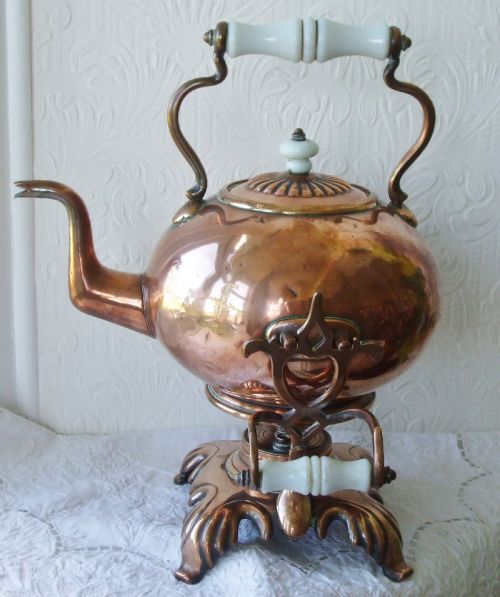
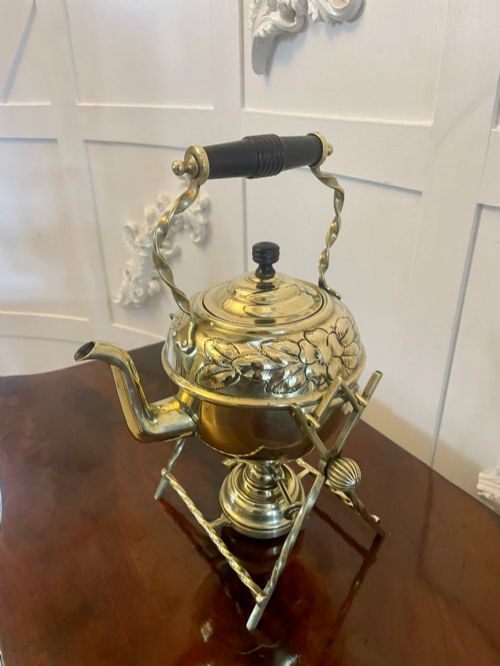
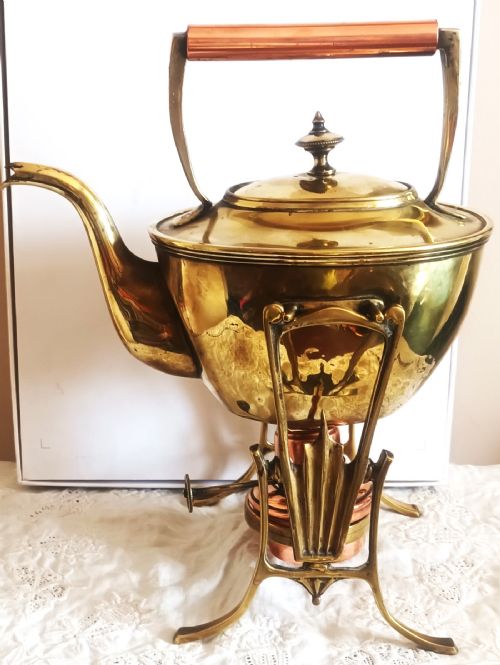
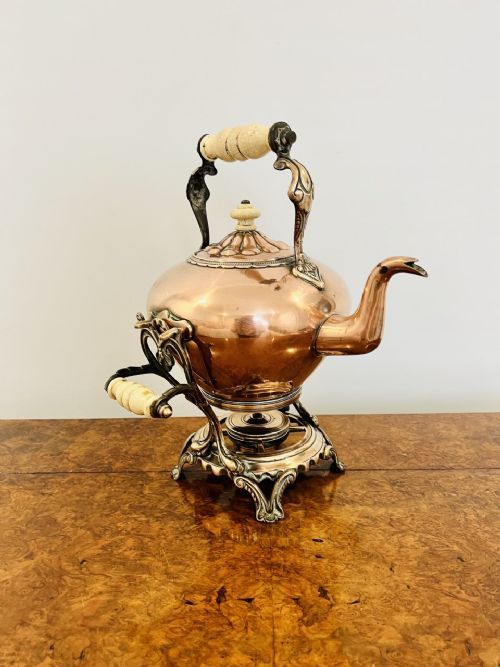
A brass spirit kettle is a traditional vessel designed for boiling water using an attached burner, frequently mounted on a matching stand. These items emerge primarily from the Victorian and Edwardian eras, spanning the nineteenth and early twentieth centuries.
How they were made
Makers constructed these vessels using sheet brass and copper, joining seams and adding mounts with traditional metalworking techniques. Handles and insulators incorporate natural materials such as wood, cane, and ebonised wood to prevent heat transfer during use.
Stands and burners frequently utilise forged or cast metals, pairing wrought iron or brass frames with small spirit burners. Each element reflects the prevailing aesthetic movement or arts and crafts sensibilities of its period.
Brass Spirit Kettle Retail Price Guide 2026
Typical asking prices for brass spirit kettle among the pieces listed under this phrase on Sellingantiques today, from the lower quarter to the upper quarter. They describe what is for sale here now, not the wider market.
Current listings span the nineteenth and early twentieth centuries, incorporating Victorian, Edwardian, Aesthetic Movement, and Arts and Crafts styles.
What varies in quality
Quality rests in the harmony of the metalwork, the weight of the brass and copper sheets, and the integrity of the stand and burner. Finer examples display balanced proportions, thoughtful integration of wood or cane handle insulators, and considered decorative detailing.
Simpler models prioritise basic utility over ornamentation, whereas pieces associated with documented makers show superior execution in their mounting and finishing. The presence of a complete, matching spirit burner alongside its original stand elevates the whole assembly.
William Soutter & Sons
The Brass Spirit Kettle Glossary
- Spirit burner
- A small portable heating container fueled by alcohol, positioned beneath the kettle to keep the water warm.
- Aesthetic Movement
- A late nineteenth-century design approach emphasising visual beauty over narrative or moral function in domestic objects.
- Ebonised wood
- Timber treated with a dark finish to imitate expensive ebony, commonly used for kettle handles and insulators.
- Cane
- Strips of rattan plant material woven around handles to provide a cool grip when handling hot metal vessels.
Brass Spirit Kettle: Frequently Asked Questions
What is a brass spirit kettle used for?
These vessels were designed to heat and maintain hot water for tea service directly at the table or in the drawing room. The integrated spirit burner kept the contents warm throughout the gathering.
They served both a practical function for hospitality and a decorative role in period interiors, reflecting the social rituals of nineteenth and early twentieth-century households.
Are these kettles safe to use today?
While these pieces were built as functional items for boiling water, modern usage requires careful inspection of internal linings and burner safety. Many collectors choose to display them as decorative historical objects rather than active kitchen equipment.
Using them for tea service depends entirely on the cleanliness and integrity of the historical metals and solder joints inside the vessel.
What styles are available for these kettles?
The available pieces span Victorian, Edwardian, Aesthetic Movement, and Arts and Crafts styles. Each style brings distinct design characteristics to the metalwork, stands, and handles.
Design influences range from ornate nineteenth-century forms to simpler dresser style arrangements from the early twentieth century.