

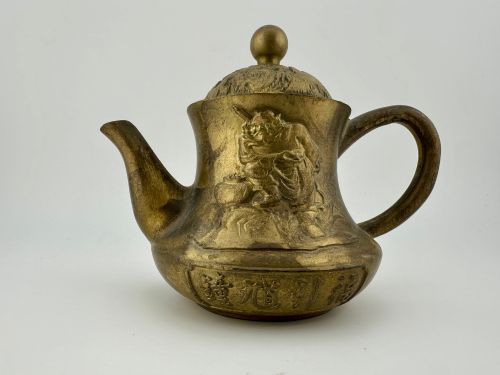
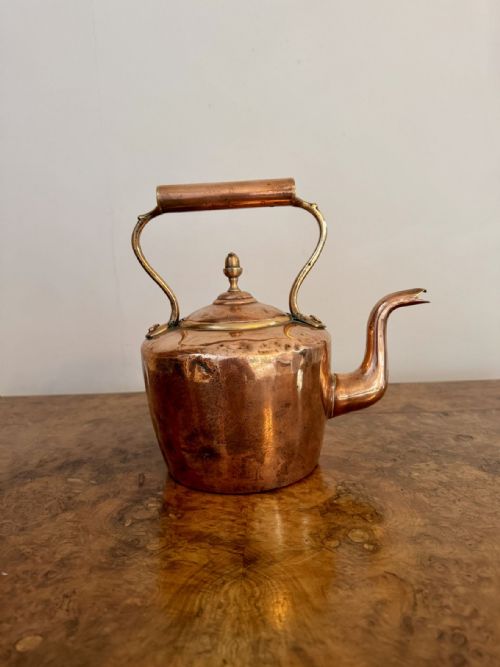
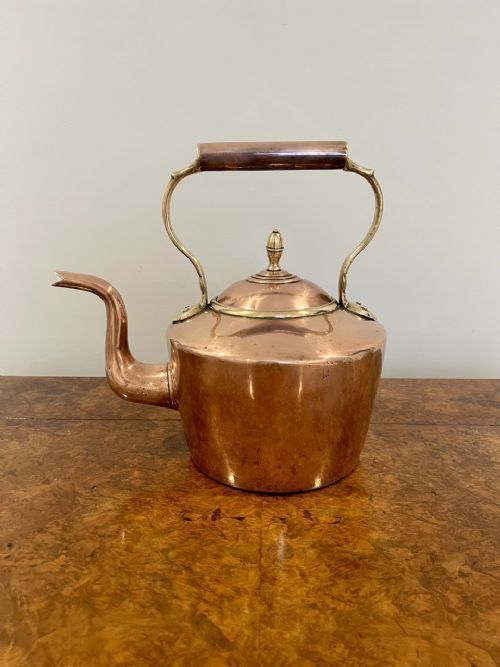
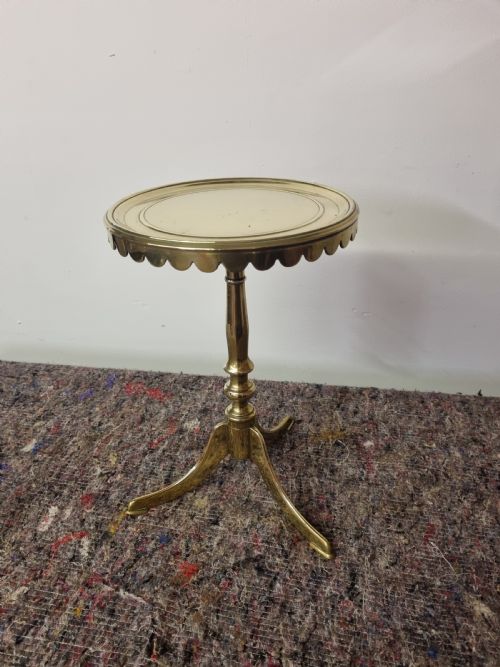
Antique Brass Kettle
An antique brass kettle brings tangible warmth and craft to a room, valued for its robust metalwork and historic utility.
Antique Brass Kettle
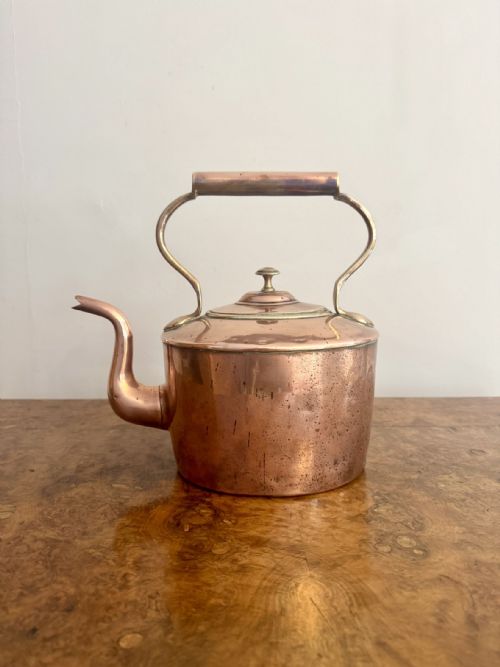
When you search for an antique brass kettle, you encounter vessels designed for heating water by the hearth, ranging from simple kitchen utensils to elaborate table pieces.
The versions most likely to meet you on this page date from the Georgian and Victorian periods, often paired with matching stands or footmen.
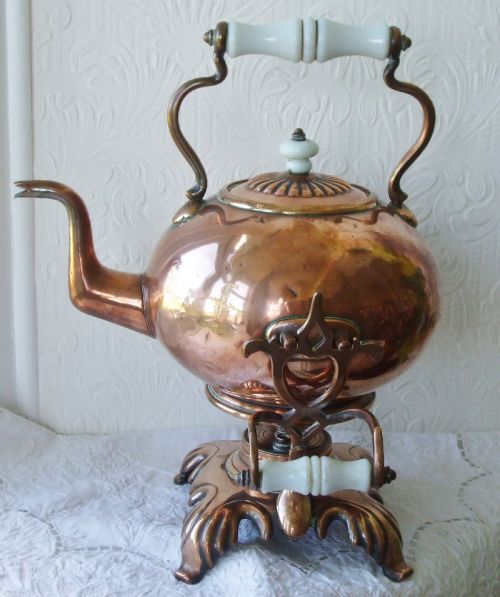
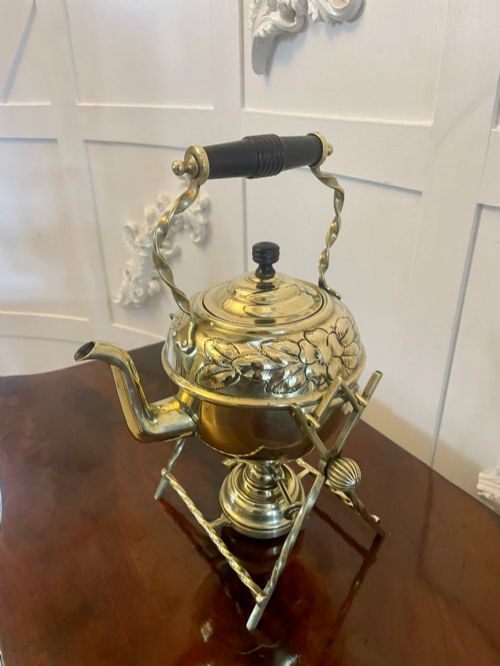
Makers produced these items in various forms, including spirit kettles on frames, samovars, and traditional tea kettles intended for daily use.
How they were made
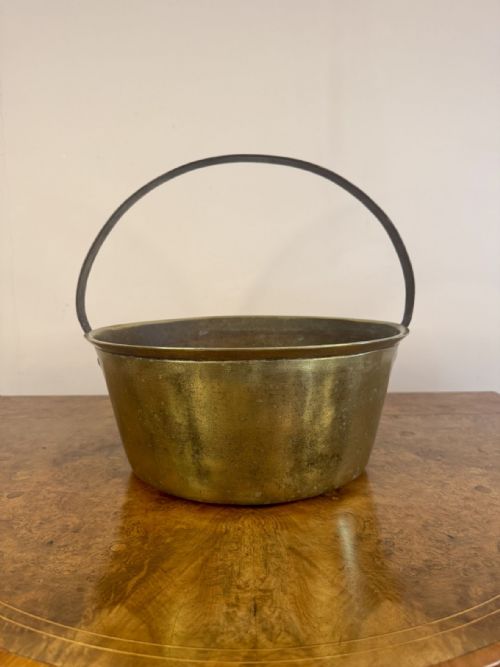
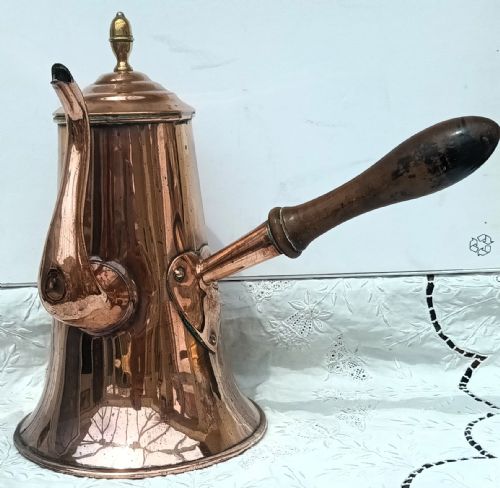
Craftsmen utilised durable metals such as brass and copper, frequently combining them with steel or iron components for structural strength.
Many examples incorporate swung handles fitted with materials like wood or bone to provide insulation against heat during handling.
Construction techniques involved careful beating and joining of sheet metal, alongside cast elements for trivets, stands, and mounts.
Antique Brass Kettle Retail Price Guide 2026
Typical asking prices for brass kettle among the pieces listed under this phrase on Sellingantiques today, from the lower quarter to the upper quarter. They describe what is for sale here now, not the wider market.
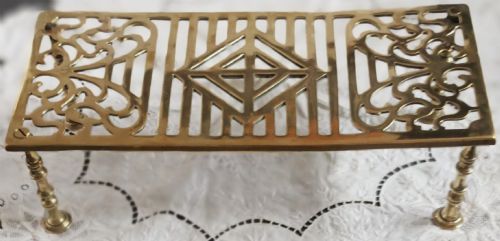
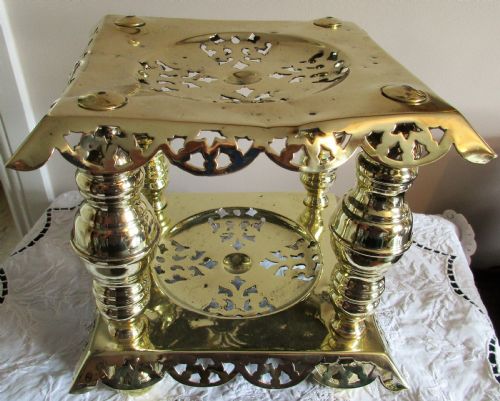
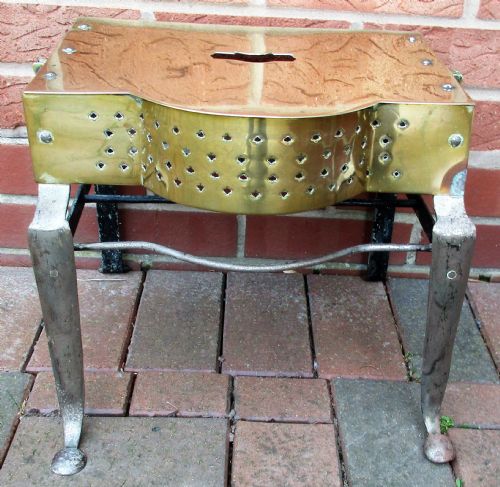
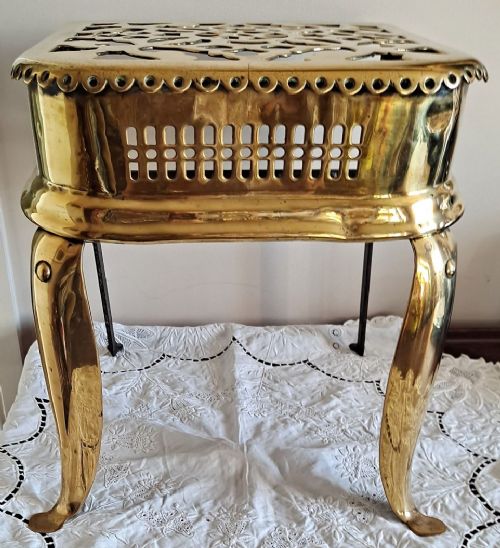
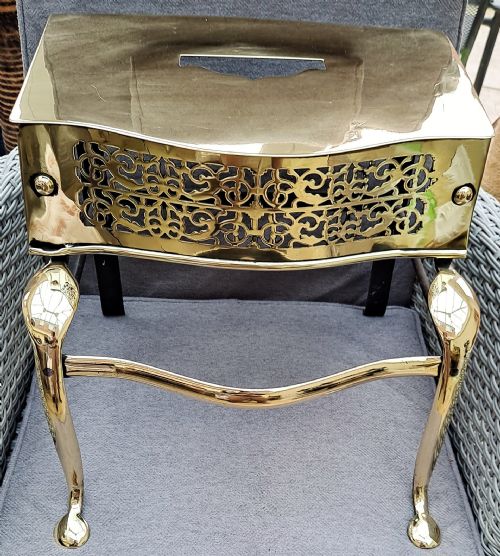
Some hefty brass footmen doubled as miniature steps for warming toes close to the coals.
What varies in quality
The distinction between standard utility items and superior examples lies in the weight of the metal and the refinement of the shaping.
Finer pieces display sophisticated mounting on stands, integrated spirit burners, and balanced proportions that elevate them above plain kitchenware.
William Soutter & Sons·James Clews
The Antique Brass Kettle Glossary
- Spirit kettle
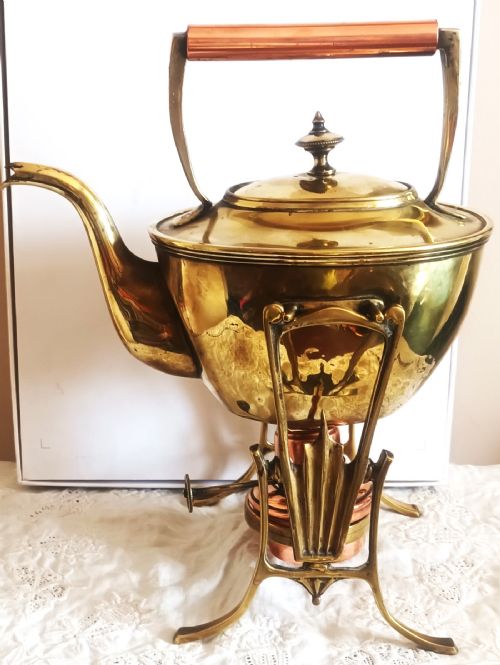
- A kettle mounted on a metal stand above a small alcohol burner used to keep water hot at the tea table. These units often feature detailed brass and copper construction from the Victorian era.
- Footman
- A metal stand placed by the fireplace to hold pots or warm plates. They are typically constructed from brass and steel.
- Samovar
- A large heated metal container traditionally used to boil and heat water for tea. Victorian examples frequently appear in copper.
- Trivet
- A three-legged support or stand raised above the hearth floor for a kettle. Georgian and Victorian versions are commonly cast in brass.
Antique Brass Kettle: Frequently Asked Questions
How do I use an antique brass kettle?
These historical vessels serve primarily as decorative objects or fireside display pieces rather than modern kitchen appliances. Their historic metal construction and internal soldering may not withstand daily use on contemporary cookers.
Place your kettle on a hearth, shelf, or dedicated stand to appreciate its brass and copper finish within a room. Many collectors display them alongside matching trivets or footmen.
What is a spirit kettle?
A spirit kettle is a tea kettle suspended in a metal frame above a small burner fueled by alcohol spirits. This arrangement kept water hot during tea service without requiring trips to the kitchen fire.
Victorian and Edwardian households utilised these pieces in drawing rooms. The stands often include swing handles and detailed brass legs.
How do I date an antique brass kettle?
Dating relies on observing manufacturing techniques, material combinations, and stylistic markers associated with periods like the Georgian and Victorian eras. Earlier pieces often feature hand-beaten copper bodies, while later Victorian and Edwardian examples show more standardised machine fabrication.
Maker marks stamped onto the metal can also help identify specific workshops. Comparing the form of the handle, spout, and mountings to documented examples clarifies the age.
What is the difference between a kettle and a samovar?
A kettle is a smaller vessel with a handle used for boiling water, frequently designed to sit on a trivet or stand. A samovar is a much larger urn-style container featuring an internal heating tube or spigot.
Samovars are built for gathering large amounts of hot water in formal settings. Kettles focus on individual tea service or smaller hearth tasks.