

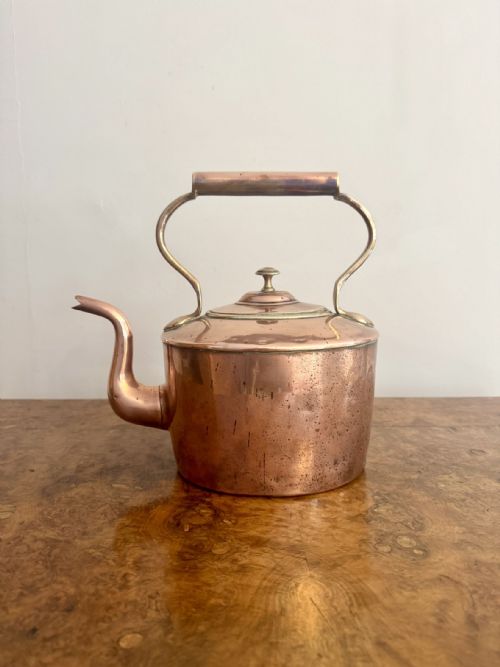
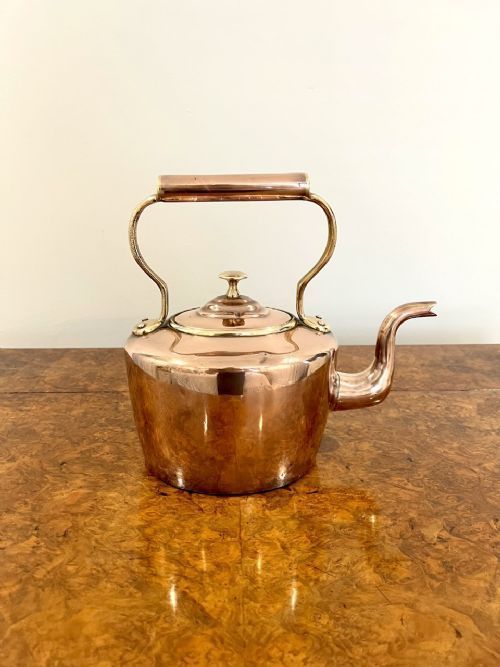


Copper Stove Kettle
These copper stove kettle examples are practical historic vessels shaped from metal to heat water, combining utility with traditional craftsmanship.

Copper Stove Kettle
A copper stove kettle is a domestic water-heating vessel encountered frequently in George III, Georgian, and Victorian styles from the nineteenth century. These pieces reflect historical kitchenware forms designed for daily use over an open fire or stove.
The inventory on this page ranges from small early nineteenth-century examples to larger Victorian designs. You will find items shaped as standard kettles and oval kettles, often incorporating brass and wood elements alongside the primary metal.
Originating primarily from English workshops, these items demonstrate the enduring utility of metal kitchen equipment. The selection balances nineteenth-century utility with decorative domestic presence.
Materials and construction methods
A copper stove kettle relies primarily on sheet copper, beaten or formed into hollowware bodies designed to conduct heat efficiently. Many examples incorporate brass components for structural mounts and wood details for insulated handles.
Makers constructed these vessels using traditional metalworking techniques appropriate to the Georgian and Victorian eras. The integration of copper and brass demonstrates durable construction intended for active kitchen service.
Copper Stove Kettle Retail Price Guide 2026
Typical asking prices for copper stove kettle among the pieces listed under this phrase on Sellingantiques today, from the lower quarter to the upper quarter. They describe what is for sale here now, not the wider market.
Listings for the copper stove kettle span the Georgian and Victorian periods, featuring copper, brass, and wood materials.
Assessing quality in antique kettles
Quality in a copper stove kettle depends on the integrity of its construction and the crispness of its original form. Superior examples display balanced proportions, neat assembly of brass and copper elements, and well-preserved surface finishes.
The distinction between standard domestic items and finer pieces lies in the weight of the metal and the precision of the handle and spout attachments. Earlier George III and Georgian specimens often exhibit refined hand-finished details.
The Copper Stove Kettle Glossary
- Copper
- A ductile, reddish-brown metallic element used historically for domestic hollowware and kitchen vessels due to its thermal conductivity.
- Brass
- An alloy of copper and zinc utilised for handles, spouts, and decorative mountings on traditional kettles.
- George III
- The stylistic period spanning the reign of King George III, noted in these listings for classic proportions and early nineteenth-century craftsmanship.
- Victorian
- The period covering the reign of Queen Victoria, representing the later nineteenth-century output of domestic metalware.
- Tea kettle
- A vessel specifically designed for boiling water to make tea, incorporating a pouring spout and a carrying handle.
Copper Stove Kettle: Frequently Asked Questions
What is a copper stove kettle?
A copper stove kettle is a historic water-heating vessel made primarily of copper with brass and wood additions. These pieces served a functional role in nineteenth-century kitchens.
Today, they function as decorative antiques that highlight traditional metalworking techniques from the Georgian and Victorian periods.
How old are these kettles typically?
The pieces listed date from the nineteenth century, encompassing George III, Georgian, and Victorian periods. Many examples originate from around 1800 to 1880.
Archival records also show occasional examples extending into the early twentieth century, reflecting enduring domestic manufacturing traditions.
What materials were used?
These items are constructed predominantly from copper, supplemented by brass for structural stability and detailing. Some examples also feature wood components on the handles to prevent heat transfer.
This combination of materials ensures both functional durability and visual contrast in the finished vessel.
How should I display my kettle?
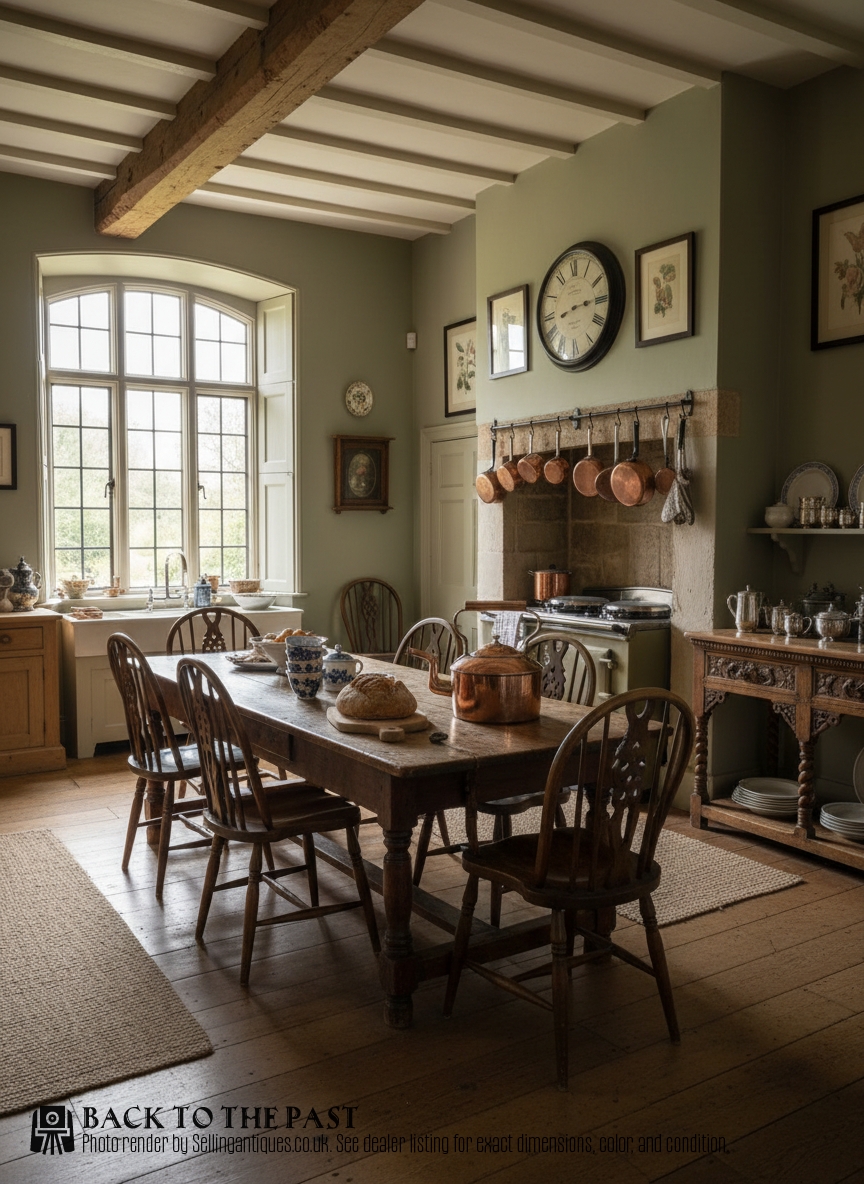
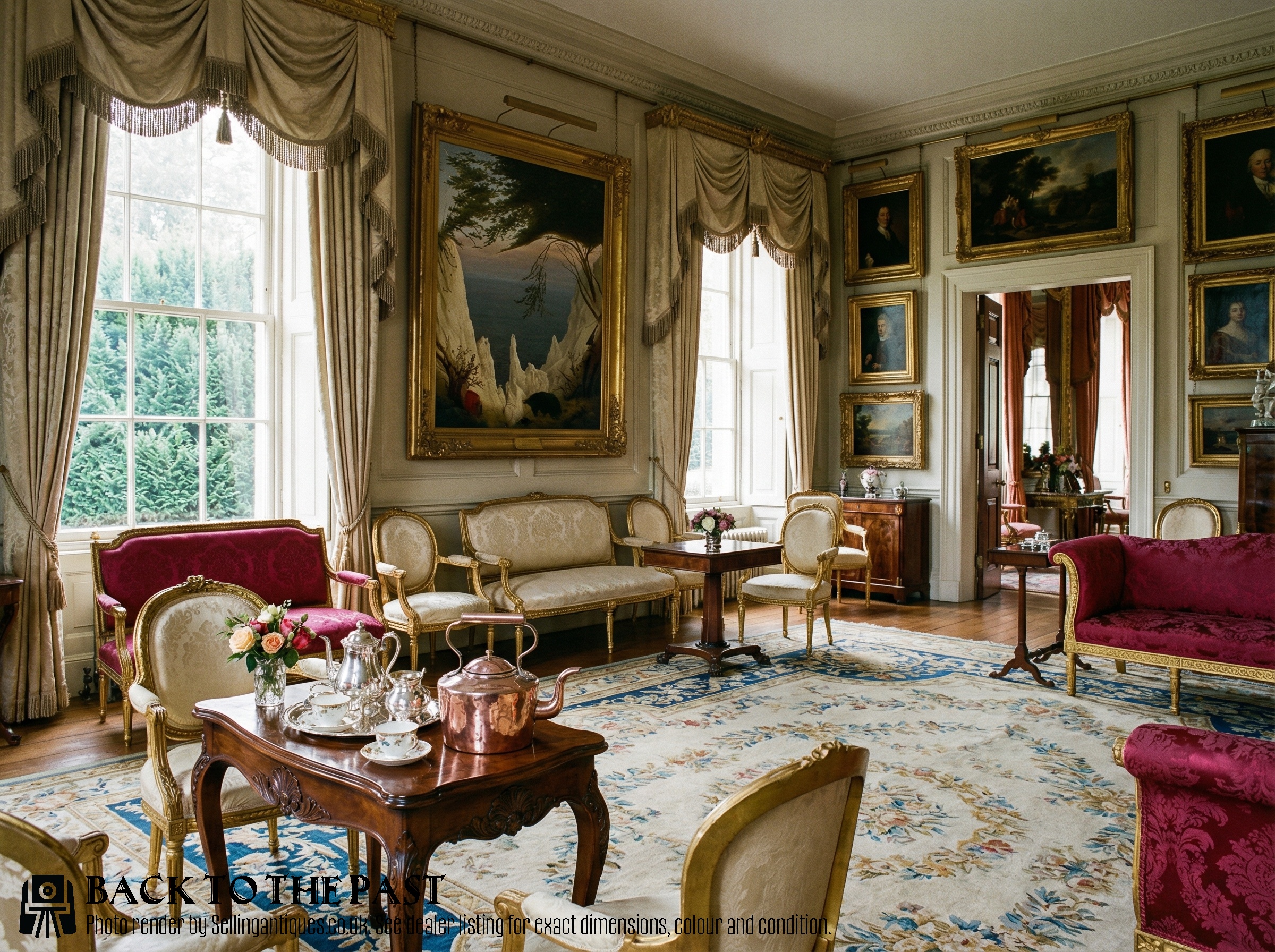
These kettles suit placement in traditional kitchens, dining rooms, or living spaces where their metallic surfaces can be appreciated. Their historic character complements period interiors and rustic displays alike.
Placement near fireplaces or stoves reflects their original domestic context without requiring active use.