





Vintage Copper Teapot
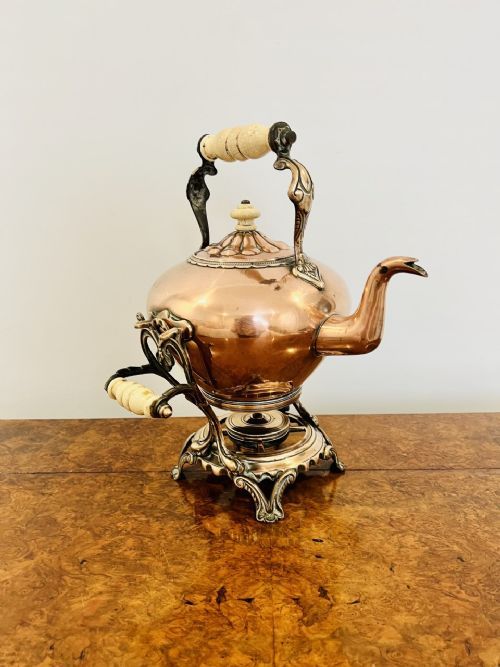
A vintage copper teapot brings warmth and tactile weight to a hearth, shaped from beaten metal to hold boiling water.
What a vintage copper teapot is
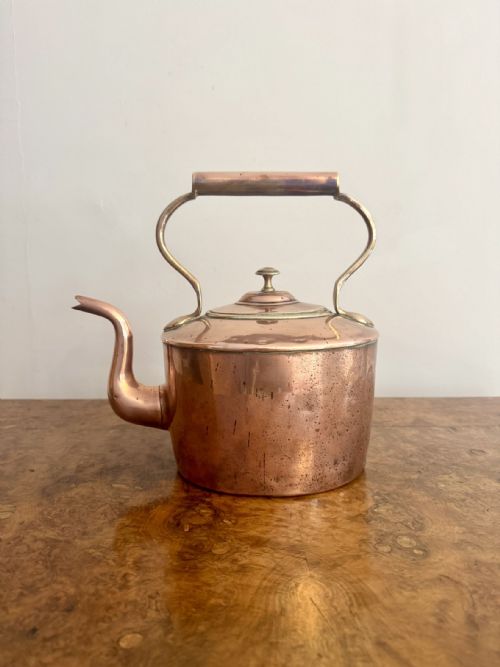
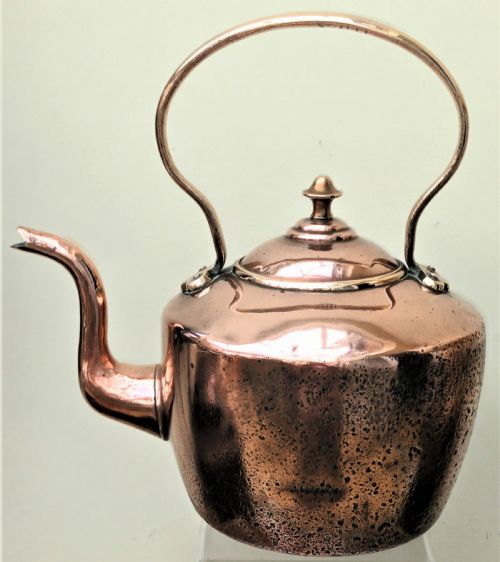
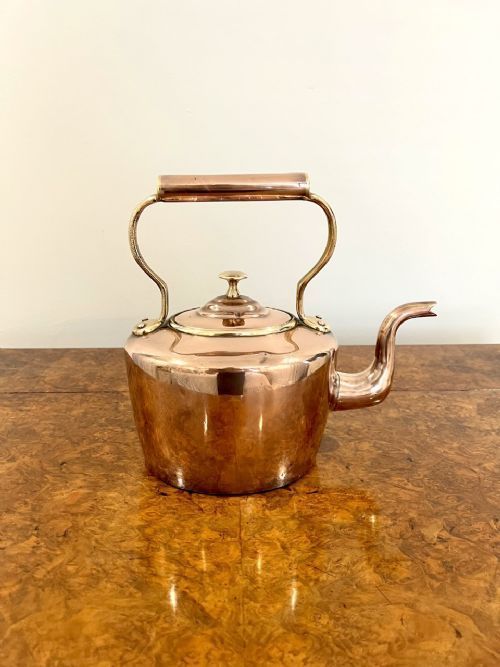
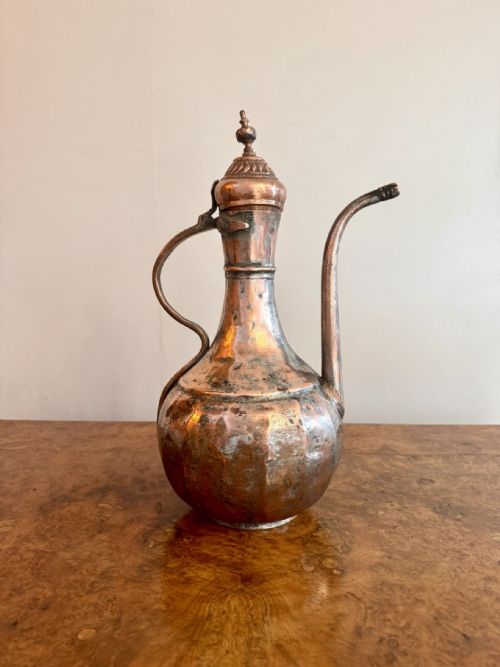
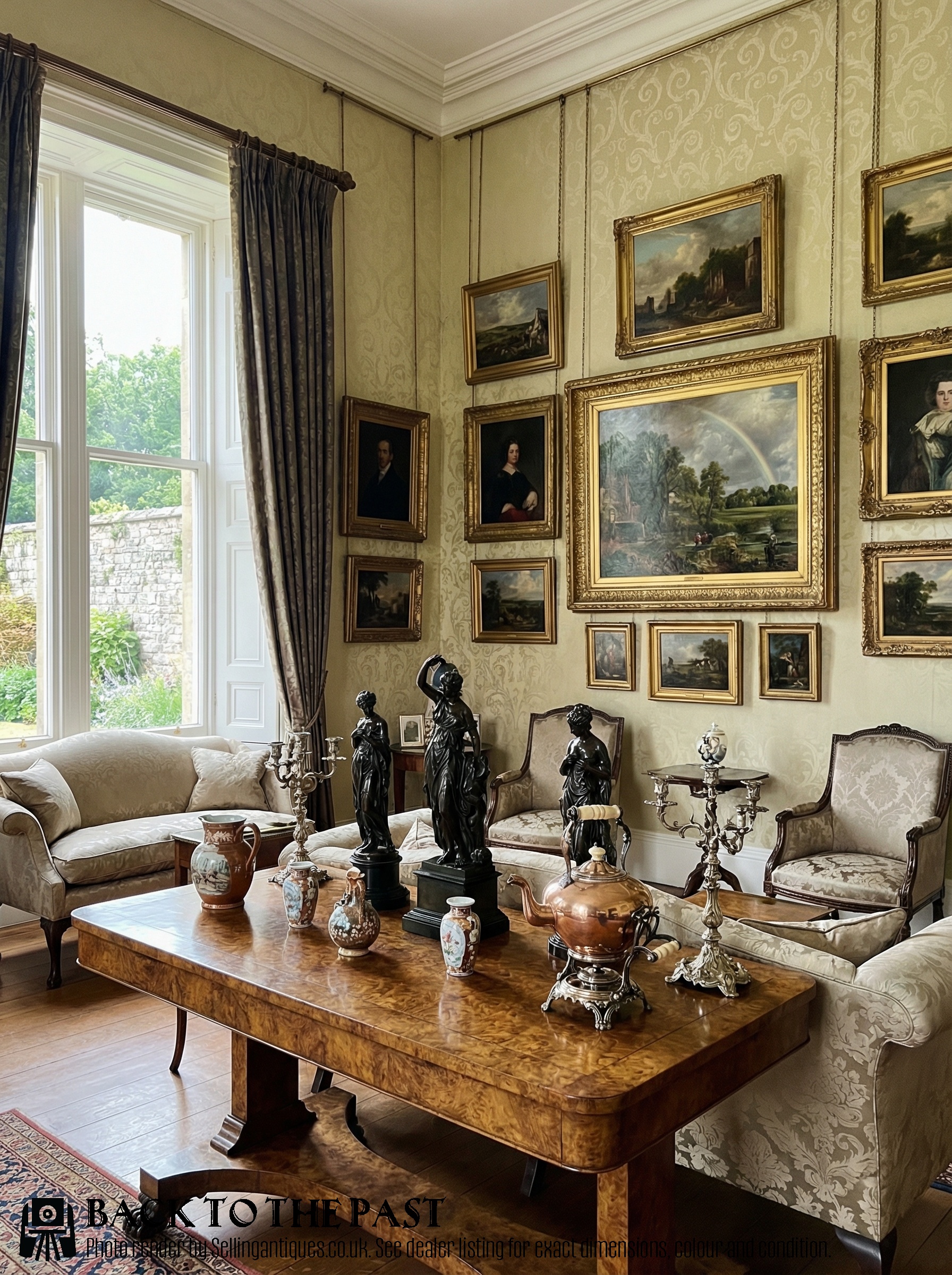
When you search for a vintage copper teapot, you find domestic vessels intended for heating water on a hearth or stove. The pieces available here consist entirely of 19th-century and Georgian kettles, spanning the Victorian and George III periods.
The forms range from standard round bodies to large oval shapes, and include examples mounted on stands from the mid-19th century. These items reflect traditional English metalworking from the 1800s to the late 19th century.
How they were made
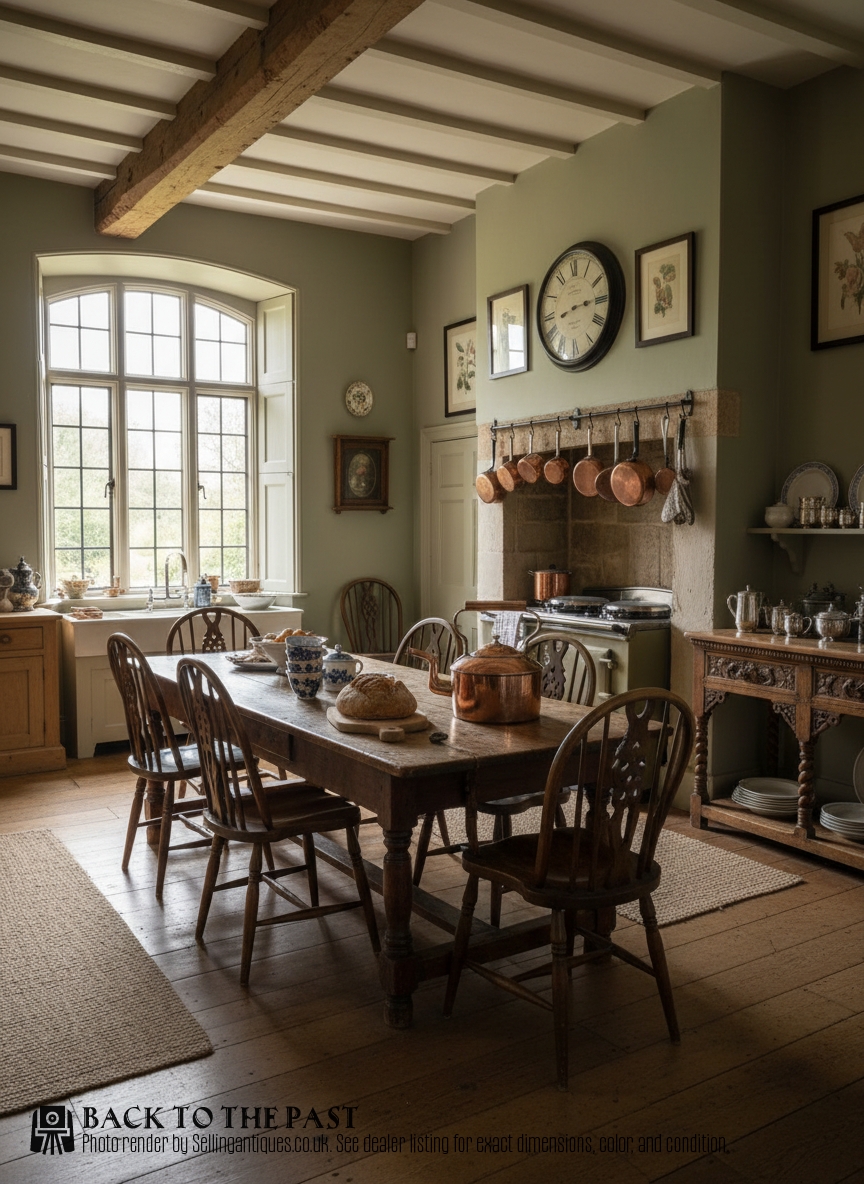
The body of each piece is formed from sheet copper, shaped by hand or mechanical hammering to create the vessel. Fittings such as handles incorporate brass, wood, and bone to provide insulation against heat during use.
Surfaces are often polished to reveal the metallic lustre of the copper, contrasting with the warm tones of the attached brass and wooden elements.
Retail Price Guide 2026
Typical UK retail prices for vintage copper teapot, calculated from the Sellingantiques database of over a million retail prices indexed since 2003. This retail price guide relies exclusively on Sellingantiques data; no external sources or auction records are used, so the figures do not describe the wider market.
What varies in quality
Quality rests in the precision of the construction, seen in the neatness of the seams and the heft of the metal walls. Larger vessels and those complete with original stands demonstrate more ambitious manufacturing techniques than standard domestic versions.
The choice of secondary materials also separates standard examples from better ones, with turned wood and bone insulators showing superior detailing compared to plain metal handles.
The Vintage Copper Teapot Glossary
- Copper
- A reddish-brown metallic element used to form the primary body of these vessels. It conducts heat rapidly and develops a characteristic surface patina over time.
- Georgian
- The period spanning the reigns of the first four Georges, associated here with George III kettle designs from around eighteen hundred. These pieces display classic proportions predating the Victorian era.
- Victorian
- The period of the nineteenth century covering the reign of Queen Victoria, represented here by kettles dated from eighteen eighty and general nineteenth-century production. Designs from this era often feature heavier ornamentation.
- Brass
- A yellow alloy of copper and zinc utilised for handles, spouts, and structural trim. It provides a contrasting metallic colour against the darker copper body.
Frequently Asked Questions
Are these kettles safe to use?
These historical vessels are primarily collected for display or decorative purposes rather than daily boiling. Many older interiors lack modern linings suitable for consumption.
Examine the interior condition carefully before attempting to heat water in a nineteenth-century metal vessel.
How do I date a copper kettle?
Dating relies on stylistic clues, construction methods, and overall shape relative to Georgian and Victorian periods. George III examples often show distinct oval forms and specific handle attachments.
Compare the seam construction and handle materials against known period pieces to establish an approximate decade.
What is a kettle on a stand?
Some mid-nineteenth-century vessels include a matching metal frame or base designed to hold the body above a heat source. This setup allowed hot water to remain accessible in a parlour or dining room.
The stand adds structural height and involves extra brass or copper components separate from the main water chamber.
How should I clean copper?
Polished surfaces require gentle maintenance with specialised metal cleaners to preserve the reflective finish without thinning the sheet metal. Avoid abrasive pads that scratch the historic surface.
Allowing a natural patina to develop is also common for buyers who prefer a darker, aged appearance.