
Vintage Copper Pot
A vintage copper pot brings warmth and working history to a room, offering robust metalwork shaped for kitchen or hearth.
Vintage Copper Pot
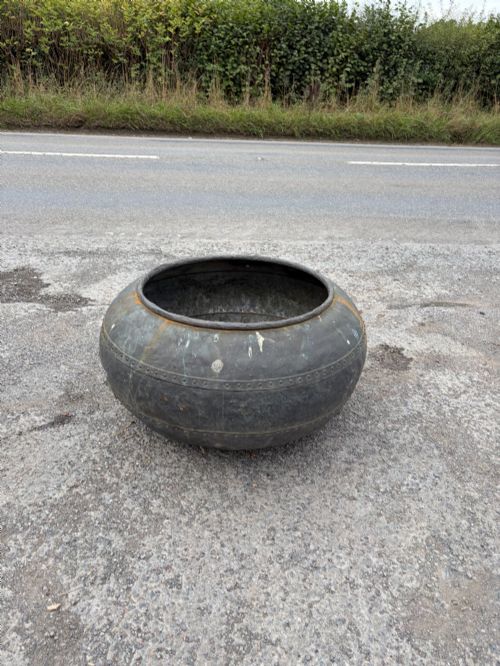
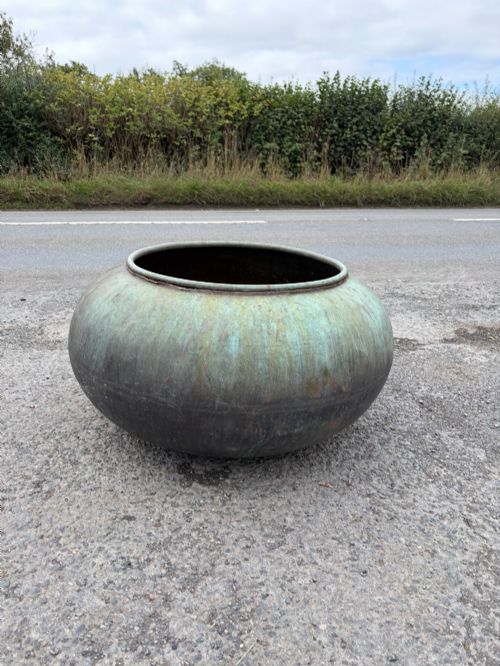
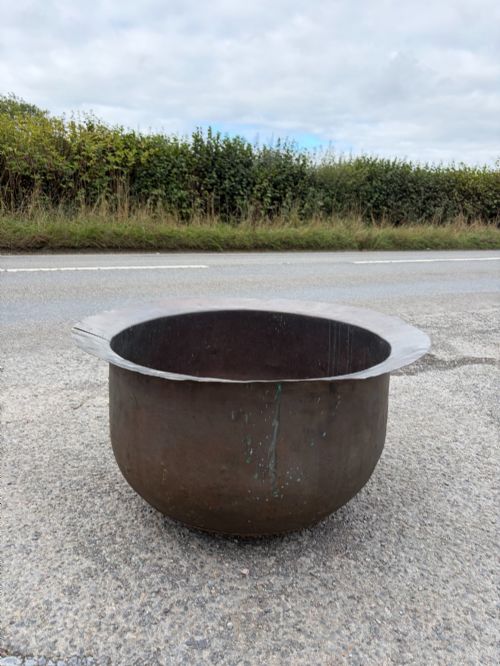
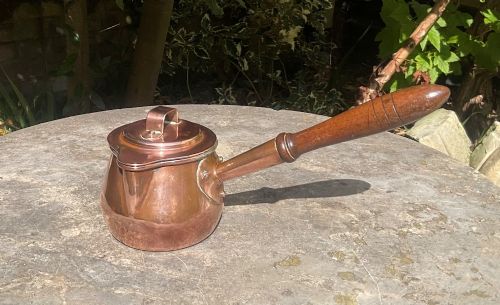
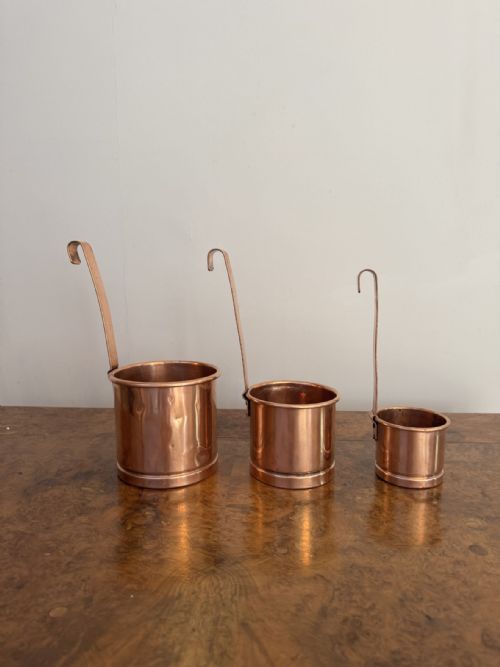
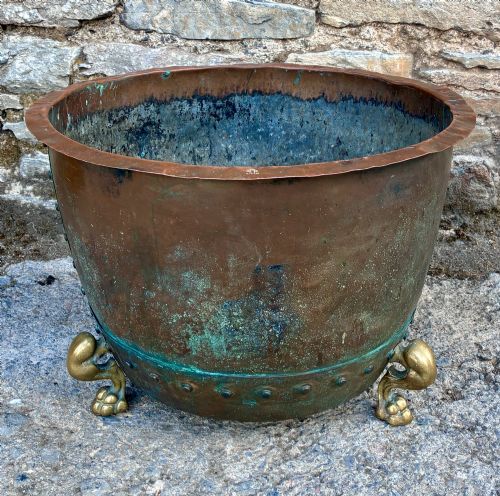
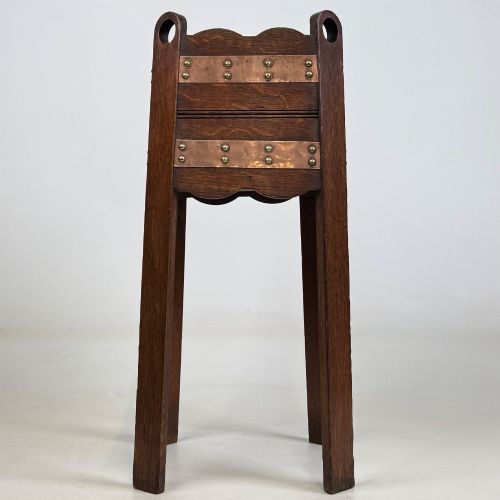
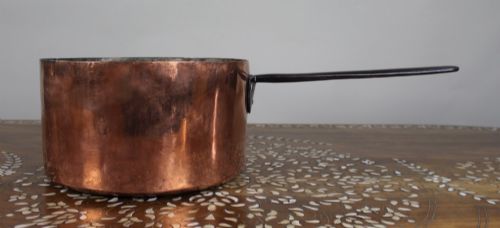
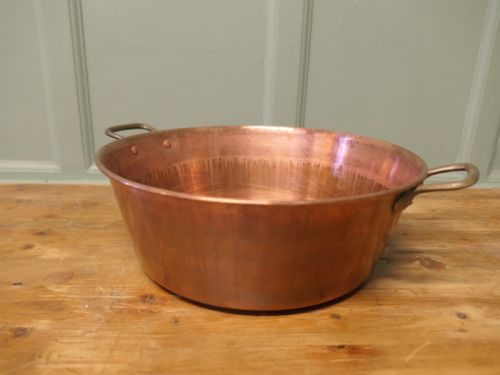
A vintage copper pot encompasses utilitarian kitchenware and display vessels from the Georgian, Victorian, and Edwardian eras. Buyers looking for a vintage copper pot encounter everything from heavy preserving pans and jam pans to coal buckets, planters, and kettles.
The pieces on this page originate from English, French, and Indian workshops, showing forms designed for active culinary use or domestic display. The most common survivals are large 19th-century vessels featuring riveted construction and practical handles.
Domestic vessels from the 19th century transition easily from traditional hearth settings to contemporary interiors as plant holders or display pieces. Each item carries the distinct surface marks of its original purpose in the kitchen or garden.
Materials and construction
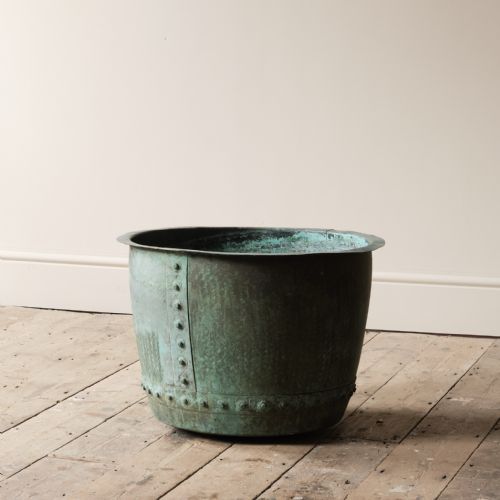
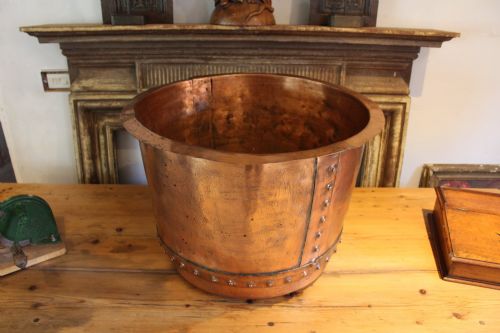
The construction relies on heavy gauge sheet copper shaped by hand beating or hammering to achieve durable walls. Makers joined seams with visible copper rivets and attached contrasting handles of brass, iron, or wrought iron.
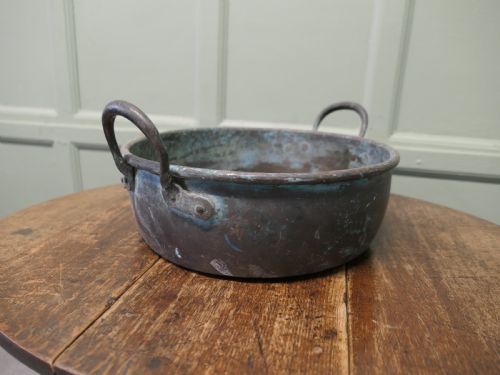
Surfaces often retain traces of tin linings used originally for food safety, alongside natural patinas developed over decades of exposure. Brass fittings and iron swing handles provide structural strength and colour contrast against the warm red metal.
Vintage Copper Pot Retail Price Guide 2026
Typical asking prices for vintage copper pot among the pieces listed under this phrase on Sellingantiques today, from the lower quarter to the upper quarter. They describe what is for sale here now, not the wider market.
The listings span the Georgian, Victorian, and Edwardian periods, utilising copper, brass, iron, and wrought iron in cookware, planters, and kettles.
Assessing the manufacture
Quality rests on the thickness of the metal gauge and the integrity of the hand-beaten or riveted joints. Heavier vessels maintain their structural rigidity better over time and demonstrate greater skill in the metalworker's shaping.
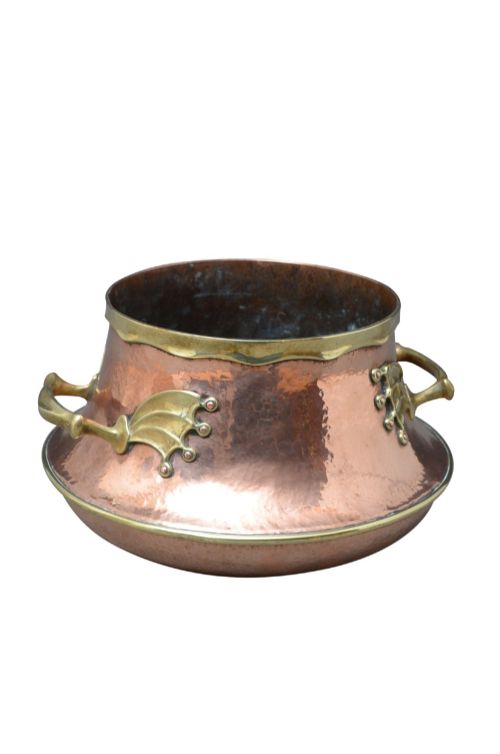
The refinement of decorative details, such as hand-hammered surfaces, applied brass feet, and well-proportioned handles, separates standard utility items from finer domestic showpieces.
William Soutter & Sons·Hodges & Sons·Bretby Pottery·WMF
The Vintage Copper Pot Glossary
- Gauge
- The thickness of the sheet copper used to form the vessel. Thicker metal indicates heavier utility ware built to withstand intense heat.
- Patina
- The surface film and colour resulting from age, handling, and oxidation. Natural patinas show the authentic history of the metal.
- Riveted
- Joined together using metal pins hammered flat to secure overlapping seams. This technique provides durable mechanical strength before modern welding.
- Verdigris
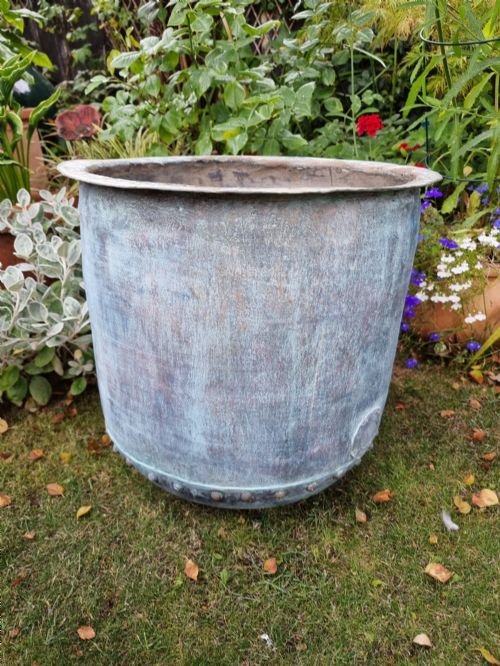
- The green corrosion film that forms naturally on copper exposed to moisture over long periods. It appears frequently on pieces kept in gardens or damp environments.
- Repoussé
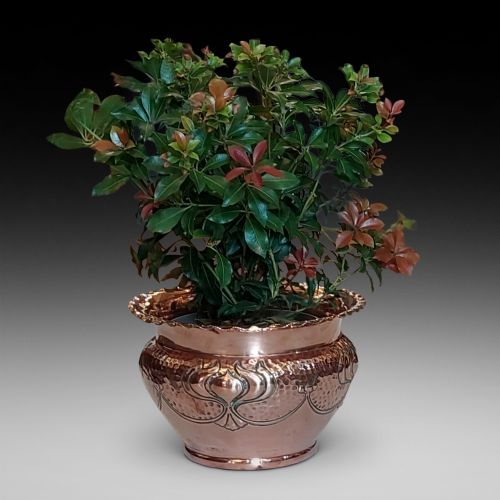
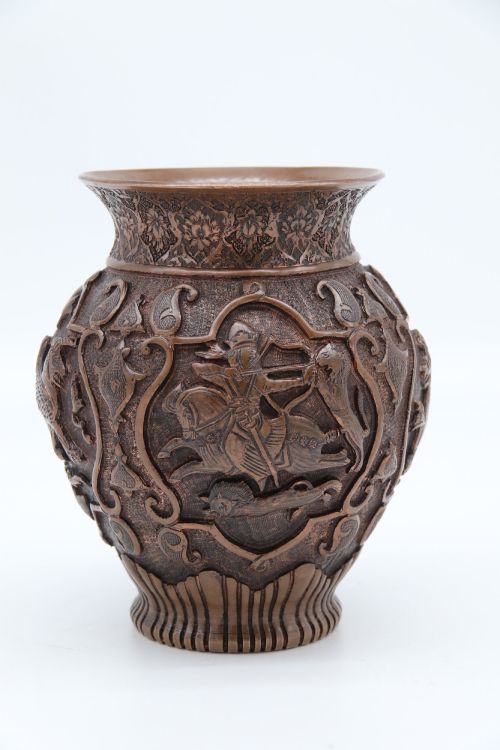
- A metalworking technique where the design is hammered into relief from the reverse side. This ornamental method is common on 19th-century decorative vessels.
Vintage Copper Pot: Frequently Asked Questions
Are vintage copper pots food safe?
Many older vessels were lined with tin to prevent copper from leaching into food during cooking. Modern users often have these interiors retinned before culinary use.
Unlined vessels work well for decorative display, holding plants, or storing household items around the home.
How do I clean a copper pot?
Light washing with warm soapy water removes dust while preserving the aged surface character. Dedicated metal polishes restore bright reflectivity if a polished finish is desired.
Allowing the natural patina to remain untouched maintains the historical appearance valued by collectors.
What is the difference between a jam pan and a jardiniere?
Jam pans feature wide, open tops and sturdy handles designed for boiling fruit over a heat source. Their heavy gauge metal distributed heat evenly during long cooking sessions.
Jardinieres function as decorative plant holders and often include brass feet, swing handles, or repoussé decoration intended for display.
How can I date a copper pot?
Construction methods offer key clues to age, with hand-beaten bodies and hand-cut rivets pointing to 19th-century manufacture. Machine-rolled sheets and uniform factory stamps generally indicate later 20th-century production.
Stylistic details like Arts and Crafts motifs or Georgian proportions help narrow the manufacturing period further.