
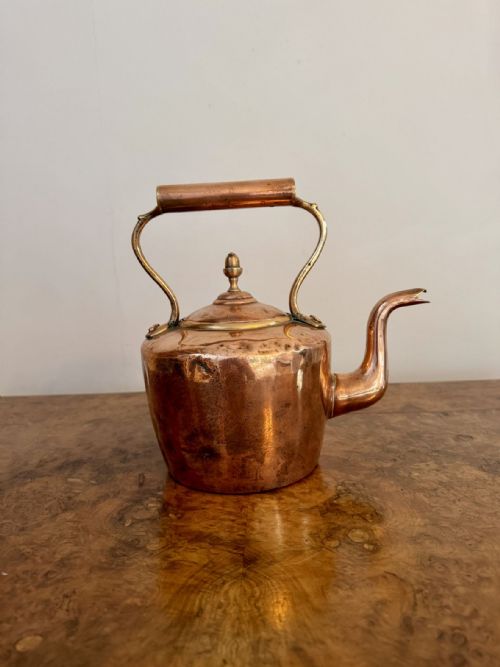
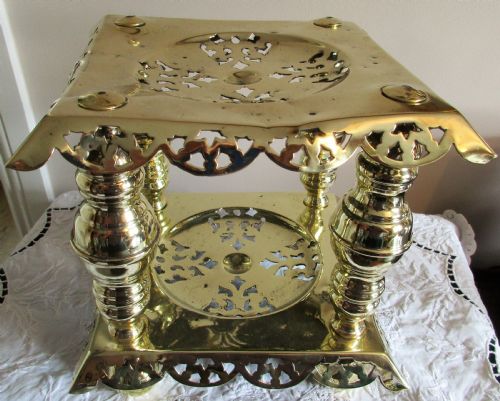
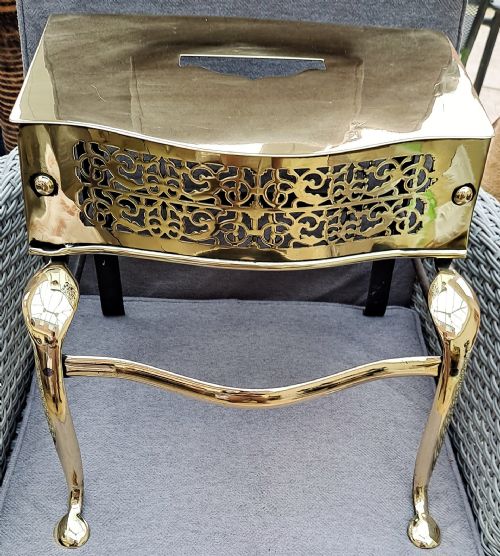
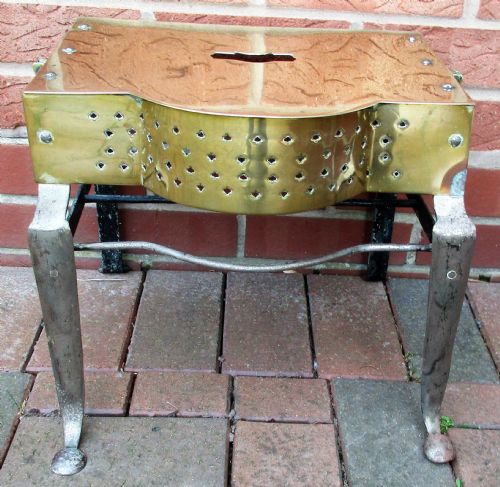
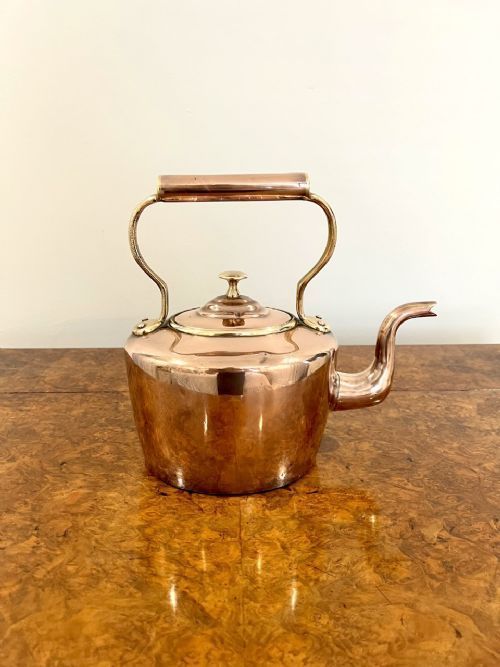


Polished Brass Kettle
These polished brass kettle pieces bring warmth and bright metalwork to a room, offering both period utility and decorative presence.
What a polished brass kettle is
A polished brass kettle is a domestic vessel designed for heating water, appearing here in forms ranging from standard kitchen vessels to sophisticated spirit kettles with stands. You are most likely to meet Victorian and Edwardian examples on this page, reflecting the heavy domestic output of the nineteenth and early twentieth centuries.
The selection includes specific variations such as dresser style brass spirit kettles and round antique kettles, alongside related items like a continental model of a flat tub stove. These objects bridge the gap between functional kitchenware and decorative fireplace furniture.
Originating predominantly from the nineteenth century and extending into the nineteen-twenties, these pieces display the enduring popularity of warm metal alloys in domestic interiors. They serve as tangible links to historical tea-making traditions.
How they were made
These items are constructed primarily from brass, a copper and zinc alloy that takes a high polish and resists corrosion well. Many examples incorporate subsidiary materials such as ebonised wood or standard wood for handles and insulators, preventing heat transfer during use.
Additional structural elements include cast iron components for internal stability or associated stands, while glass occasionally appears in related domestic models. The fabrication relies on traditional metalworking techniques of spinning, casting, and riveting to create durable vessels.
Retail Price Guide 2026
Typical UK retail prices for polished brass kettle, calculated from the Sellingantiques database of over a million retail prices indexed since 2003. This retail price guide relies exclusively on Sellingantiques data; no external sources or auction records are used, so the figures do not describe the wider market.
Listings span four distinct periods: eighteen-fifty, nineteen-hundred, nineteenth century, and nineteen-twenty.
What varies in quality
Quality in these pieces is dictated by the crispness of the metal shaping and the integrity of the joints, where skilled hand-finishing separates standard utilitarian output from superior examples. The weight of the metal and the proportion of the body relative to its handle and spout dictate the visual balance of the object.
The sophistication of the design also plays a role, with complete spirit kettles on dedicated stands representing a more ambitious form of manufacture than simple round kettles. Furthermore, the inclusion of contrasting materials like ebonised wood demonstrates attention to detail in the finished construction.
The Polished Brass Kettle Glossary
- Brass
- An alloy of copper and zinc known for its bright golden appearance and durability. It forms the primary body of these vessels.
- Spirit kettle
- A kettle mounted on a metal stand above a small burner fueled by spirit or alcohol. This setup allowed water to be kept hot at the table or in the drawing room.
- Ebonised wood
- Timber treated with a dark finish to imitate expensive ebony. It provides a stark black contrast to the polished golden brass.
- Victorian
- Pertaining to the reign of Queen Victoria, spanning the mid-to-late nineteenth century. Pieces from this era often feature robust construction and traditional forms.
Frequently Asked Questions
What is a spirit kettle?
A spirit kettle is a self-contained boiling vessel raised on a metal frame above a small fuel burner. This arrangement kept water hot during tea service away from the main kitchen.
Such pieces often include a matching stand and burner unit, forming a complete ensemble designed for parlour use.
How do I clean polished brass?
Polished brass benefits from regular dusting with a soft cloth to maintain its reflective surface. Avoid abrasive cleaners that can strip the finish and scratch the metal.
For deeper maintenance, use a proprietary brass cleaner sparingly, following the grain of the metal. Ensure all residue is removed before displaying the piece.
Are these kettles safe for boiling water?
While historically used for heating water, antique kettles are generally acquired today for decorative display. The interior linings of older vessels may not meet modern food safety standards.
If you intend to use one for boiling, inspect the interior condition thoroughly. Most collectors prefer to enjoy them purely as decorative metalwork.
How do I date an antique kettle?
Dating relies on stylistic cues, manufacturing methods, and material combinations seen in the piece. Victorian examples often display heavier cast components and specific handle attachments.
Later Edwardian and nineteen-twenties pieces may show sleeker lines or different mounting styles for stands. Comparing the construction details against known period examples helps narrow down the era.