







Edwardian Tea Kettle
An edwardian tea kettle brings a marvellous ritual of hospitality to the table, combining a freestanding vessel with a dedicated burner stand for continuous warmth.
Edwardian Tea Kettle
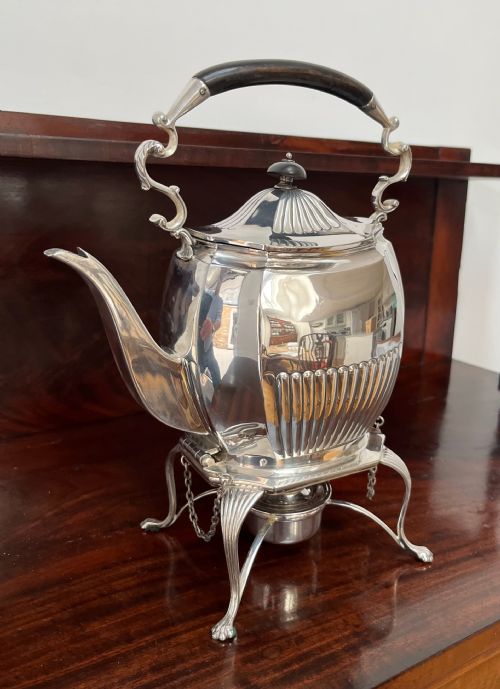
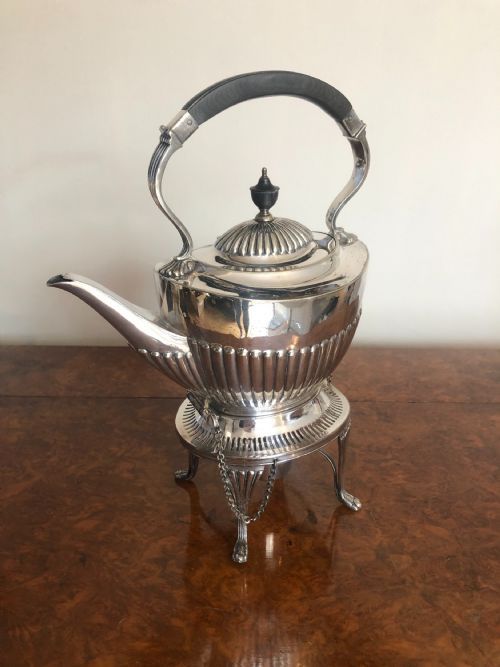
When searching for an edwardian tea kettle, buyers encounter sophisticated water-boiling vessels designed for formal tea service. Most examples on this page date from the Edwardian period and the surrounding decades, frequently taking the form of a spirit kettle mounted upon a fitted stand complete with its original burner.
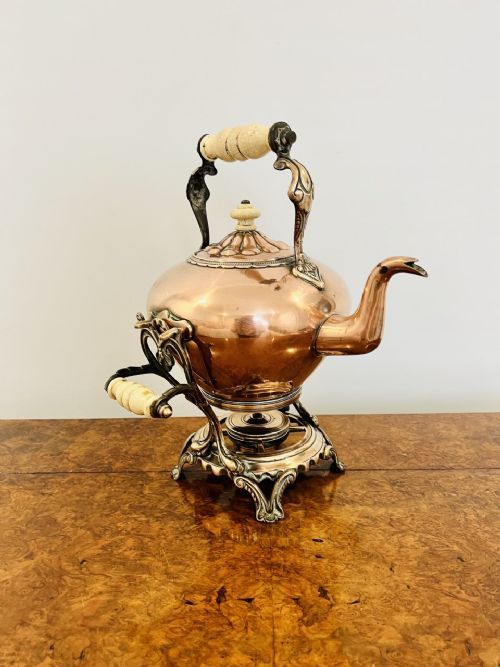
Beyond standard Edwardian designs, the selection incorporates Victorian copper and brass vessels alongside Arts and Crafts hanging models. Occasional furniture such as mahogany, satinwood and painted kettle stands also appear, designed specifically to support these heavy metal vessels during service.
What varies in quality
Quality rests on the substantial weight of the metal and the integrity of the silver plating or polished finish. Superior items maintain matched components across the kettle, stand, and burner rather than assembled substitutes.
Design distinction separates standard production models from artistic interpretations. Pieces featuring detailed casting, maker marks from established firms, or complementary wooden tables sit firmly at the higher end of the range.
Edwardian Tea Kettle Retail Price Guide 2026
Typical asking prices for edwardian tea kettle among the pieces listed under this phrase on Sellingantiques today, from the lower quarter to the upper quarter. They describe what is for sale here now, not the wider market.
Listings feature items spanning the eighteenth, nineteenth, and twentieth centuries, encompassing silver plate, copper, brass, and timber.
Fenton Brothers·Walker and Hall
The Edwardian Tea Kettle Glossary
- Spirit Kettle
- A tea kettle suspended on a metal frame above a small fuel burner. This apparatus kept water at a rolling boil throughout a drawing room gathering.
- Silver Plate
- A thin layer of silver fused to a base metal such as copper or brass. This technique provided the lustrous appearance of solid silver at a more accessible cost.
- Arts and Crafts
- A design movement prioritising handcraftsmanship and visible material qualities. Pieces from this tradition often display hammered copper surfaces and unpretentious structural honesty.
- Sheraton Revival
- A late nineteenth and early twentieth century style inspired by eighteenth century neoclassical furniture forms. It frequently employs light timbers, satinwood, and painted decorative details.
Edwardian Tea Kettle: Frequently Asked Questions
What is an edwardian tea kettle?
An edwardian tea kettle is a hot water vessel typically supplied with its own metal stand and spirit burner. These pieces were utilised in formal reception rooms to maintain boiling water for extended tea service.
Most examples date from the early twentieth century and employ silver plating, copper, or brass construction. They frequently form part of larger matching tea sets or service collections.
How did people use spirit kettles?
Users filled the kettle with water in the kitchen, transported it to the drawing room on its stand, and ignited the small spirit burner underneath. This kept the contents hot without requiring trips back to the stove.
The handle remained cool due to bone or wooden insulators, allowing the host to tilt the vessel and pour water directly into the teapot.
How do I care for silver plated kettles?
Care requires gentle cleaning with non-abrasive silver cloth or specialist metal cream to preserve the plated surface. Avoid harsh chemical dips that strip away historical patination and underlying plate.
Keep the interior dry when stored and check that burner components remain clean and free from old fuel residue.
How do I distinguish Edwardian from Victorian kettles?
Edwardian kettles tend to display lighter proportions and cleaner neoclassical revival lines compared to heavier Victorian counterparts. Victorian examples often utilise robust copper and brass with bolder, more ornate ornamentation.
Examining the manufacturing style, mounting hardware, and any associated maker marks helps clarify the specific period of production.