

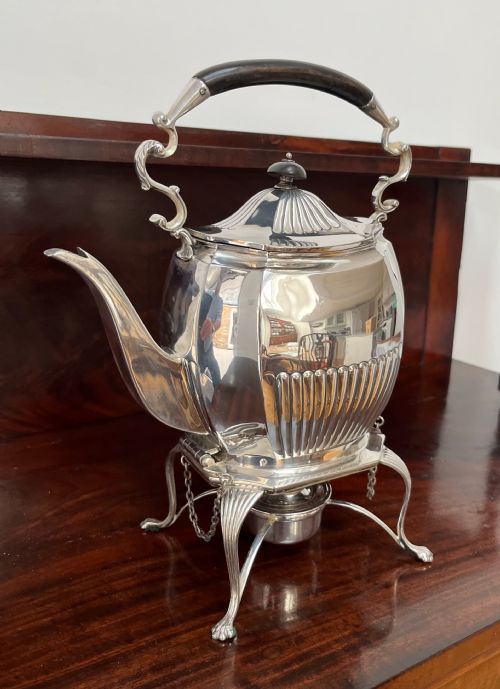


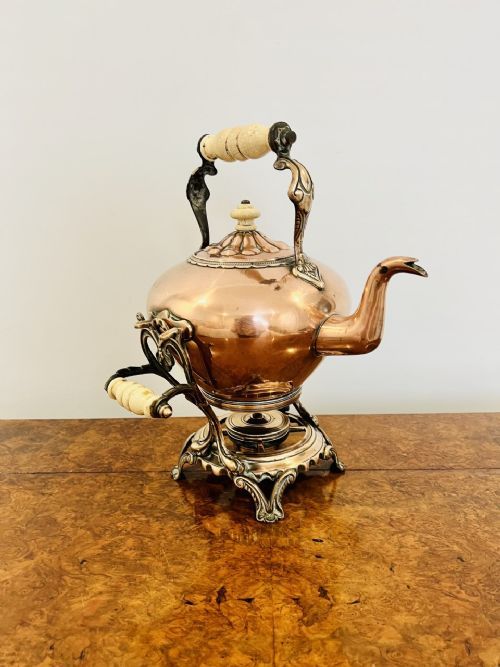


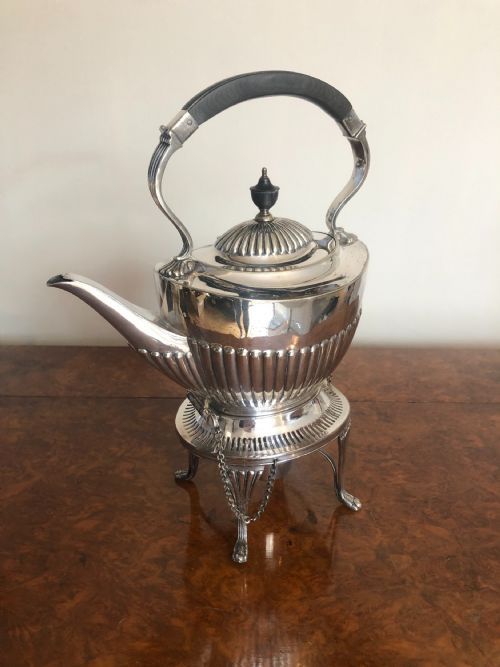
Edwardian Silver Kettle
An Edwardian silver kettle brings formal hospitality to the table, combining a freestanding metal vessel with a fitted burner and stand.
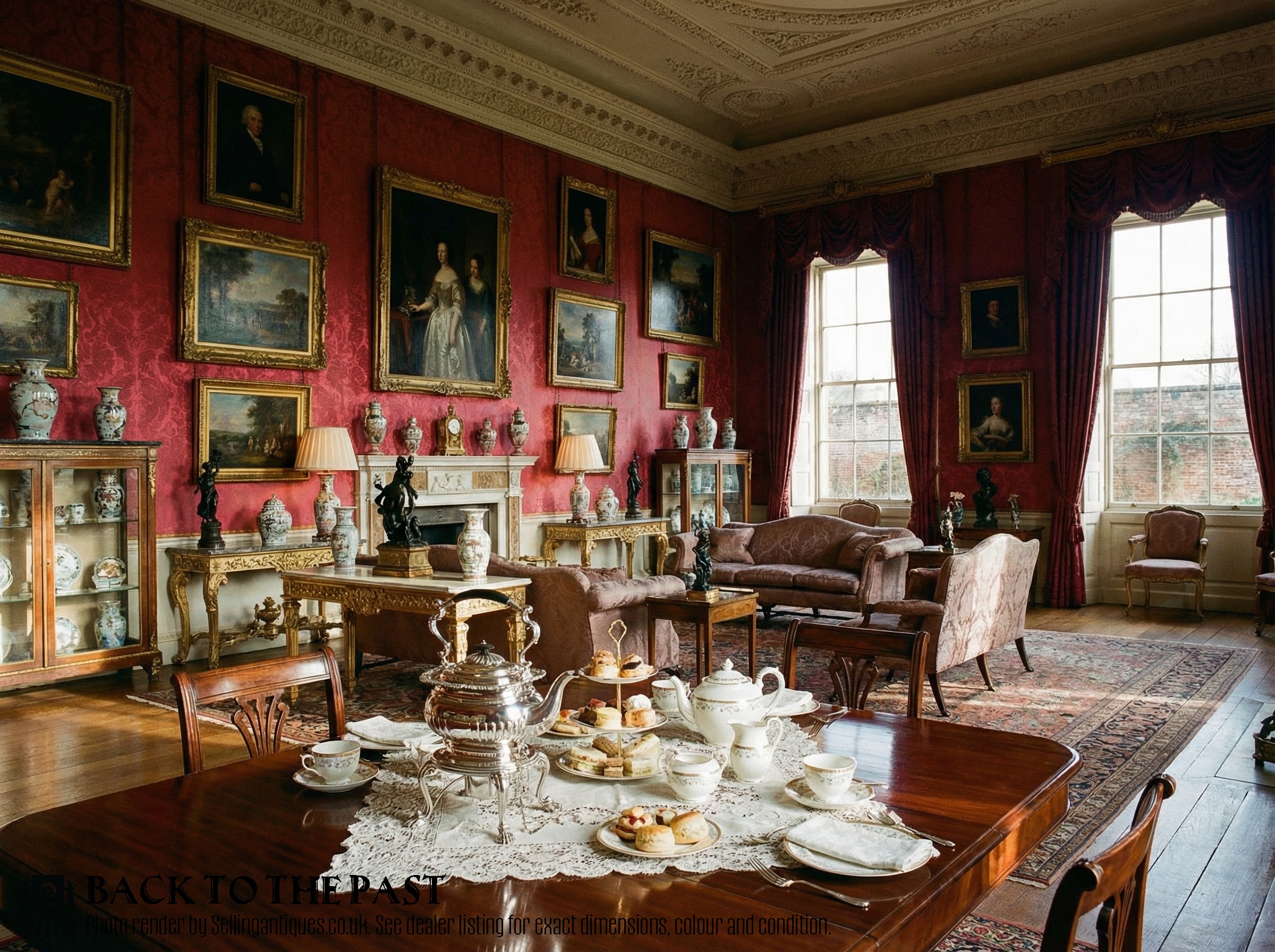
Edwardian Silver Kettle
An edwardian silver kettle is typically encountered as a spirit kettle mounted upon a dedicated metal stand with an integrated burner. These pieces form part of larger tea services or stand alone as prominent items of silver-plated teaware.
The majority of examples seen on this page belong to the Edwardian period, with dates clustering around nineteen hundred to nineteen ten, alongside occasional Victorian and Georgian revival variants. Forms range from standard kettles to larger samovars and tea urns designed for hot water service.
How They Were Made
These vessels are constructed primarily from silver plate and EPNS over a base metal core, whilst solid sterling silver versions appear less frequently in the record. Workshops integrated contrasting elements of ebony, ebonised wood, bone and standard wood for insulated handles and lift knobs.
Stands and burners incorporate copper and various base metals alongside the main silver-plated components to withstand the direct heat of the spirit burner. The metalwork relies on traditional plating and soldering techniques common to silversmithing workshops of the early twentieth century.
Recorded periods span from Victorian eighteen fifty through the Edwardian decade into nineteen thirty.
What Varies in Quality
The distinction between standard domestic teaware and finer items rests in the weight of the metal and the complexity of the stand construction. Elaborate frames with complete, matching burners display a higher standard of manufacture than plain utility vessels.
Makers who supplied substantial silver-plated items tended to apply heavier plating layers and more refined decorative chasing to the body and stand. The inclusion of genuine ebony or bone insulators rather than simpler wood also marks out the better tier of production.
Fenton Brothers·Walker & Hall
The Edwardian Silver Kettle Glossary
- Spirit kettle
- A water kettle mounted above a small spirit-fuel burner on a metal stand. This setup allowed water to remain heated at the tea table.
- EPNS
- Electroplated nickel silver. A common base metal method utilised for producing silver-plated tea vessels during the period.
- Samovar
- A large heated urn used for boiling water. These tall vessels serve a similar function to kettles within formal tea service setups.
- Spirit burner
- A small removable container holding liquid fuel and a wick. It sits directly beneath the kettle on the metal frame to supply heat.
Edwardian Silver Kettle: Frequently Asked Questions
How do I use an edwardian silver kettle?
These kettles are designed to hold hot water during tea service rather than boil cold water from scratch. The spirit burner beneath keeps the water warm at the table.
Fill the vessel with pre-heated water and light the burner only once the kettle is securely positioned in its metal stand.
Are these kettles made of solid silver?
The vast majority of pieces recorded here are silver plated or constructed from EPNS over a base metal. Solid sterling silver versions are documented in the archive but appear less frequently.
Check the hallmarks or stamped marks on the base to determine the specific metal composition of an individual piece.
What is the stand for?
The stand holds the kettle at a precise height above the spirit burner. This keeps the flame at a safe distance while allowing continuous heating.
Many stands incorporate a tilting mechanism so the kettle can pour without being lifted entirely off the frame.
How do I date an edwardian silver kettle?
Dating relies on stylistic clues, manufacturer marks and registered design numbers stamped onto the metalwork. Most examples on this page align with the Edwardian era around nineteen hundred to nineteen ten.
Earlier Victorian pieces from eighteen fifty and later Georgian revival items follow distinct decorative patterns that separate them from standard Edwardian manufacture.