






Silver Plated Tea Kettle
These silver plated tea kettle pieces combine warmth and heavy silver plate for the table, offering a centrepiece of period hospitality.
Silver Plated Tea Kettle
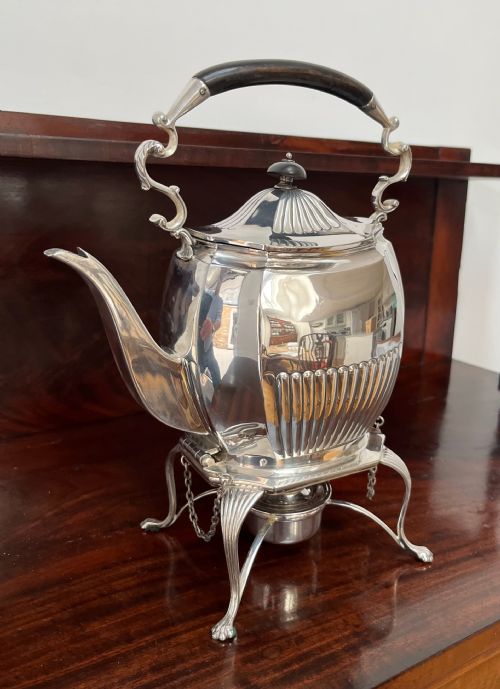
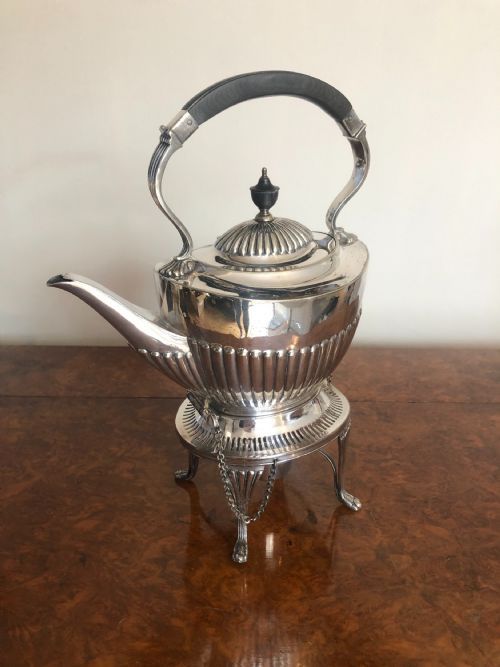
When searching for a silver plated tea kettle, a buyer encounters a range of vessels designed to heat and serve hot water, most frequently met here as spirit kettles mounted on stands with burners. These pieces span the Georgian, Regency, Victorian, and Edwardian periods, stretching from the early nineteenth century into the twentieth century, alongside related forms such as tea urns and teapots.
The objects take various shapes, from classical urns with taps to kettle bodies supported by dedicated metal frames above spirit burners. Aesthetic Movement and Georgian Revival styles appear alongside standard period designs, reflecting the changing tastes of British households over more than a century.
How they were made
Makers constructed these vessels from base metals like nickel silver or electroplated nickel silver, applying a layer of silver plate over the surface. Many examples utilise Old Sheffield Plate techniques, fusing silver to a copper core.
Handles and insulators frequently incorporate contrasting materials such as ebony, ebonised wood, plain wood, or bone to prevent heat transfer during use.
Silver Plated Tea Kettle Retail Price Guide 2026
Typical asking prices for silver plated tea kettle among the pieces listed under this phrase on Sellingantiques today, from the lower quarter to the upper quarter. They describe what is for sale here now, not the wider market.
Materials recorded across the inventory include silver plate, nickel silver, electroplated nickel silver, ebony, bone, and ebonised wood.
What varies in quality
The distinction between standard examples and superior pieces rests on the weight of the metal, the integrity of the silver layer, and the precision of the stand and burner mechanisms. Better workshops applied heavier plating and more substantial mounts.
Detailing on the body, such as crisp engraving or cast feet and handles, separates basic utility items from the finer tea sets and samovars produced by notable firms.
Walker And Hall·Fenton Brothers·Frederik Ellis Tim And Co
The Silver Plated Tea Kettle Glossary
- Spirit Kettle
- A tea kettle mounted on a metal stand above a small spirit burner used to keep the water hot at the table.
- Old Sheffield Plate
- An early method of fusing a thin sheet of silver to a thicker copper base before electroplating became common.
- Tea Urn
- A large vessel with a tap, often called a samovar, used for heating and dispensing water during larger tea services.
- Electroplated Nickel Silver
- A base alloy of copper, nickel, and zinc coated with a layer of pure silver through an electrical process.
Silver Plated Tea Kettle: Frequently Asked Questions
How do you use a spirit kettle?
The burner beneath the kettle is filled with methylated spirit and lit to maintain the temperature of the water during tea service.
The kettle itself rests securely in the frame, allowing hot water to be poured without removing the vessel from its stand.
What is the difference between a teapot and a spirit kettle?
A standard teapot holds brewed tea and sits directly on the table without an external heat source.
A spirit kettle heats plain water over a burner, often used to replenish the teapot during extended gatherings.
How do you clean silver plate safely?
Silver plate requires gentle cleaning with a soft cloth and a specialised polish formulated for plated items to preserve the thin metal layer.
Avoid aggressive scrubbing or harsh abrasives that can wear through the silver to the underlying base metal.
How can you tell an Edwardian kettle from a Victorian one?
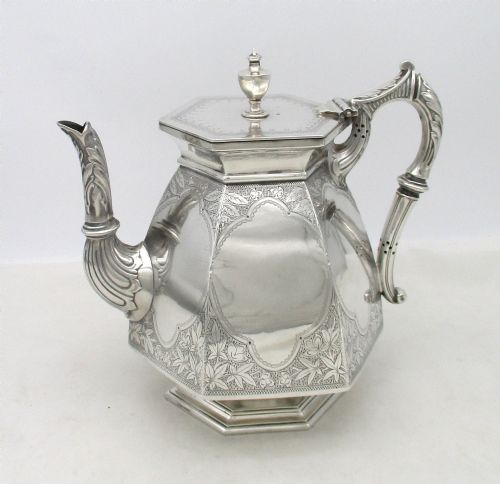
Victorian pieces often display heavier ornamentation, elaborate engraving, and robust Aesthetic Movement influences.
Edwardian examples tend to reflect lighter Georgian Revival proportions and simpler decorative schemes.