






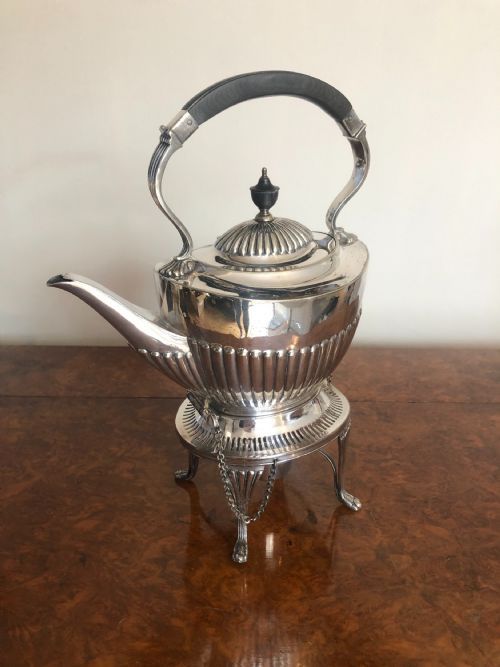

Silver Plated Hot Water Urn
A silver plated hot water urn stands as a centrepiece of hospitality, designed to dispense boiling water for tea with undeniable presence.
Silver Plated Hot Water Urn
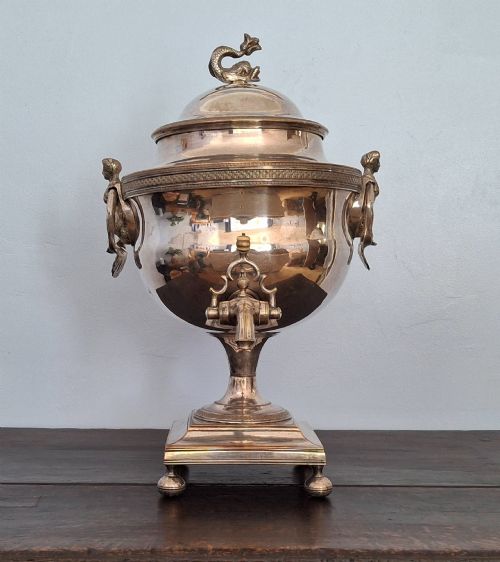
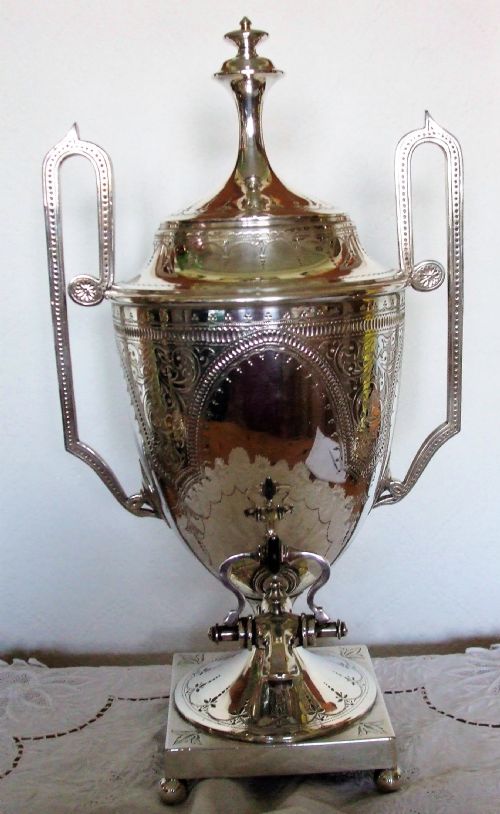
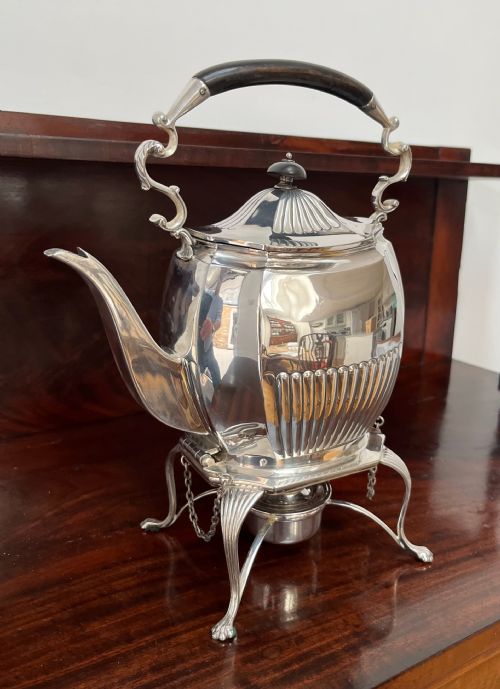
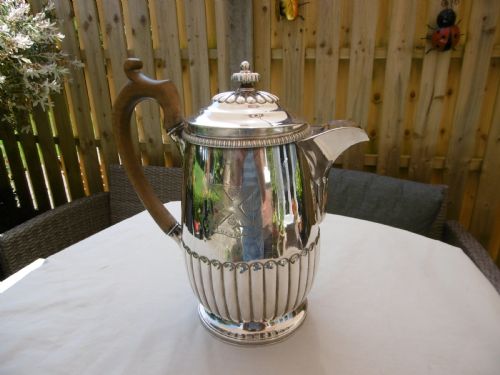
A silver plated hot water urn provides a functional vessel for serving heated water, appearing across periods from the eighteenth century through to the Edwardian era. These pieces manifest primarily as tea urns, samovars, and spirit kettles on stands complete with burners.
The selections encountered here stretch from Georgian Neoclassical forms to Victorian and Edwardian iterations. Buyers most frequently meet Edwardian examples and nineteenth century spirit kettles equipped with their original stands.
Formations vary from substantial two handled samovars fitted with taps to compact kettles designed for table service. Each object reflects the social rituals of tea drinking across successive centuries of British and European design.
How they were made
Construction relies upon base metals such as nickel silver or copper, fused or coated with silver plate, including Sheffield plate methods. Makers often incorporated contrasting elements like wood and ebony for handles and insulating fittings.
Techniques combine metalworking traditions with precision plating, mounting vessels upon secure stands with integrated spirit burners. Master silversmiths shaped spouts, applied crests, and fitted operational taps with mechanical exactness.
Silver Plated Hot Water Urn Retail Price Guide 2026
Typical asking prices for silver plated hot water urn among the pieces listed under this phrase on Sellingantiques today, from the lower quarter to the upper quarter. They describe what is for sale here now, not the wider market.
Listings feature items spanning the eighteenth century through to the nineteen thirties, encompassing Georgian, Victorian, and Edwardian periods.
What varies in quality
Distinction in quality arises from the integration of maker credentials, such as pieces bearing attributions to workshops like Walker and Hall or Matthew Boulton. The presence of original matching components, including stands, burners, and lids, elevates the integrity of an object.
Subtleties of execution, from the crispness of neoclassical casting to the retention of surface silver plating, separate standard production items from exceptional commissions. Structural balance and the durability of fitted taps further demonstrate superior manufacturing standards.
Walker And Hall·Matthew Boulton·John Hoyland·Risler And Carré Paris·Frederik Ellis Tim And Co
The Silver Plated Hot Water Urn Glossary
- Sheffield Plate
- A fused composite material made by applying a sheet of silver to a copper base before rolling and shaping. This technique represents an early method of producing silver appearance before electroplating.
- EPNS
- Electroplated Nickel Silver. A modern plating process introduced in the nineteenth century that replaced older fusion methods.
- Samovar
- A heated metal container traditionally used to boil and heat water for tea. These vessels typically feature an internal heating tube or a spigot for dispensing.
- Spirit Kettle
- A portable water kettle mounted upon a dedicated metal stand housing a small alcohol or spirit burner. This arrangement maintained water temperature during tea service.
- Neoclassical
- A style drawing inspiration from classical antiquity, characterised by symmetry, restrained ornamentation, and architectural proportions. This aesthetic appears on eighteenth and early nineteenth century vessels.
Silver Plated Hot Water Urn: Frequently Asked Questions
How do I use a spirit kettle?
Fill the kettle with water and place it securely upon its metal stand above the unlit burner. Fill the burner with a suitable liquid fuel, ignite it carefully, and allow the flame to heat the water.
Regulate or extinguish the flame using the burner cap once the water reaches the desired temperature. Exercise caution when handling the vessel, as the metal body and handle may become hot during use.
How do I clean silver plate?
Wash the surface gently using warm water, a mild non abrasive detergent, and a soft cloth to remove everyday dust. Rinse thoroughly and dry immediately with a lint free towel to prevent water spots.
Avoid harsh chemical dips and abrasive scouring pads that can wear away the thin silver layer over the base metal. Apply a specialised silver polish sparingly only when necessary, rubbing gently in straight lines.
Are these urns still functional?
Many historic urns and spirit kettles retain their physical capacity to hold and heat water. However, internal components and taps may require professional assessment before practical use.
Collectors generally treat these pieces as decorative display items rather than daily kitchen appliances. Modern usage depends entirely on the structural soundness of the interior lining and soldered joints.
How do I date an urn?
Examine the overall architectural style, noting whether the piece displays Georgian neoclassical symmetry or Edwardian decorative restraint. Look closely for maker stamps, registry marks, or engraved crests that provide clues to the period of manufacture.
Material composition also offers evidence, as older pieces often utilise Sheffield plate techniques while later examples employ nickel silver or EPNS.