




Antique Hot Water Kettle
An antique hot water kettle brings heavy copper, gleaming silver plate and polished brass to the table, ready to serve boiling water for tea with period style.
Antique Hot Water Kettle
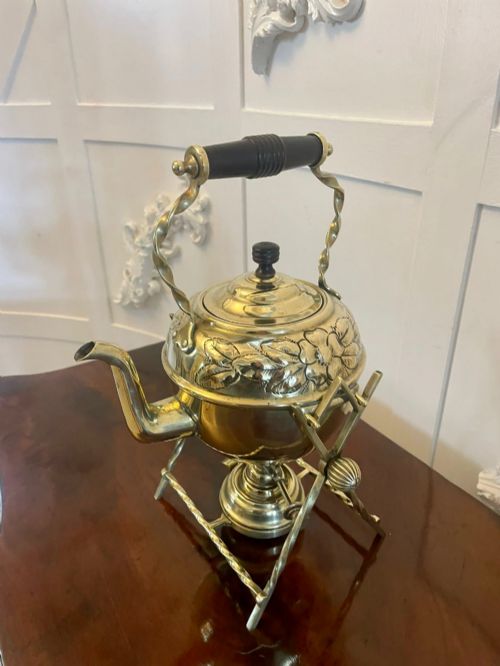
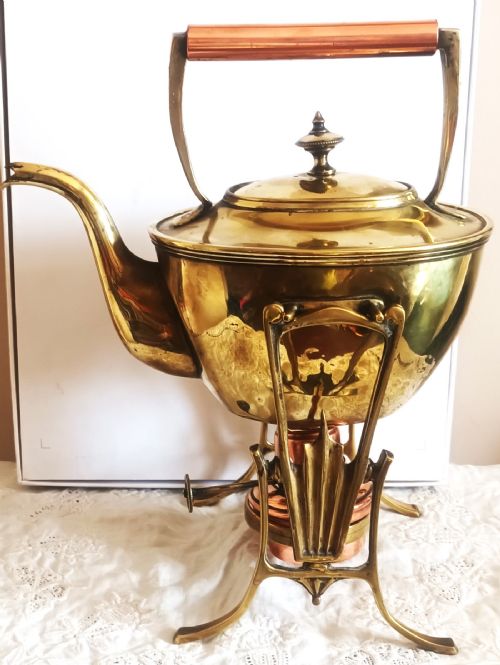
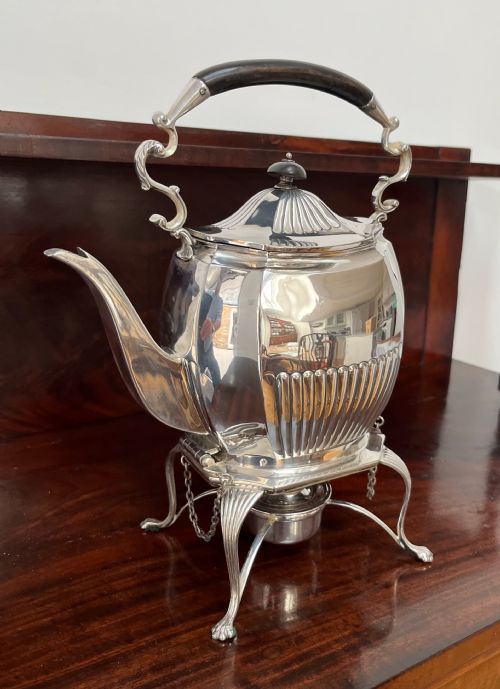
The antique hot water kettle takes several distinct forms across the Victorian and Edwardian periods, including spirit kettles on dedicated stands with burners, large samovars, and tea urns. You are most likely to encounter Victorian and Edwardian copper spirit kettles paired with brass fittings, alongside substantial silver plated samovars from Sheffield makers.
Makers produced these vessels to sit upon the dining table or sideboard, providing a continuous supply of hot water for tea service during the nineteenth and early twentieth centuries. Surviving examples span from the Regency era through to the 1930s, reflecting changing domestic habits in tea preparation.
The inventory on this page ranges from modest brass table kettles to large copper tea urns fitted with taps and internal heating elements. These utilitarian pieces combine practical function with decorative presence, utilising metals that developed rich patinas over decades of domestic use.
How they were made
Metalworkers formed the bodies of these vessels primarily from heavy gauge copper, brass, and silver plate over copper, often combining materials to contrast warm copper bodies with bright brass handles and stands. Craftsmen applied ebonised wood, bone, or ebony to the handles and finials to insulate the user's hand from boiling water.
Spirit kettles required integrated metal stands fitted with small burners to maintain water temperature at the table, whilst larger samovars and tea urns utilised internal heating tubes or central chambers. Makers such as William Soutter and Sons and Walker & Hall executed these metal forms with sturdy riveted construction and functional taps.
Listings span the nineteenth and twentieth centuries, incorporating Victorian, Edwardian, and Regency periods in copper, brass, and silver plate.
What varies in quality
Substantial metal gauge and solid construction separate robust utilitarian vessels from lighter decorative items, with superior pieces showing heavy, dense copper or thick silver plating over old Sheffield plate. The presence of matching original components, such as the burner on a spirit kettle stand or the internal key for a samovar tap, distinguishes complete examples from assembled ones.
Refined surface finishing, neatly turned wooden insulators, and crisply cast brass mounts indicate superior workshop production. Makers known for quality metalware invested greater skill in the joints, handles, and engraved decoration, resulting in vessels that retained their structural integrity and aesthetic balance.
William Soutter & Sons·Walker & Hall·Frederik Ellis Tim & Co
The Antique Hot Water Kettle Glossary
- Spirit kettle
- A portable water kettle mounted upon a metal stand above a small spirit burner. This arrangement kept water hot at the tea table.
- Samovar
- A large heated metal urn traditionally used to boil and heat water for tea. These vessels typically feature a spigot near the base.
- Silver plate
- A thin layer of silver fused or electroplated onto a base metal such as copper or brass. This technique provided the appearance of solid silver at a lower cost.
- Old Sheffield plate
- An early method of fusing a sheet of silver to a thicker copper core by heat and pressure. Pieces made this way display characteristic copper seams.
- Tea urn
- A large standing vessel fitted with a tap used for dispensing hot water. They frequently date from the Victorian period and appear in heavy copper or silver plate.
Antique Hot Water Kettle: Frequently Asked Questions
What is a spirit kettle?
A spirit kettle is a metal water vessel mounted on a metal framework above a small spirit burner. The burner burns liquid fuel to keep the water hot during tea service.
These kettles were designed to remain on the dining table or sideboard so hosts could replenish teapots without returning to the kitchen.
How do you use a samovar?
A samovar holds and heats a large volume of water for serving tea to groups. Users turn a small tap at the base to dispense water directly into cups or teapots.
In period settings, these large metal urns acted as the central apparatus for tea hospitality, often remaining heated throughout long meals.
How do you clean antique copper?
Antique copper benefits from gentle cleaning that preserves its historic surface character and warm tone. Harsh abrasive modern compounds strip away desirable age patinas accumulated over generations.
Most collectors prefer to maintain a soft lustre rather than attempting to make old metal look factory-new.
How do you date silver plated items?
Dating silver plated items involves examining maker marks, base metal characteristics, and overall manufacturing style. Silver plate over old Sheffield plate often points to the late eighteenth or early nineteenth century.
Victorian and Edwardian pieces frequently display registry numbers or specific maker stamps that link to known Sheffield workshops.
Were these kettles made for tea?
These metal vessels were produced specifically to supply hot water for brewing tea in domestic settings. Their capacity and internal heating arrangements ensured a steady supply of boiling water.
They formed part of larger matched teaware services or stood alone as principal table accessories.