





Edwardian Spirit Kettle
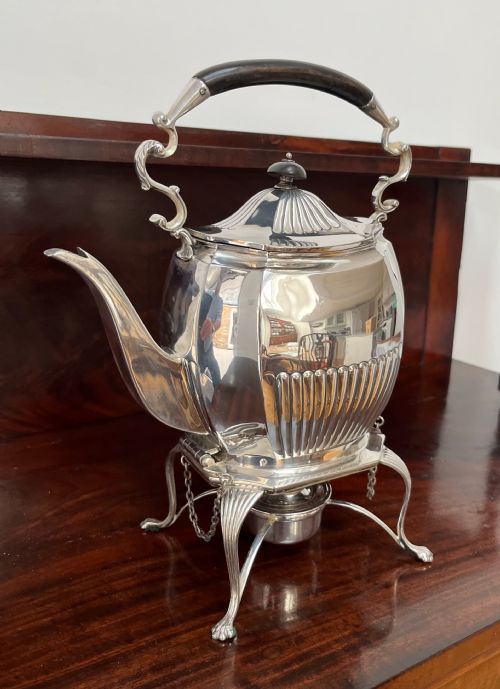
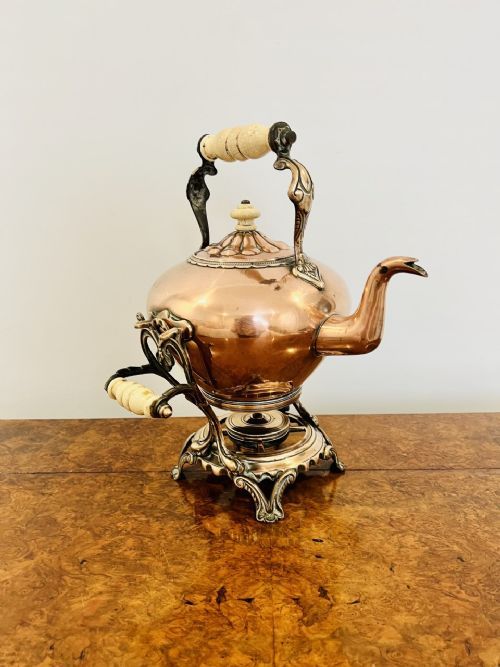
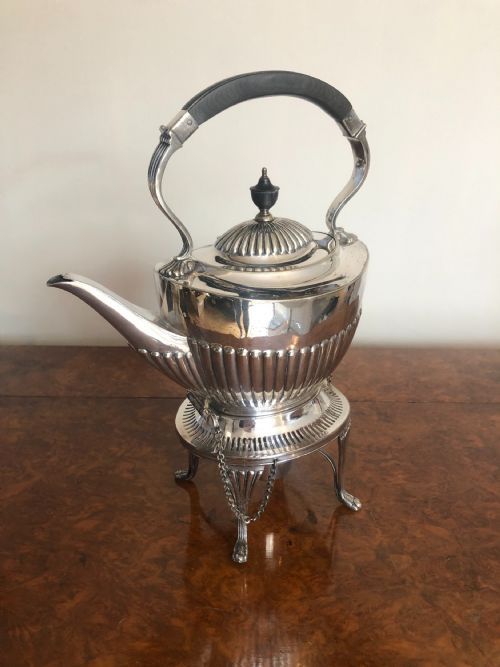
An edwardian spirit kettle brings table tea service to life with a matching burner, stand, and heated water.
Edwardian Spirit Kettle
An edwardian spirit kettle is a functional tea vessel mounted on a dedicated stand incorporating a spirit burner beneath. When searching for this phrase, a buyer encounters matching sets designed for formal hospitality, table service, and drawing room entertaining.
The pieces on this page span several decades around the turn of the twentieth century, alongside Victorian, Georgian Revival, and Arts and Crafts interpretations. The Edwardian era dominates the selection, bringing refined metalwork and traditional silhouettes to the table.
Most examples appear as complete suites featuring the kettle itself, the supporting frame, and the original burner. Forms range from standard table stands to hanging kettles and occasional tea urns.
Materials and construction
Silver plate over a base metal forms the primary construction for formal examples, while solid sterling silver appears in select pieces from the period. Copper and brass also feature prominently, particularly within Arts and Crafts designs.
Makers integrated practical insulators such as ebony and bone into the handles to protect users from heat during pouring. Wrought iron and wood provide sturdy framing for the stands and burners.
Listings feature materials spanning silver plate, solid silver, copper, brass, wood, bone, and ebony.
Distinctions in quality
Quality rests on the integrity of the original plating, the crispness of applied period detail, and the retention of matching stands and burners. Pieces bearing recognised maker marks command particular attention from collectors of fine teaware.
Substantial gauge metal and well-balanced frames differentiate superior examples from lighter production. The inclusion of undamaged heat insulators like bone or ebony preserves the historical authenticity of the piece.
Fenton Brothers·Walker & Hall
The Edwardian Spirit Kettle Glossary
- Spirit kettle
- A tea kettle mounted on a metal stand with an under-mounted burner fueled by methylated spirit to keep water hot at the table.
- Silver plate
- A layer of silver fused to a base metal core, common in domestic teaware produced during the Edwardian period.
- Arts and Crafts
- A design movement prioritising handcraftsmanship and simple forms, often seen in hammered copper and brass kettles.
- Georgian Revival
- A style looking back to eighteenth-century classical proportions, reflected in the decorative motifs of later tea vessels.
- Samovar
- A large heated urn used for boiling water, functioning on a similar principle to the table spirit kettle.
Edwardian Spirit Kettle: Frequently Asked Questions
How do I use an Edwardian spirit kettle?
Fill the kettle with hot or cold water, place it securely upon its stand, and light the spirit burner underneath to maintain the temperature.
Ensure the burner contains suitable fuel and adjust the flame height carefully beneath the vessel during tea service.
Were these kettles made of solid silver?
Most examples utilise silver plating over a base metal, though solid sterling silver pieces do occur within the period.
Copper and brass also feature strongly, particularly in Arts and Crafts interpretations.
What is the purpose of the bone on the handle?
Bone or ebony insulators are fitted into the handle brackets to prevent heat from transferring from the boiling water to the grip.
These materials protect the user's hand and provide a comfortable grip during tea pouring.
How do I distinguish Edwardian from Victorian styles?
Victorian examples often employ heavier, more ornate decoration in copper and brass, dating back into the mid-nineteenth century.
Edwardian pieces tend toward lighter silver-plated frameworks and refined Georgian Revival forms.