



Silver Plated Kettle Burner
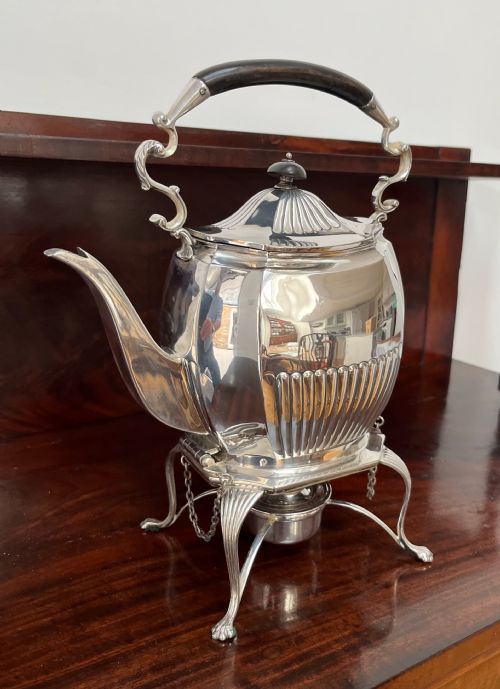
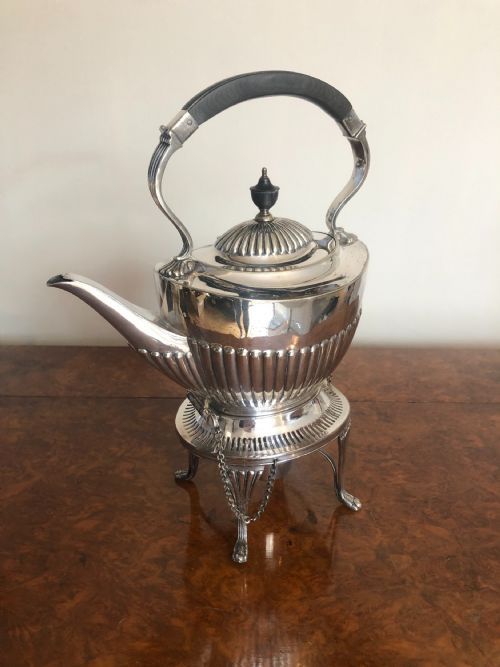
A silver plated kettle burner brings the elegance of formal tea service to the table, combining a heavy metal vessel with its own dedicated heat source.
Silver Plated Kettle Burner
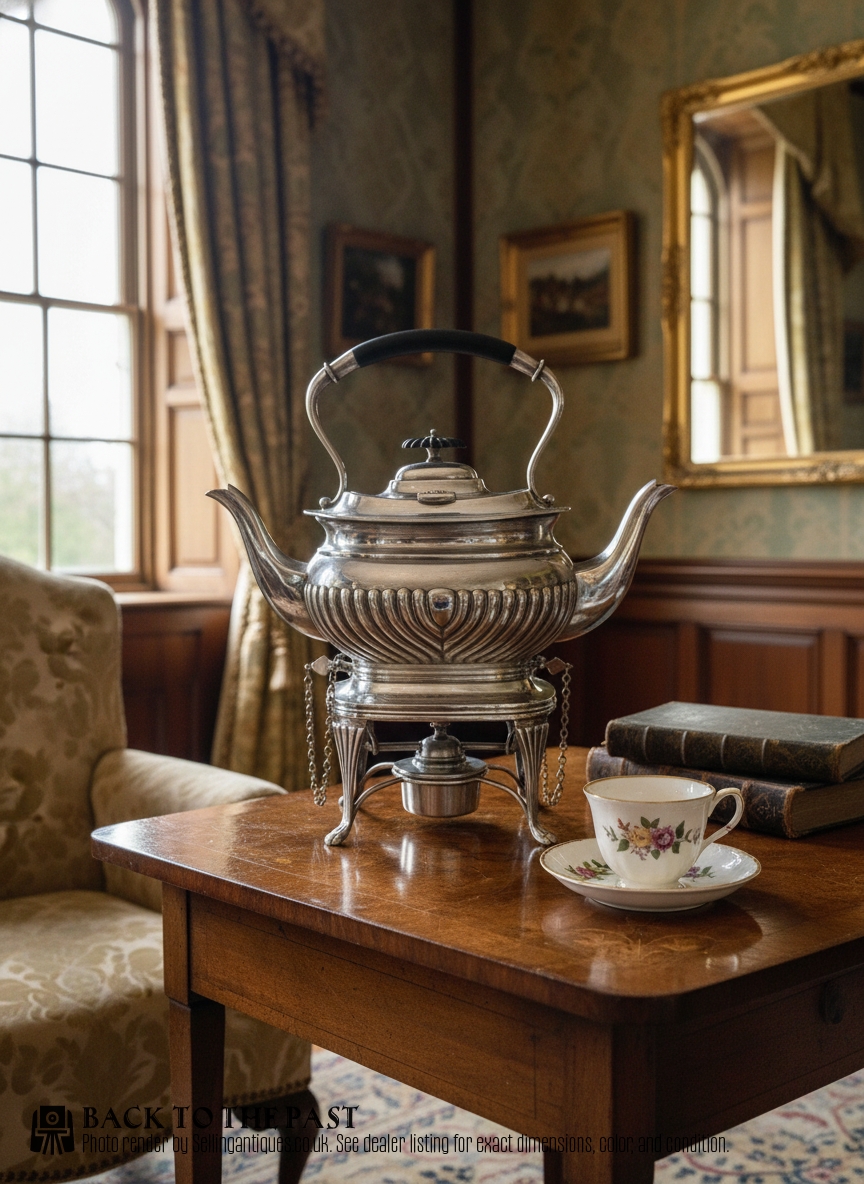
When you search for a silver plated kettle burner, you are looking at substantial vessels designed to heat and maintain hot water at the table during tea service. These pieces typically consist of a kettle suspended on a metal stand above a small spirit burner.
The versions you are most likely to meet on this page hail primarily from the Edwardian era, alongside pieces dating from around eighteen eighty up to nineteen thirty. Their forms range from straightforward utilitarian designs to elaborate Georgian Revival interpretations.
Makers utilised various supporting elements in these teaware sets, incorporating materials such as ebony, bone, ebonised wood, and general wood components for handle insulation. The overarching style leans heavily towards Edwardian and Victorian aesthetics.
How they were made
These kettles and stands rely on silver plate over a base metal foundation, combining durability with a bright metallic finish suitable for the dining table. Electroplate nickel silver, known as EPNS, also appears in the construction of these stands and vessels.
Insulating touches of ebony, bone, and ebonised wood prevent the handles from conducting excessive heat while the spirit burner operates beneath the kettle. Metal work is shaped into stands that securely cradle the vessel above the flame.
Ebony and bone handles ensured that pouring tea remained a civilised affair rather than a test of heat tolerance.
What varies in quality
The refinement of the casting and the weight of the metal separate standard production pieces from finer examples. Heavier silver plate and substantial metal stands indicate better durability and more careful manufacturing.
Attention to detail in the stand construction and the quality of insulating materials like bone or ebony show the level of care put into the teaware. Pieces attributed to specific makers often display a higher standard of overall finish.
Fenton Brothers·Frederik Ellis Tim and Co
The Silver Plated Kettle Burner Glossary
- Silver Plate
- A thin layer of silver applied to a base metal object. This technique allowed makers to produce bright, decorative teaware without the expense of solid silver.
- Spirit Burner
- A small vessel underneath the kettle designed to hold liquid fuel and a wick. It provided a steady flame to keep the water hot during tea service.
- EPNS
- Electroplated nickel silver. This designation indicates a base of nickel silver coated with a layer of pure silver through an electrolytic process.
- Spirit Kettle
- A tea kettle mounted on a dedicated stand with a burner beneath. It allowed hosts to boil and maintain water at the table rather than fetching refills from the kitchen.
- Georgian Revival
- A design style popular in later periods that imitated the proportion and ornament of eighteenth-century silver and teaware. These pieces combine earlier decorative motifs with newer manufacturing methods.
Silver Plated Kettle Burner: Frequently Asked Questions
What is a silver plated kettle burner?
A silver plated kettle burner is a tea kettle mounted on a metal stand with an integrated spirit burner underneath. It was designed to keep water hot at the dining or tea table.
Most examples seen here date from the Edwardian period and Victorian eras, combining silver plate with insulating handles of wood or bone.
How did people use them?
Hosts used these kettles to serve tea without needing to leave the table for hot water. The spirit burner beneath the vessel kept the contents warm throughout the gathering.
The metal stands held the kettle securely over the flame while insulated handles protected the user's hands from heat.
What materials are used?
The primary materials are silver plate and base metal, frequently including electroplated nickel silver. Handles often incorporate wood, bone, ebony, or ebonised wood to prevent heat transfer.
These varied materials worked together to create a functional and decorative piece of teaware suitable for formal use.
How do I date these pieces?
Dating relies on stylistic clues, historical records, and maker attribution. Pieces span from around eighteen eighty through the Edwardian era up to nineteen thirty.
Design styles such as Georgian Revival and Edwardian provide further context for placing a particular kettle within a specific decade.