

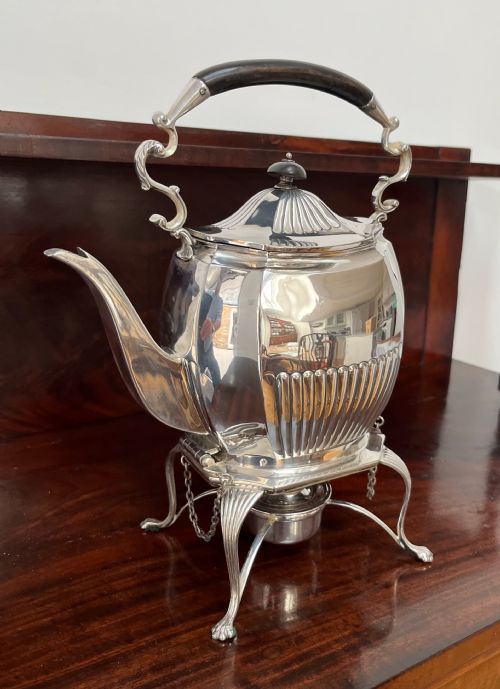


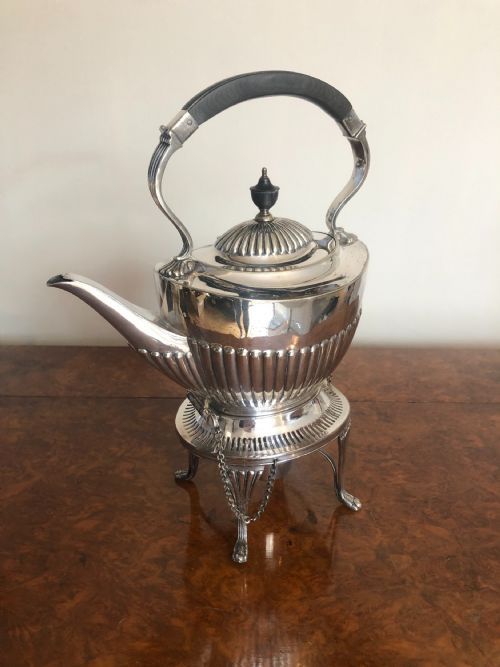
Silver Plated Spirit Kettle
A silver plated spirit kettle brings undeniable theatre to the tea table, combining period craftsmanship with portable warmth.
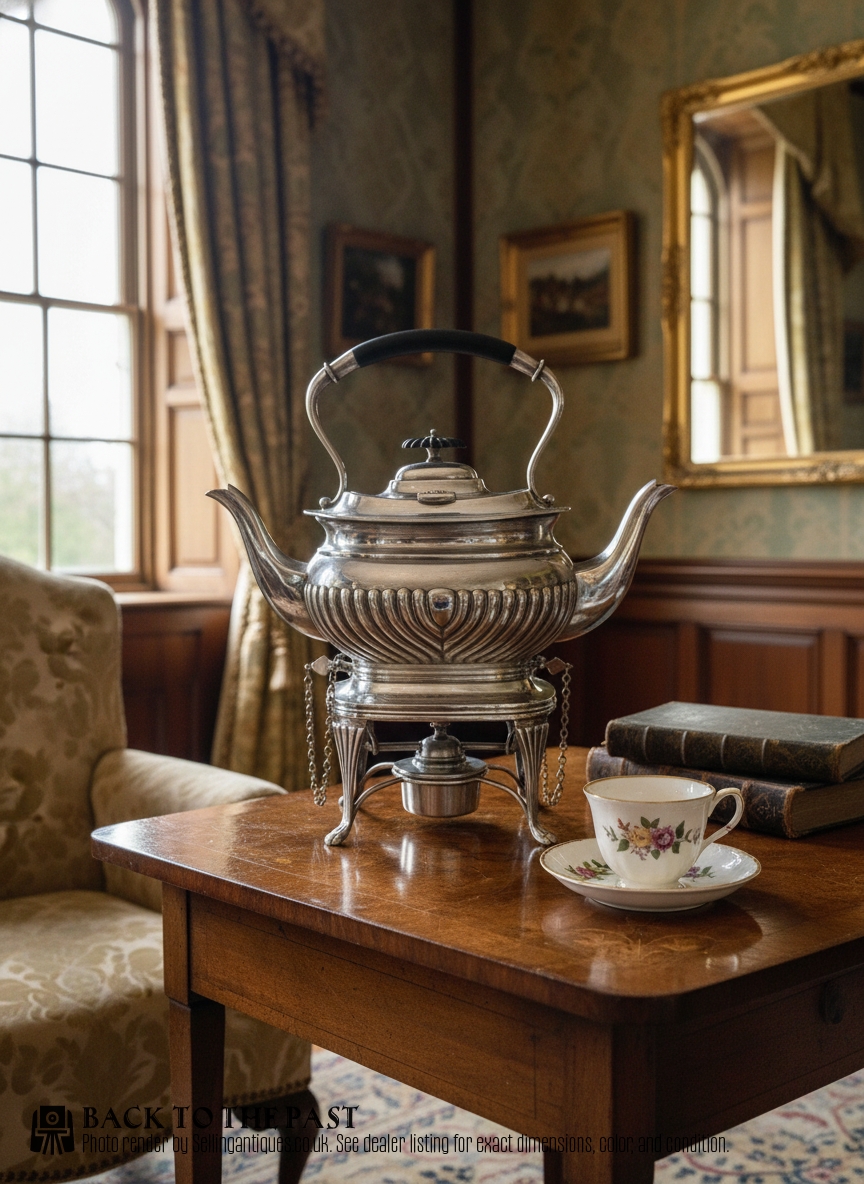
Silver Plated Spirit Kettle
A silver plated spirit kettle sits upon a dedicated metal stand housing a small burner underneath to keep water warm during tea service. Most examples encountered here hail from the Edwardian period and the late nineteenth century, though earlier Victorian iterations and Georgian-style revivals appear regularly.
The standard form comprises the kettle vessel itself, a matching stand with supporting legs, and a spirit burner designed for safe table use. Alongside traditional kettles, related tea urns and samovars share the same fundamental purpose and period aesthetics.
Makers often incorporated insulating materials on the handle to protect the hand from heat during pouring. These handle mounts utilise contrasting textures that define the visual character of each piece.
Materials and construction methods
The underlying body is typically formed from base metal before undergoing electroplating to achieve a bright silver finish. Surviving listings record this technique widely under designations such as silver plate and EPNS.
Handles and insulators frequently incorporate wood, ebonised wood, bone, or ebony. These natural materials provide thermal resistance while adding subtle contrast to the polished metal surface.
Some nineteenth-century models feature whimsical naturalistic twig handles that pretend to be branches while keeping your fingers safely away from the boiling water.
Distinguishing quality across examples
Superior pieces display crisp hand-engraved decoration, such as fern motifs or garland patterns, rather than plain unadorned surfaces. The weight of the metal and the rigidity of the supporting stand also indicate the tier of production.
Makers known for high-grade metalwork invest greater care in the articulation of hinges, burner fittings, and handle mounts. The presence of a recognised maker's mark often corresponds to a higher standard of overall execution.
Fenton Brothers·Frederik Ellis Tim & Co·Walker & Hall·Mappin & Webb·Elkington & Co·Deakin & Sons·WMF·Goodfellow & Son·Benetfink
The Silver Plated Spirit Kettle Glossary
- EPNS
- Electroplated Nickel Silver. This denotes a base metal alloy coated with a layer of pure silver through an electrolytic process.
- Spirit burner
- A small portable container holding liquid fuel and a wick. It slides into the centre of the stand beneath the kettle to maintain water temperature.
- Samovar
- A large heated metal container traditionally used to boil water. These tall urns operate on the same principle as spirit kettles.
- Aesthetic Movement
- A late nineteenth-century design style emphasising visual beauty over narrative content. Pieces from this movement often feature distinct decorative engraving.
- Stand
- The metal framework designed to elevate the kettle above the table surface and accommodate the burner. Stands vary from simple ring supports to elaborate naturalistic legs.
Silver Plated Spirit Kettle: Frequently Asked Questions
How do you use a spirit kettle?
The kettle is filled with hot water, placed upon its stand, and positioned on the tea table. The burner underneath is filled with spirit fuel and lit to maintain the water temperature throughout the gathering.
Once the water reaches the desired heat, the kettle tilts on its pivot or is lifted by the handle to pour into individual teapots or cups.
What is the difference between a kettle and a samovar?
A spirit kettle is a smaller vessel suspended on a pivoting stand above a separate burner, intended for table service. A samovar is generally a taller urn designed to hold a larger volume of water.
Both items utilise metal construction and silver plating, serving the same functional role in historic tea rituals.
How do I identify an Edwardian spirit kettle?
Edwardian examples often display refined Georgian revival influences alongside crisp machine rolling and careful hand finishing. The styling tends to favour balanced proportions and neat decorative engraving.
Maker marks and registration numbers stamped into the base frequently point towards production dates around the early twentieth century.
Why do some handles have black wood?
Handles are fitted with materials like ebony or ebonised wood to prevent heat transferring from the boiling water to the hand. These dark inserts provide a practical thermal break during service.
They also create a deliberate visual contrast against the bright silver plated surface of the kettle body.
Can I polish silver plated items safely?
Silver plate requires gentle cleaning with appropriate non-abrasive polishes to preserve the thin metal coating over the base alloy. Vigorous scrubbing can wear through the plating over time.
Storing the kettle in a dry environment helps prevent tarnishing and maintains the reflective finish of the metal.