




Antique Silver Kettle
An antique silver kettle brings the ritual of heated water and hospitality to the table, combining functional grace with period metalwork.
Understanding antique silver kettle pieces
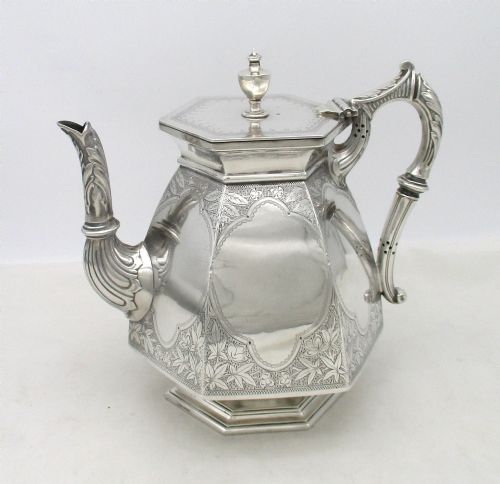
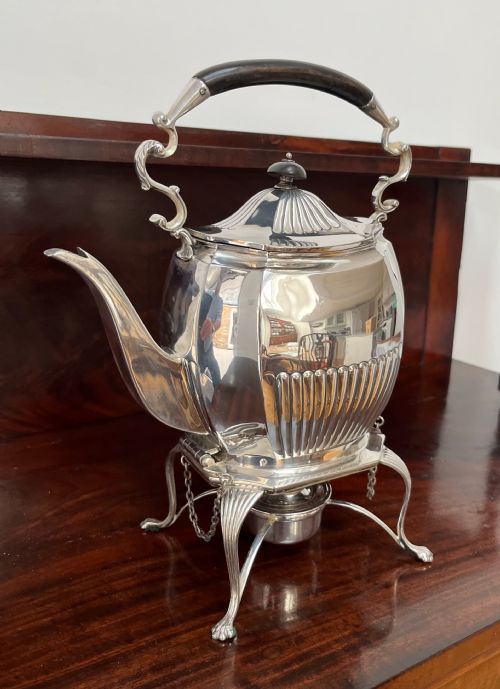
When you search for an antique silver kettle, you encounter forms ranging from simple freestanding teapots to elaborate spirit kettles mounted on dedicated metal stands. The pieces span Georgian, Victorian, Edwardian, and later twentieth-century periods, capturing shifting tastes in domestic silver and silver plate.
You are most likely to meet silver-plated examples complete with stands and spirit burners, often dating from the late nineteenth or early twentieth century. Solid sterling silver versions appear less frequently, representing higher status and greater intrinsic metal value from both English provincial workshops and London makers.
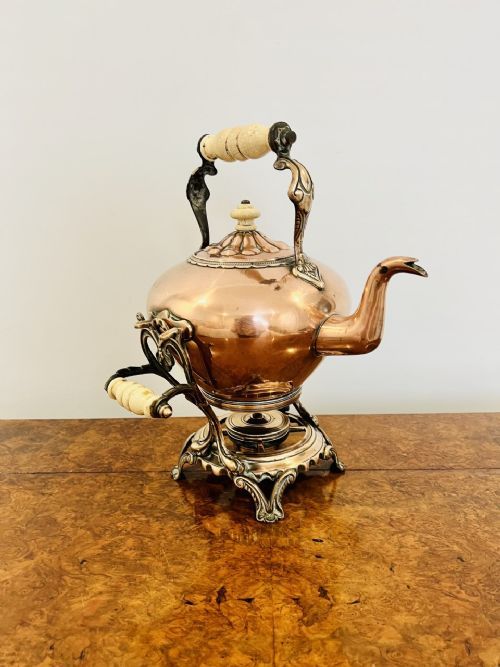
Forms vary from traditional oval shapes and octagonal designs to pieces featuring Chinoiserie Willow patterns, fern engravings, or Aesthetic Movement decoration. Handles frequently incorporate insulating materials such as wood, bone, or ebony to manage heat transference during use.
Materials and construction methods
Maker workshops employed solid sterling silver or applied silver plating over base metals like electroplated nickel silver, supported by techniques such as chased motifs and engraved decoration. Metal components combined with fitted elements in wood, bone, and ebony for handles and insulating spacers.
Stands and spirit burners utilised matching metal fabrication to secure the vessel safely above an adjustable flame, requiring precise engineering in the hinges, swing handles, and frame mounts.
Retail Price Guide 2026
Typical UK retail prices for silver kettle, calculated from the Sellingantiques database of over a million retail prices indexed since 2003. This retail price guide relies exclusively on Sellingantiques data; no external sources or auction records are used, so the figures do not describe the wider market.
Handle materials recorded across the archive include natural wood, bone, and ebony, chosen to protect hands from conducted heat.
Distinctions in craftsmanship and design
Quality rests on the weight of the metal, the crispness of chased or engraved detailing, and the structural integrity of the stand and burner assembly. Superior pieces maintain alignment in the swing handle and secure fits between the kettle body, lid, and supporting frame.
Maker attribution separates standard commercial production from prestigious workshops, with known makers delivering heavier gauge silver or thicker plating alongside refined surface ornamentation and harmonious proportions.
Elkington & Company·Martin Hall & Co·William Padley·Thomas Prime·Goodfellow & Son·Benetfink London
The Antique Silver Kettle Glossary
- Spirit kettle
- A water kettle mounted on a metal stand above a small spirit burner, designed to keep water hot at the tea table.
- Silver plate
- A thin layer of silver fused or electroplated onto a base metal core such as nickel silver or copper.
- Sterling silver
- An alloy consisting of ninety-two point five percent silver and seven point five percent other metals, typically copper.
- Chased motif
- Ornamentation hammered and punched into the metal surface from the exterior to create low-relief designs.
- Aesthetic Movement
- A late nineteenth-century style prioritising visual beauty over narrative content, often drawing inspiration from Japanese design.
Frequently Asked Questions
What is an antique spirit kettle?
An antique spirit kettle is a hot water vessel suspended on a metal stand above a small fuel burner. It allowed Victorians and Edwardians to replenish teapots without leaving the table.
The burner used methylated spirit to keep the water simmering throughout a long tea service. These kettles feature swing handles to allow safe tilting while seated in the stand.
How do I tell sterling silver from silver plate?
Sterling silver pieces carry official hallmarks indicating the metal standard, assay office, and date of manufacture. Silver plate items typically display maker marks that denote electroplating rather than solid precious metal.
Closer inspection under magnification can reveal where plating has worn thin over raised edges. Solid silver maintains a consistent metal composition throughout, even where minor surface wear occurs.
How were these kettles used historically?
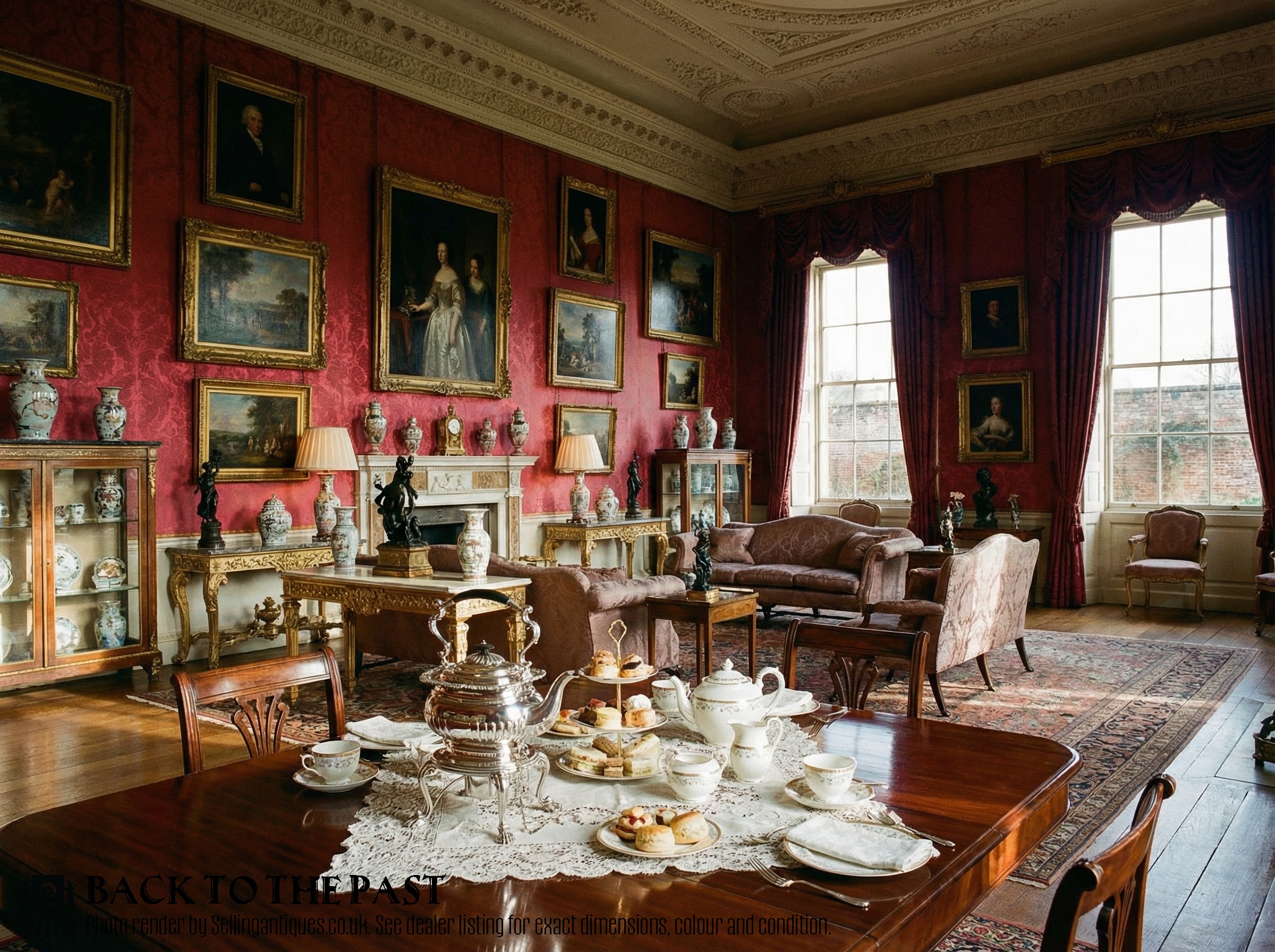
These kettles served as the centrepiece of formal tea hospitality in drawing rooms and dining rooms. Servants or hosts used them to heat water at the point of consumption rather than carrying heavy vessels from the kitchen.
The spirit burner beneath the kettle provided a controlled flame that kept the water hot during prolonged social gatherings.
What periods do these kettles come from?
The available pieces span from the Georgian era through the nineteenth century into the Edwardian period and nineteen-hundreds. Georgian examples often feature plain sterling silver construction, while Victorian and Edwardian pieces frequently showcase elaborate silver plating.
Stylistic shifts appear across these decades, moving from classical Georgian proportions to Aesthetic Movement ornamentation and Art Nouveau contours.