


Silver Plated Tea Pot
A silver plated tea pot brings the warmth of the table from past centuries into daily use.
Silver Plated Tea Pot
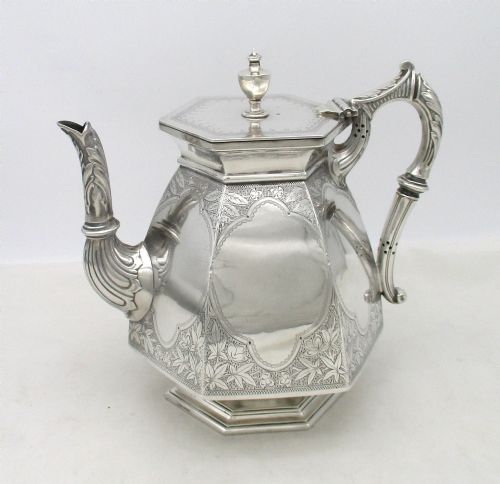
A silver plated tea pot sits at the centre of the table, designed for hospitality across the eighteenth, nineteenth, and twentieth centuries. The pieces on this page span Georgian, Victorian, and Edwardian eras, stretching from early Old Sheffield plate up to Art Deco designs.
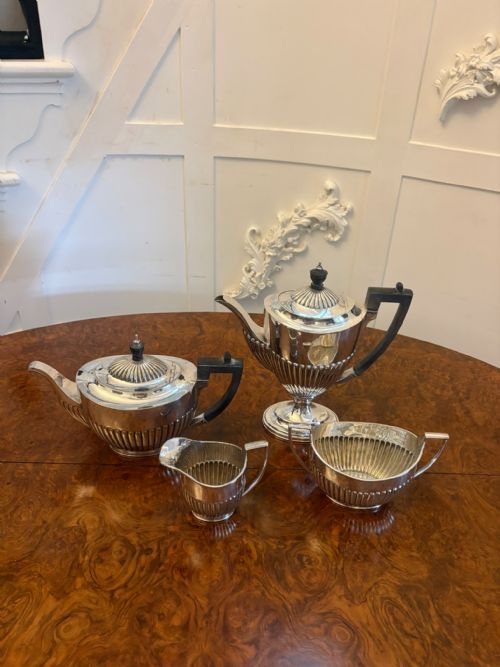
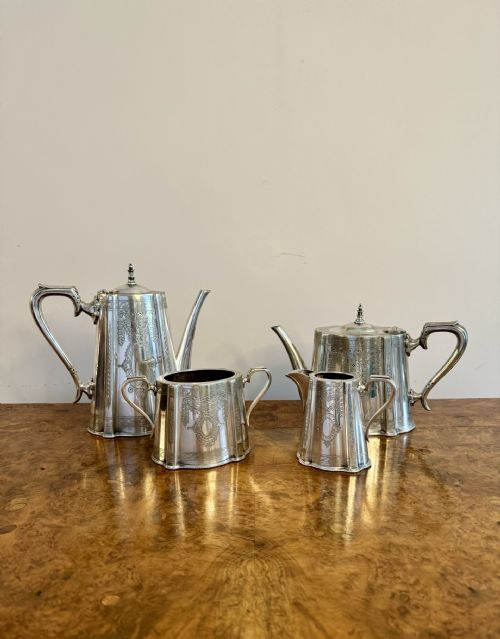
Most frequently, a buyer meets Victorian and Edwardian examples, often found either as standalone vessels or as part of larger tea and coffee sets. These range from simple, utilitarian forms to ornate, revivalist shapes featuring decorative handles and stands.
Materials and Construction
Makers utilised silver plate over copper, such as early Old Sheffield plate, alongside later electroplated nickel silver. These metal bases were shaped into pots, coffee services, and kettles, often paired with contrasting handles and insulators.
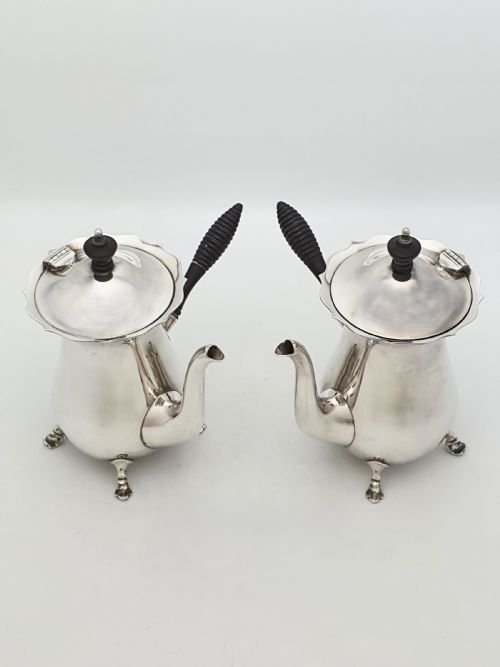
Handles and finials frequently incorporate wood, ebony, bone, or ebonised wood to protect hands from heat. Ceramic elements also appear alongside the metalwork in specific biscuit barrels and tea services.
One unusual tea pot takes the form of a mythical dragon, showing that Victorian makers occasionally indulged a taste for the whimsical.
Distinctions in Standard
The division between standard domestic ware and top-tier pieces lies in the crispness of the chasing, the weight of the metal, and the integrity of the plating. Heavier gauge metal and precise hand-applied ornament distinguish the better workshops.
Proportion and balance dictate the success of a design, whether in a plain Georgian pot or an elaborate Edwardian service. Maker attribution also plays a role, with firms known for superior execution commanding greater attention.
Walker and Hall·Martin Hall and Co·Elkington and Co·J B Chatterley and Sons Ltd·Thomas Bradbury·Philip Ashberry and Sons·Boardman Glossop and Co
The Silver Plated Tea Pot Glossary
- Old Sheffield Plate
- A method of fusing a thin sheet of silver to a thicker copper core before shaping. This technique creates a distinctive edge where the underlying copper shows through wear.
- Electroplated Nickel Silver
- A process introduced in the nineteenth century where a silver coating is applied to a nickel silver base using electricity. It replaced earlier fusion methods.
- Café Au Lait Pot
- A tall vessel designed specifically for serving coffee with milk. These often appear in matched pairs from the Edwardian period.
- Finial
- The decorative knob on top of a teapot lid. It allows safe lifting when the vessel is hot.
- Tea Service
- A matched group of vessels usually comprising a teapot, milk jug, and sugar bowl. Coffee pots and hot water kettles frequently join these sets.
Silver Plated Tea Pot: Frequently Asked Questions
How do I clean a silver plated tea pot?
Use a soft cloth and a gentle, non-abrasive silver polish formulated for plated items. Avoid harsh scrubbing that might wear through the thin silver layer to the base metal underneath.
Take care around handles made of wood, bone, or ebony, keeping moisture away from organic elements. Regular, gentle dusting keeps tarnish at bay without requiring heavy cleaning.
What is the difference between Old Sheffield plate and electroplate?
Old Sheffield plate involves fusing silver mechanically to a copper base by heat and pressure. This older method often reveals subtle hints of copper along high points and edges.
Electroplate relies on an electrical current to bond silver particles onto a nickel silver or white metal base. This later technique produced an even, uniform coat across more complex shapes.
How do I date a silver plated tea pot?
Examine the overall style, from Georgian simplicity through Victorian ornamentation to Art Deco geometry. Details like handle materials and decorative motifs often point to a specific decade.
Maker marks stamped onto the base provide another reliable indicator of age. Cross-referencing these marks with historical registry records narrows down the period of production.