




Silver Plated Tea Urn
These silver plated tea urn vessels deliver hot water in grand style, bringing substantial presence and historic utility to any table.
Silver Plated Tea Urn
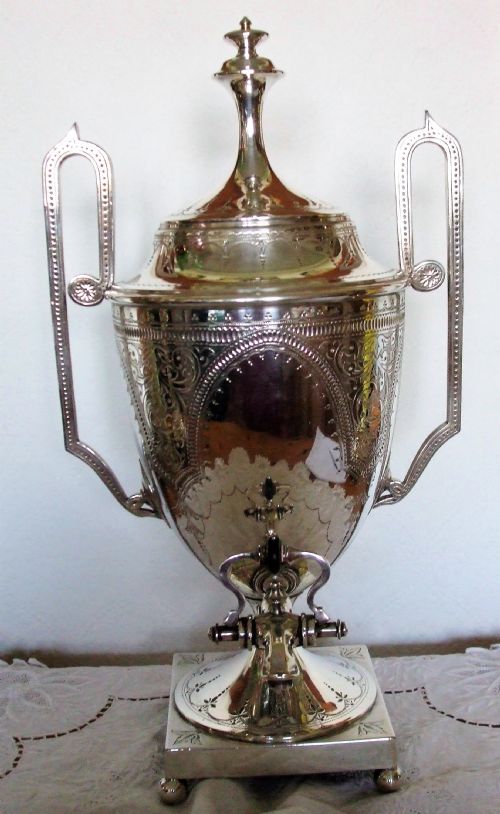
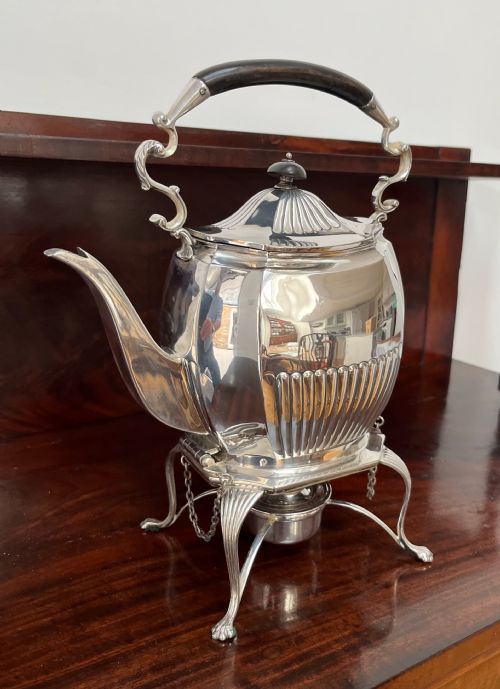
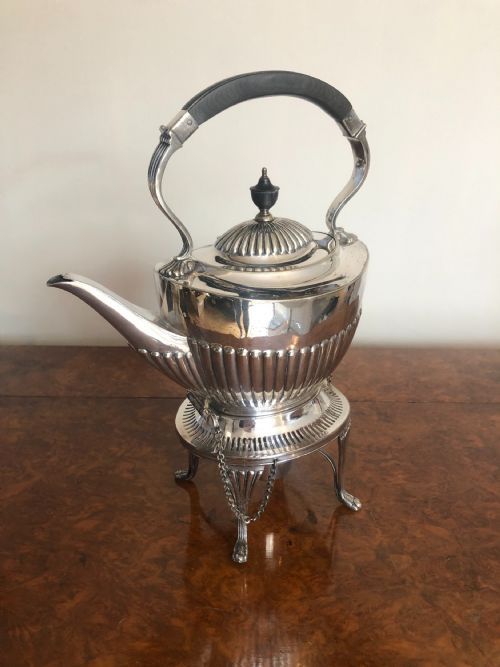
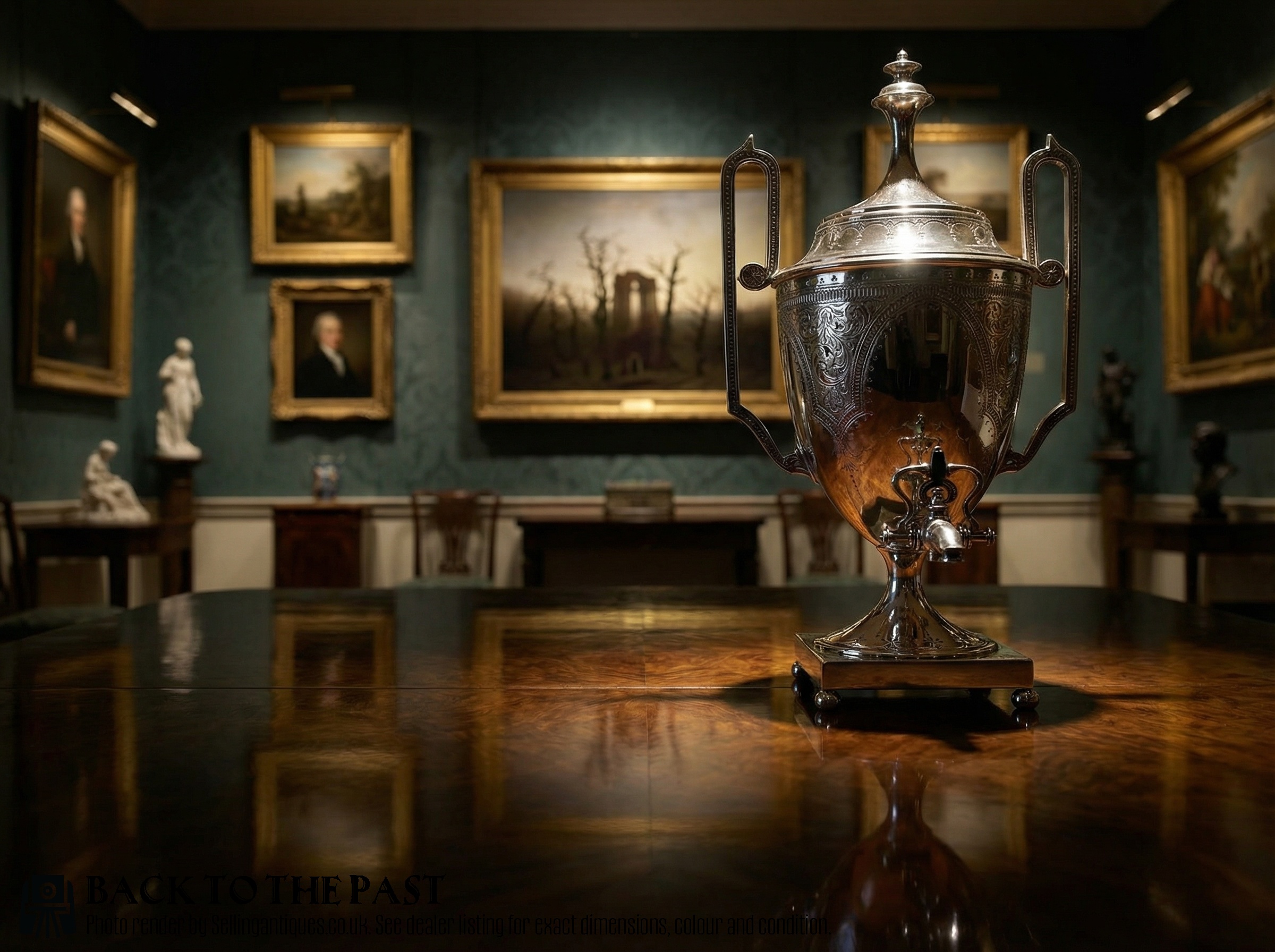
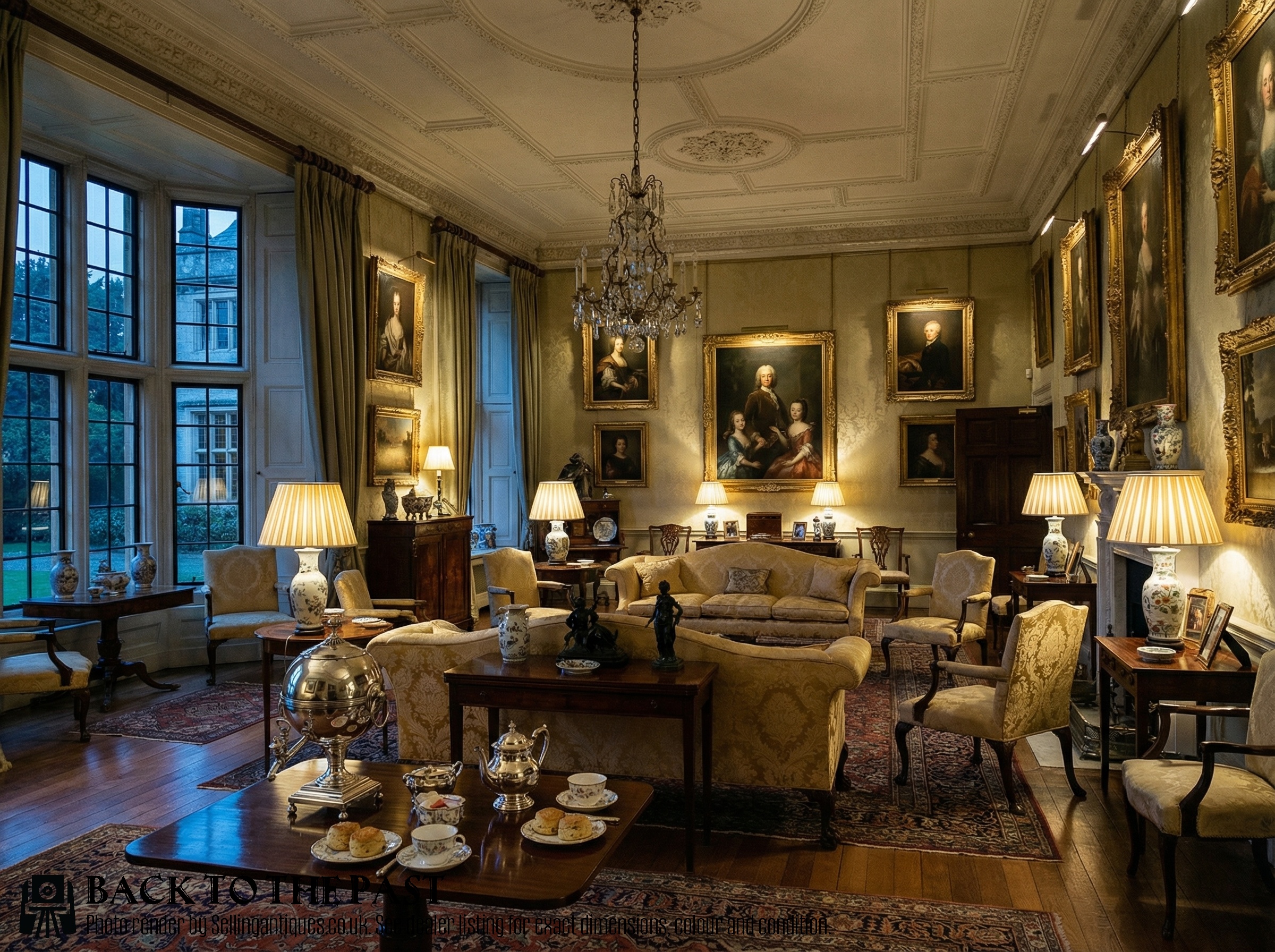
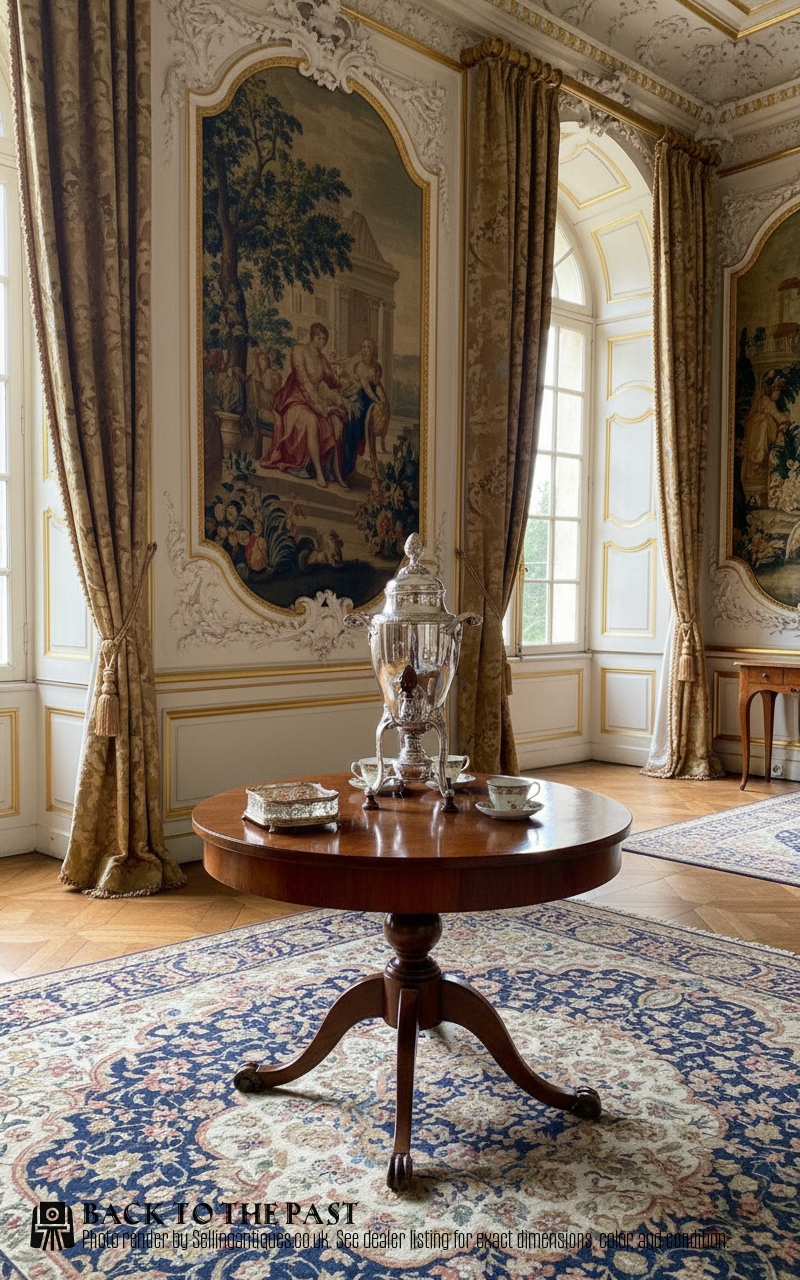
A silver plated tea urn provides a formal centrepiece for hospitality, designed to heat and dispense water for large gatherings. The selection ranges from substantial two-handled samovars with taps to spirit kettles mounted on dedicated stands with burners.
Edwardian and Victorian examples dominate the available pieces, often drawing on earlier Georgian or Regency forms like Neoclassical urns. Makers produced these items in various configurations, including standalone vessels and portable kettles equipped with spirit burners for continuous warmth.
Materials and construction methods
Silversmiths built these urns on a base metal foundation, utilising silver plate, nickel silver, and EPNS to achieve the lustre of solid silver at a different scale. Many pieces incorporate robust Sheffield plating techniques from the nineteenth and early twentieth centuries.
Handles, finials, and insulating spacers frequently integrate contrasting materials such as ebony, ebonised wood, bone, and plain wood to prevent heat transfer during service. Stands and burners often combine these elements with engineered metal frames to support the filled vessels securely.
Silver Plated Tea Urn Retail Price Guide 2026
Typical asking prices for silver plated tea urn among the pieces listed under this phrase on Sellingantiques today, from the lower quarter to the upper quarter. They describe what is for sale here now, not the wider market.
Several Victorian spirit kettles retain tiny, original wick caps attached by delicate micro-chains so nobody loses them in the tea leaves.
Assessing quality and craftsmanship
Quality rests upon the weight of the metal body, the crispness of applied neoclassical or period ornamentation, and the structural integrity of the tap and handles. Superior examples retain consistent silver plating over the base metal without thinning across high-wear areas.
The refinement of ancillary components, such as finely turned wooden handles, matching burners, and maker marks from established workshops, distinguishes standard production items from exceptional workshop output.
Walker & Hall·Risler and Carré Paris·Fenton Brothers·Frederik Ellis Tim & Co·Hutton & Sons·John Round & Sons·Willis & Sons·Henry Bourne
The Silver Plated Tea Urn Glossary
- Samovar
- A heated metal container traditionally used to boil and heat water in a domestic setting. These vessels often feature a central internal heating tube and a spigot near the base.
- Spirit Kettle
- A water kettle mounted on a metal stand above a small spirit burner. This setup maintains water temperature during tea service.
- EPNS
- Electroplated nickel silver, a common base material and plating process utilised extensively from the Victorian era onward. It provides a durable surface layer of silver over a hard white metal alloy.
- Old Sheffield Plate
- An early method of fusing a thin sheet of sterling silver to a thicker copper or base metal ingot before rolling. This technique creates a distinctive layered material found on earlier Georgian and Regency pieces.
- Neoclassical
- A decorative style inspired by classical antiquity, marked by urn shapes, symmetrical proportions, and restrained ornamentation. This aesthetic frequently appears on eighteenth and nineteenth century tea vessels.
Silver Plated Tea Urn: Frequently Asked Questions
How do I use a silver plated tea urn?
These vessels function primarily as decorative centrepieces or functional water dispensers when paired with a heat source. Fill the main chamber with hot water, or utilise the integrated spirit burner beneath a kettle to maintain the temperature during a gathering.
Exercise care with the internal surfaces and stopcock taps, ensuring everything remains clean and dry after use to preserve the silver plate and any internal fittings.
How do I clean a silver plated tea urn?
Clean the exterior surfaces gently using a non-abrasive silver cloth or specialist polish formulated for plated items. Avoid aggressive scrubbing that might wear through the silver layer down to the underlying metal.
Keep moisture away from wooden or bone insulators on handles and finials during cleaning. Wipe these components with a damp cloth instead of immersing them in water.
What is the difference between a tea urn and a spirit kettle?
A tea urn is typically a larger, stationary vessel featuring a fixed tap near the base for dispensing water directly into cups. They often take a classical urn or pedestal shape.
A spirit kettle is usually smaller and sits suspended in a portable stand above an adjustable spirit burner. This design allows the entire assembly to be moved or kept actively boiling at the table.
How do I date a silver plated tea urn?
Examine the overall style, decorative motifs, and manufacturing techniques to determine the period. Neoclassical urn shapes and Old Sheffield plating methods typically point toward the Georgian or Regency eras, while heavier electroplated finishes and specific maker marks indicate Victorian or Edwardian production.
Look for stamped maker marks, registry diamonds, or retailer stamps on the base or near the rim. These details often correlate directly with historical trade records and known active dates for firms like Walker & Hall or Fenton Brothers.