







Silver Tea Kettle Stand
A silver tea kettle stand brings together water, metal and flame to anchor a period tea service with theatrical grace.
Silver Tea Kettle Stand
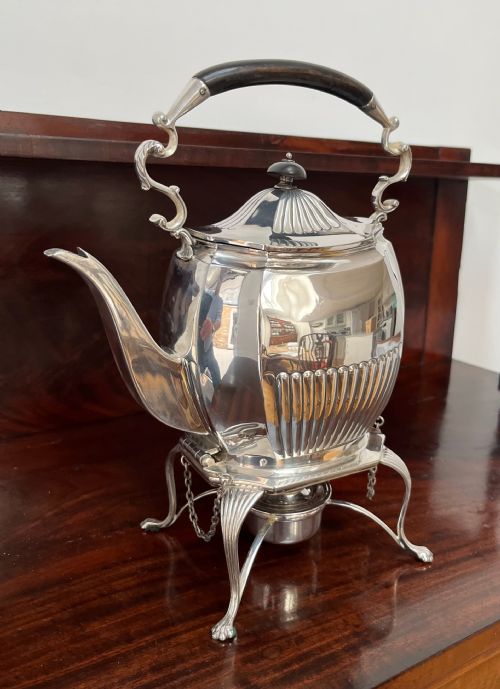
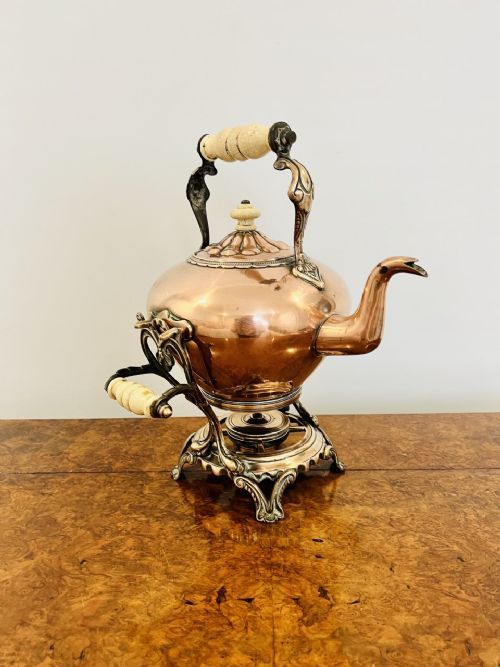
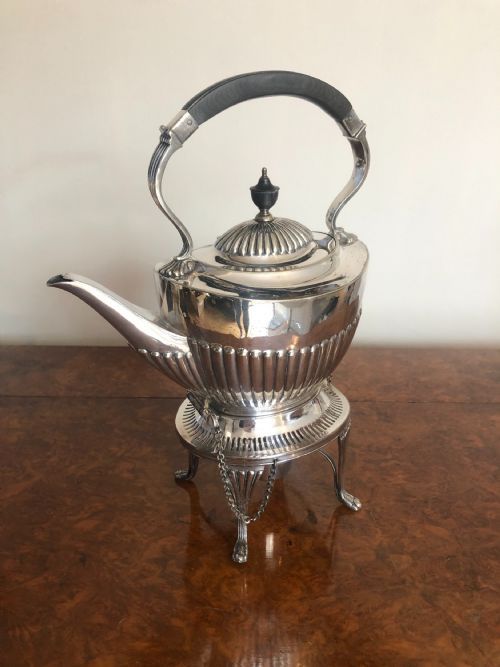
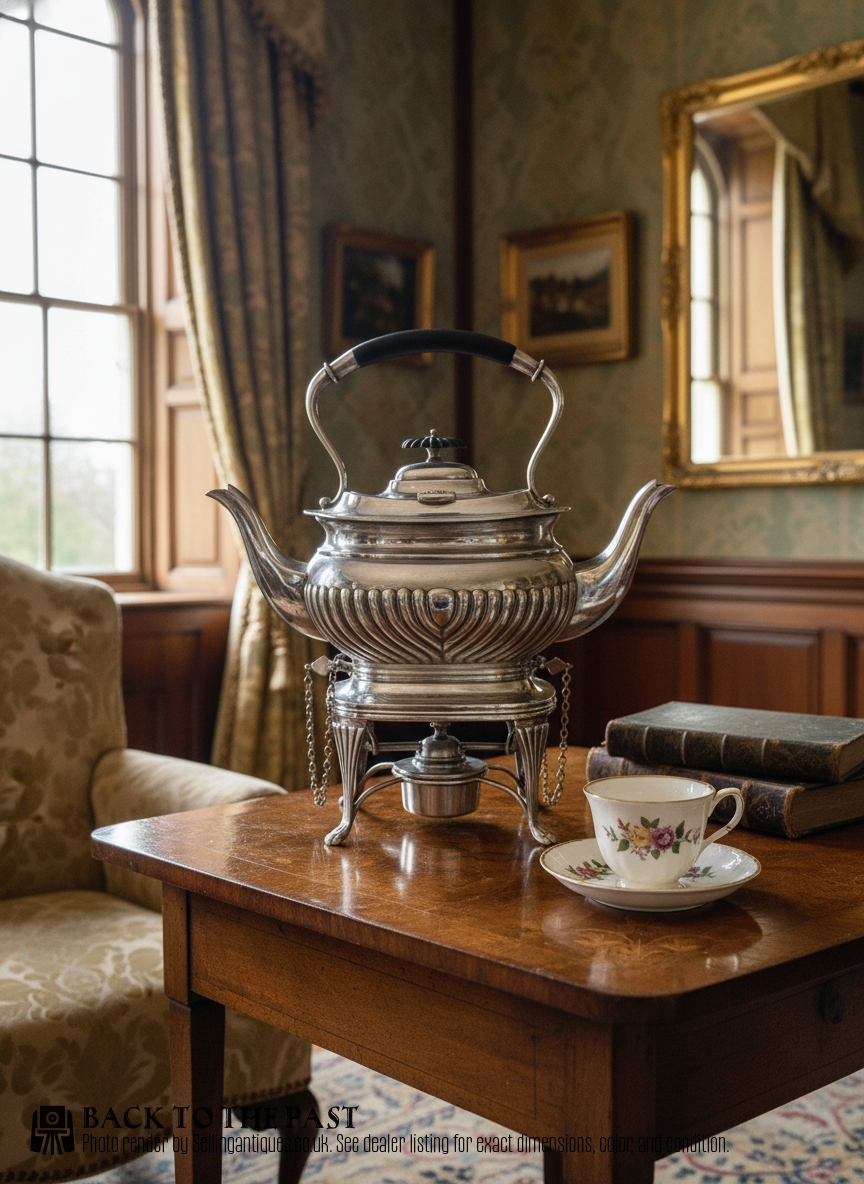
A silver tea kettle stand unites a vessel for heating water with a dedicated metal framework and an integrated spirit burner. These pieces combine utility with formal display, serving as the social centrepiece of historic tea service.
The versions most commonly met on this page date from the Edwardian era and the nineteenth century, executed in silver plate, Sheffield plate, or copper. Alongside complete spirit kettles on stands, the selection includes Georgian examples and expanded tea sets.
Makers such as Fenton Brothers and Frederik Ellis Tim and Company appear among the Edwardian and late nineteenth-century items. Styles span from strict Georgian forms and Regency lines to Victorian proportions and Edwardian revivalism.
How they were made
Construction relies heavily on silver plating over a base metal, alongside traditional Old Sheffield Plate techniques where a thin sheet of silver is fused to copper. These methods allowed workshops to achieve the visual weight of solid silver while managing material costs.
Handles and insulators often incorporate secondary materials like ebony, ebonised wood, bone, or plain wood to prevent heat transfer during use. Burners and stands utilise cast and spun brass or copper components alongside plated fittings.
Silver Tea Kettle Stand Retail Price Guide 2026
Typical asking prices for silver tea kettle stand among the pieces listed under this phrase on Sellingantiques today, from the lower quarter to the upper quarter. They describe what is for sale here now, not the wider market.
Every complete set comes with its own tiny metal hat to put the flame out.
What varies in quality
The distinction between standard production and top-tier output rests on the crispness of chased or engraved ornament and the structural integration of the stand. Superior pieces maintain balanced proportions between the kettle, the supporting frame, and the spirit burner.
The choice of handle materials and the survival of matching original burners indicate workshop ambition. Quality also shows in the weight of the metal and the longevity of the plating across both Edwardian revival and Victorian items.
Fenton Brothers·Frederik Ellis Tim and Company
The Silver Tea Kettle Stand Glossary
- Silver Plate
- A thin layer of silver bonded to a base metal such as copper or Britannia metal. This technique became widespread during the nineteenth century to produce affordable tableware.
- Sheffield Plate
- An early fusing method where silver is mechanically melted onto a copper ingot before being rolled into sheets. This process creates a distinctive cross-section where copper edges occasionally show through wear.
- Spirit Burner
- A small removable fuel container fitted underneath the kettle stand. It burns methylated spirit to keep the water hot at the table.
- Old Sheffield Plate
- An alternative descriptor for items produced via the fused silver and copper technique before electroplating superseded it. These pieces typically date to the Georgian and early nineteenth-century periods.
- Ebonised Wood
- Timber treated with a dark stain or finish to imitate ebony. It frequently appears on kettle handles and insulators for its heat-resistant properties.
Silver Tea Kettle Stand: Frequently Asked Questions
What is a silver tea kettle stand used for?
These assemblies held boiling water over a lit spirit burner during formal tea service. This allowed hosts to replenish teapots without leaving the room.
The setup served both a practical function and a decorative role as the centre of nineteenth-century hospitality.
How do I date a silver tea kettle stand?
Dating relies on stylistic cues, manufacturing marks, and the materials used in the frame and handle insulators. Edwardian pieces often display revival motifs, while nineteenth-century items favour heavier copper cores or Sheffield plate.
Comparing the form of the handle, the shape of the burner, and the base mountings against documented periods helps narrow the decade of manufacture.
Can I use the spirit burner today?
Many surviving burners retain their wick holders and caps, but modern safety checks are necessary before introducing fuel. Most collectors choose to display the burner dry as part of the complete object.
Using the kettle for heating water requires verifying that the interior plating remains intact and clean.
What is the difference between silver plate and Sheffield plate?
Sheffield plate involves a physical fusion of silver sheet and copper ingot rolled together under heat. This older Georgian technique differs from later nineteenth-century electroplating.
Electroplated items feature a uniform layer deposited via electrical current onto a base metal.