




Antique Tea Kettle Burner
These antique tea kettle burner setups bring the ritual of the Victorian and Edwardian tea table to life with glowing metals and flickering flames.
Antique Tea Kettle Burner
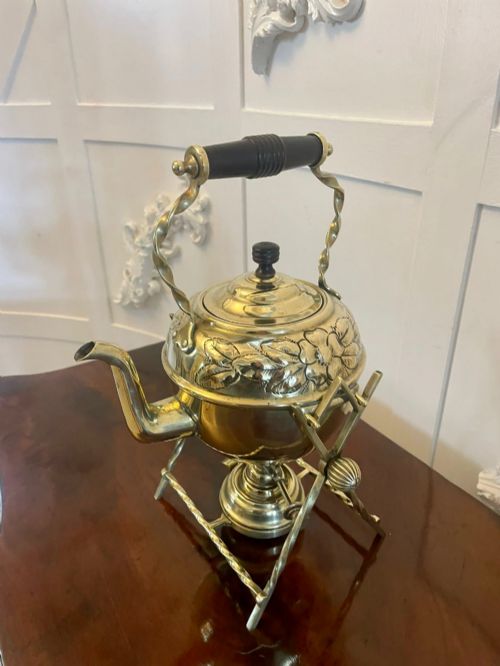
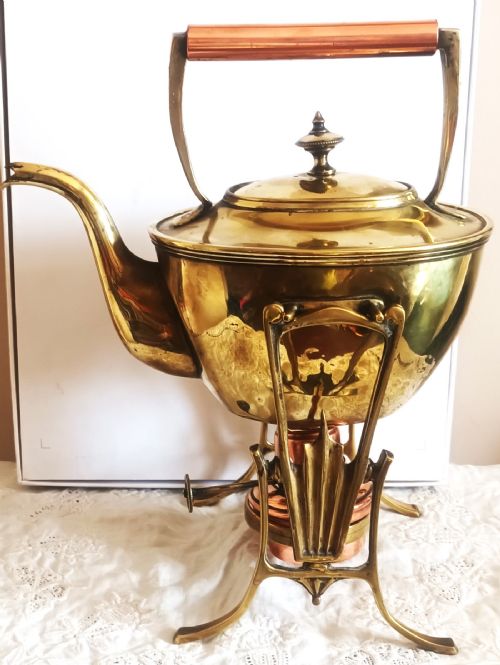
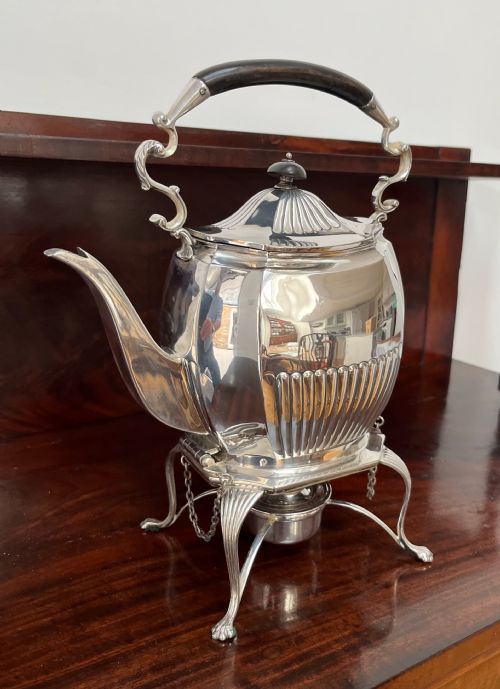
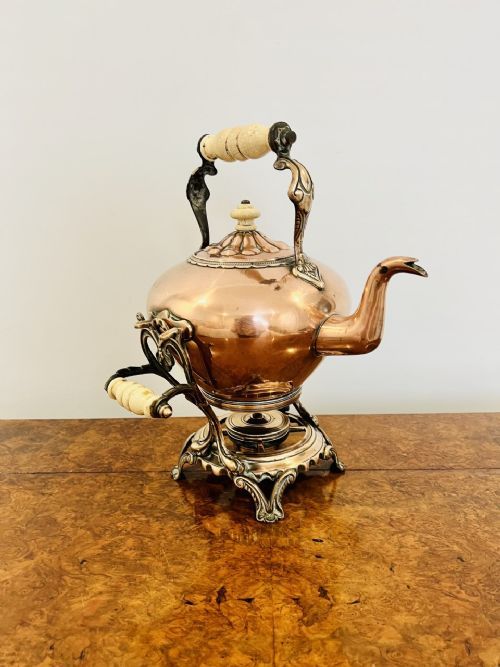
An antique tea kettle burner combines a vessel for boiling water with a dedicated stand and a small spirit lamp beneath to keep the brew hot throughout tea service. Most examples encountered here date from the Victorian and Edwardian eras, spanning the late nineteenth century into the early decades of the twentieth.
The forms range from traditional table-standing spirit kettles to hanging copper designs and Georgian Revival silver-plated models. Makers paired vessels with matching stands and burners to create complete sets for the formal parlour or drawing room.
How they were made
Metalworking techniques of the period utilised heavy gauges of copper, brass, and wrought iron, alongside silver plating over base metals. Artisans hammered, spun, and cast these materials to build rigid frames and sturdy water vessels capable of enduring regular heat.
Handles frequently incorporated insulating elements such as wood, ebony, or bone to protect the user's hand from hot metal. Burners featured small wick assemblies housed within the stand beneath the suspended kettle.
Materials span silver plate, brass, copper, wood, ebony, bone, and wrought iron across Victorian and Edwardian periods.
What varies in quality
The calibre of a piece rests upon the weight of the metal and the crispness of the decorative detailing on the stand and kettle body. Heavier gauges of copper and thick silver plate indicate a higher grade of production intended for daily use in prosperous households.
Design complexity also distinguishes standard factory output from pieces reflecting specific stylistic movements like Arts and Crafts or the Aesthetic Movement. Integrated components, complete burners, and refined handles elevate an individual kettle.
William Soutter And Sons·Fenton Brothers·Frederik Ellis Tim And Co
The Antique Tea Kettle Burner Glossary
- Spirit Kettle
- A water vessel mounted on a stand with an integrated burner fuelled by methylated spirits. These pieces kept water hot at the tea table.
- Silver Plate
- A thin layer of silver bonded to a base metal such as copper or brass. This technique offered the appearance of solid silver at a lower cost.
- Aesthetic Movement
- A late nineteenth-century design style emphasising visual beauty over narrative meaning. Objects from this period often display clean lines and Japanese-inspired motifs.
- Arts and Crafts
- A design movement valuing traditional craftsmanship and visible hand-working of materials. Copper and wrought iron pieces frequently show these handcrafted qualities.
- Dresser Style
- A form of metalware design associated with specific manufacturing aesthetics of the early twentieth century. These items often feature sturdy construction and functional simplicity.
Antique Tea Kettle Burner: Frequently Asked Questions
What is a spirit kettle?
A spirit kettle is a hot water urn suspended over a small burning lamp fueled by alcohol. It allowed hosts to maintain boiling water for tea without returning to the kitchen.
The setup includes the kettle, a metal stand, and the removable burner positioned directly beneath the vessel's base.
How do you use the burner?
The small container beneath the kettle is filled with methylated spirit and fitted with a wick. Lighting the wick provides a steady flame to keep the water hot during tea service.
Most burners include a snuffer cap to extinguish the flame safely when the tea is poured.
What metals were used?
Victorian and Edwardian makers commonly used brass, copper, and silver plate to construct these kettles and stands. Handles often incorporate wood, bone, or ebony for insulation.
Wrought iron and other base metals also appear in specific Arts and Crafts designs.
How do I date these kettles?
Dating relies on stylistic clues, manufacturing marks, and the distinct design movements associated with each piece. Victorian examples often feature heavy brass and copper, while Edwardian items frequently utilise silver plate.
Periods span from the mid-nineteenth century through the 1930s, encompassing Aesthetic and Arts and Crafts aesthetics.