




Vintage Silver Plate Urn
These vintage silver plate urn forms range from grand wine coolers and tea samovars to delicate spirit kettles, offering gleaming hospitality history for the table.
Vintage Silver Plate Urn
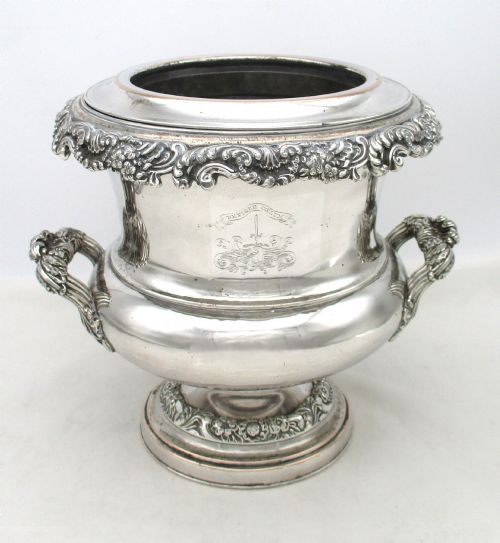
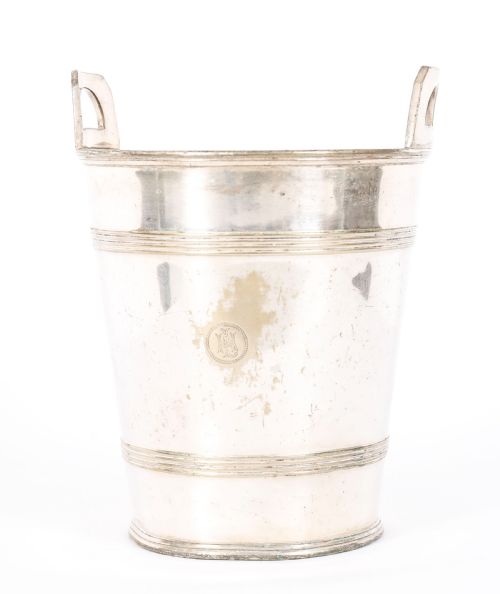
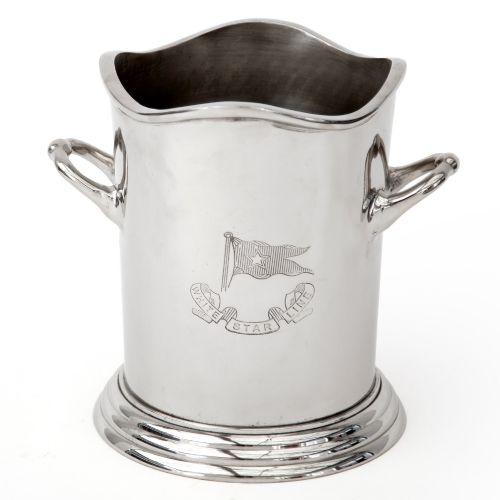
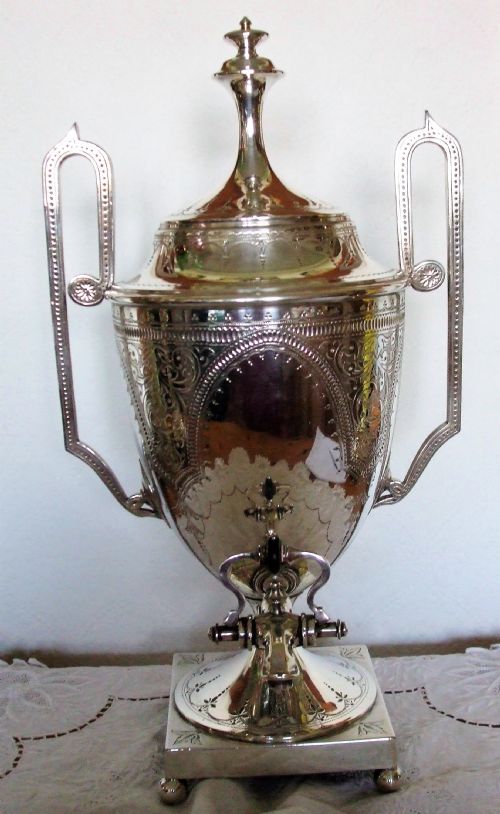
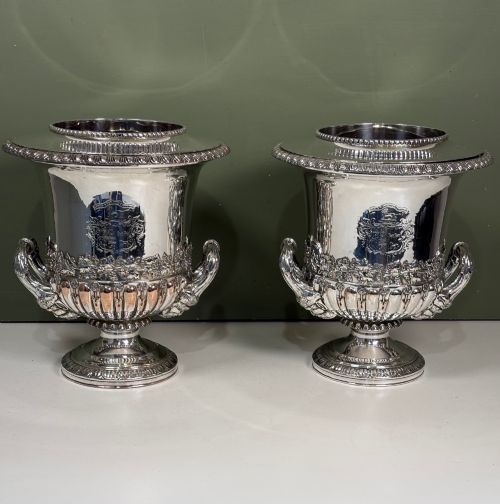
When you search for a vintage silver plate urn, you encounter vessels designed primarily for liquid service and cooling, spanning wine coolers, champagne buckets, tea urns, and spirit kettles on stands.
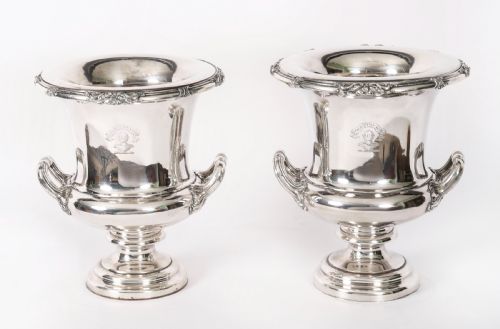
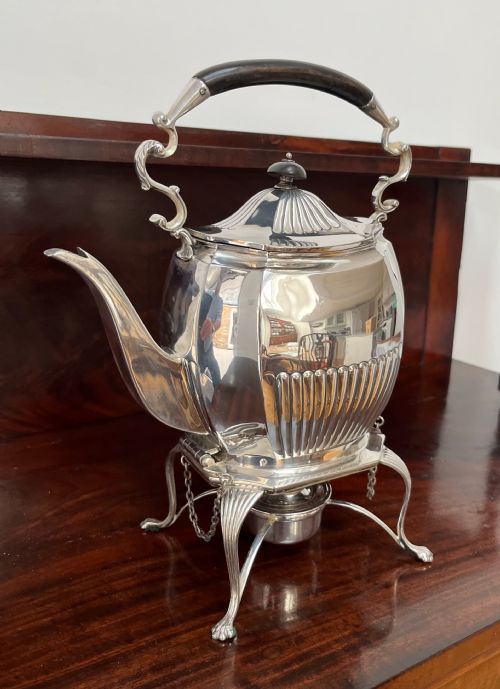
The pieces appearing here cross several centuries and styles, taking in Georgian and Regency campana wine coolers, Edwardian spirit kettles with burners, and Art Deco champagne coolers.
Forms also include samovars with taps and twin-handled ice buckets, reflecting the shifting social rituals of entertaining from the eighteenth century onward.
Materials and construction methods
Earlier examples rely on Old Sheffield Plate, a technique fusing a thin sheet of silver to a thicker copper base, often revealing subtle copper bleed along exposed edges.
Later pieces utilise standard silver plating techniques over base metals such as nickel silver and copper, sometimes incorporating ebony handles or brass burners for practical stability.
Object forms span wine coolers, champagne buckets, spirit kettles, tea urns, samovars, and cocktail shakers.
Distinguishing quality across the range
Quality rests on the crispness of cast handle mounts, applied crests, and classical embossing, where sharper botanical or heraldic detail separates standard production from superior workshops.
The preservation of the original silver layer over the base metal determines tactile depth, while weighted bases and fully functioning taps or burners indicate higher manufacturing ambition.
Hutton Sheffield·Walker & Hall·Harrison Brothers & Howson·Elkington·Matthew Boulton & Co·James Dixon & Sons
The Vintage Silver Plate Urn Glossary
- Old Sheffield Plate
- A composite material made by fusing silver to a copper core before rolling into sheets, common in Georgian and Regency items. It can develop a warm tone as the base metal shows through high points.
- Samovar
- A heated metal container traditionally used to boil and heat water for tea, typically fitted with a spigot and internal heating tube. Many English Victorian examples adapt this form into grand tea urns.
- Campana
- A bell-shaped vessel design inspired by classical antiquity, frequently utilised for wine coolers and ice pails. The flared rim and footed base provide balanced proportions.
- Spirit Kettle
- A small water kettle mounted on a metal stand above a small spirit burner, designed for table tea service. These pieces frequently date from the Edwardian period.
- Engine Turned
- A decorative mechanical engraving technique producing precise geometric patterns of fine lines. This method appears on cocktail shakers and related silver plate items.
Vintage Silver Plate Urn: Frequently Asked Questions
How do I care for old silver plate?
Clean these items gently using a non-abrasive silver cloth or specialised cream designed for plated surfaces, avoiding harsh dips that strip the remaining silver.
Store them in dry environments away from direct sunlight to maintain the finish without wearing down the underlying base metal.
How can I tell Old Sheffield Plate from later electroplate?
Old Sheffield Plate frequently exhibits faint yellowish copper lines where the silver layer has worn thin along high edges or seams.
Later electroplate maintains an even silver layer across the entire surface without the characteristic copper bleed seen on eighteenth and early nineteenth-century items.
Were spirit kettles used for daily tea?
Spirit kettles formed part of formal Edwardian and Victorian drawing-room hospitality, allowing hosts to keep water hot without returning to the kitchen.
They sat on dedicated metal stands above small burners fuelled by spirit, combining practical utility with elegant tableside display.