





Victorian Silver Tea Kettle
These victorian silver tea kettle pieces bring warmth and ritual to a room, offering silver plated and metal forms built for service.
Victorian Silver Tea Kettle
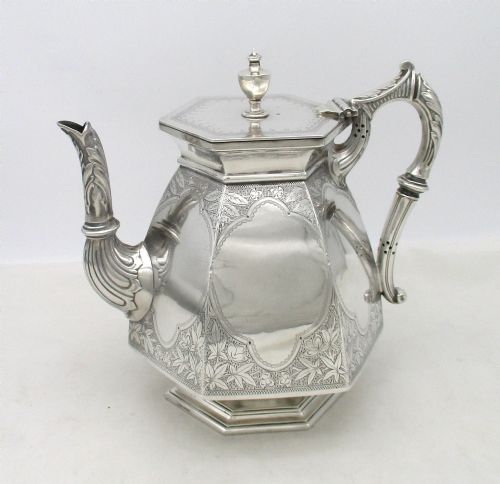
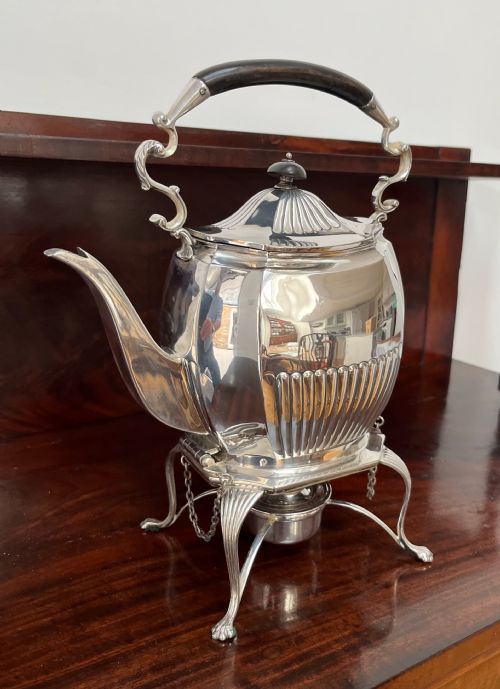
A victorian silver tea kettle brings together spirit kettles, tea urns, and samovars spanning the nineteenth and early twentieth centuries. The selection centres heavily on Edwardian and Victorian silver plated examples, often complete with original stands and spirit burners.
Forms range from tea pots and table kettles to large samovars with taps, capturing the formal tea service of earlier decades. Buyers encounter styles from the Aesthetic Movement alongside classic Victorian and Edwardian manufacturing.
How they were made
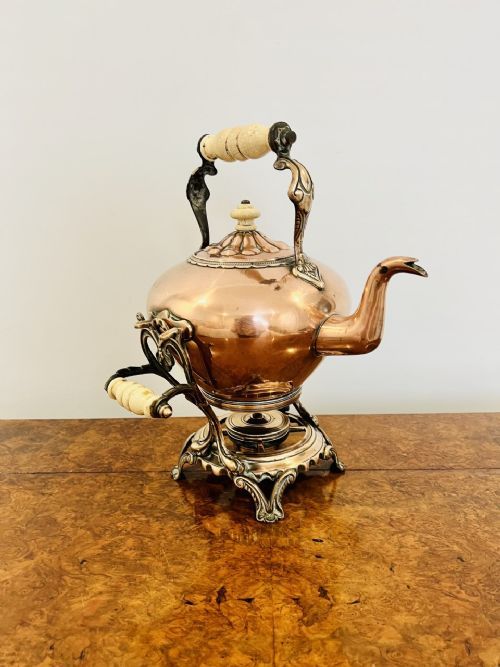
Maker workshops utilised silver plate, electroplated nickel silver, and standard metal bodies, often mounting vessels on dedicated metal stands. Handles frequently incorporate insulating materials such as bone, ebony, and wood to protect the hand from heat.
The construction combined heavy metal spinning or casting for the kettle body with delicate burner assemblies and articulated swing handles. Plating techniques of the period applied silver layers over base metals like nickel silver.
Periods represented span from the mid-nineteenth century through the Edwardian era and into the early twentieth century.
What varies in quality
Quality rests on the crispness of applied ornament and the structural integrity of the stand and burner mechanisms. Pieces bearing recognised maker marks generally demonstrate superior weight, balance, and finishing.
The preservation of the silver plating across prominent surfaces and handles dictates the standing of an individual kettle. Finer examples retain intact insulators of bone or ebony alongside fully operational taps and burners.
Walker & Hall·Fenton Brothers·Frederik Ellis Tim & Co
The Victorian Silver Tea Kettle Glossary
- Spirit kettle
- A portable water vessel mounted above a small spirit burner, designed to keep water hot at the tea table.
- Samovar
- A large heated urn traditionally used to boil water for tea, typically featuring a central internal heating tube or external burner and a small tap.
- Silver plate
- A thin layer of silver applied to a base metal such as nickel silver or copper, offering the appearance of solid silver.
- EPNS
- Electroplated nickel silver, a common base metal composition for nineteenth and twentieth century tableware beneath a silver coating.
- Aesthetic Movement
- A late nineteenth century design style emphasising visual and material beauty over narrative or moral themes.
Victorian Silver Tea Kettle: Frequently Asked Questions
How do I use a spirit kettle?
Fill the kettle with water and place it securely upon its metal stand above the filled burner. Light the spirit burner to maintain the water temperature during tea service.
Extinguish the flame using the provided cap once the gathering concludes and allow the metal to cool completely before handling or cleaning.
Why do some kettles have bone or ebony handles?
Bone, ebony, and wood serve as natural thermal insulators that prevent heat from travelling from the boiling water into the handle. This construction allows the user to lift and tilt the vessel safely without burning their hand.
These materials also provide a pleasing textural contrast against the bright silver plated metal of the body.
How do I date an Edwardian or Victorian kettle?
Dating relies on stylistic markers, historical periods, and any maker stamps or registry marks stamped into the metal base or rim. Aesthetic Movement pieces usually display stylised incised decoration characteristic of the late nineteenth century, while Edwardian examples often feature simpler neoclassical revival motifs.
Archival comparisons and known active dates for firms like Walker & Hall help narrow the production window further.