





Edwardian Silver Tea Kettle
An edwardian silver tea kettle is a heavy, elegant piece of metalwork designed to heat water at the table, offering a glimpse into formal dining rituals.
Edwardian Silver Tea Kettle
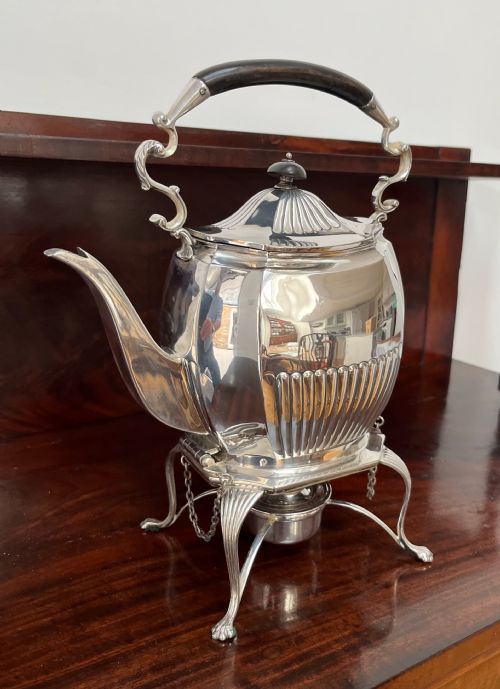
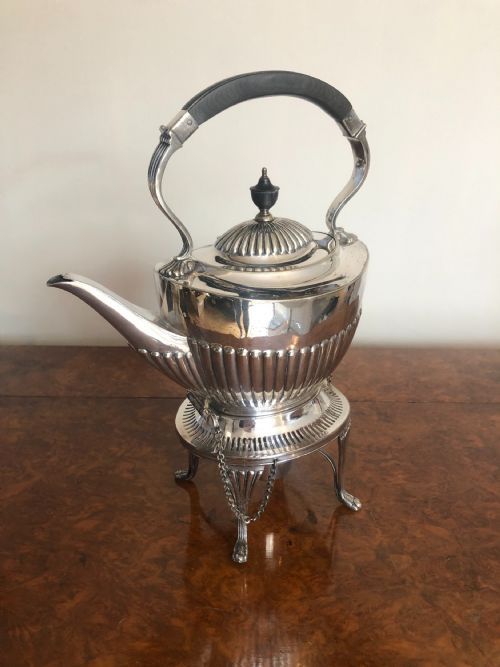
When you search for an edwardian silver tea kettle, you are looking at substantial vessels built to hold and heat water during afternoon tea. These pieces generally sit upon dedicated metal stands equipped with their own burners underneath.
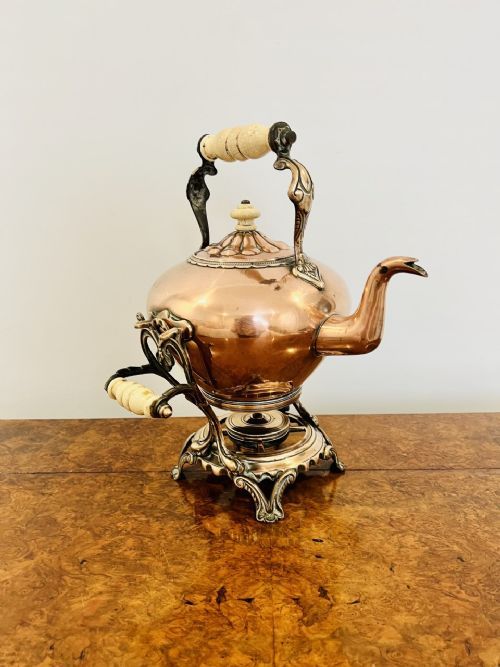
Most examples found on this page date from the Edwardian period, often taking the form of spirit kettles or broader tea services. You will also encounter related items such as copper kettles and samovars reflecting similar domestic habits.
Makers drew upon Georgian Revival and Victorian designs, producing ornate silhouettes that prioritised both utility and display. The presence of a burner underscores their original function for keeping water hot in the drawing room.
Materials and construction
Makers constructed these vessels primarily from silver plate and EPNS over a base metal, supplemented by sections of copper. Artisans incorporated insulating elements such as ebony, ebonised wood, bone and standard wood into handles to protect hands from heat.
Metalworking techniques focused on durable plating methods and sturdy stand assembly to support the weight of boiling water. Burners were integrated neatly into the framework beneath the main body of the kettle.
Listings span the Victorian and Edwardian eras, featuring silver plate, copper, ebony, and bone components.
Judging quality
Quality rests in the weight of the metal and the crispness of the decorative detailing upon the body and stand. Superior examples maintain intact plating and retain all original components, including the burner and stand.
The integration of materials like ebony or bone handles distinguishes finer workshop production from simpler utilitarian output. Balance and proportion in the stand further separate ordinary vessels from the best specimens.
Fenton Brothers·Walker & Hall
The Edwardian Silver Tea Kettle Glossary
- Spirit kettle
- A water vessel mounted on a stand with a small spirit burner beneath it. This setup allowed hosts to heat water directly at the tea table.
- Silver plate
- A layer of silver bonded to a base metal such as copper or nickel alloy. This technique offered the appearance of solid silver at a lower cost.
- EPNS
- Electroplated nickel silver, a common base material for plated wares. It provided a strong, durable foundation for the silver coating.
- Samovar
- A large heated urn used to boil water for tea. These pieces served a similar purpose to kettles but on a larger scale for bigger gatherings.
- Georgian Revival
- A design style that revived the aesthetics of the eighteenth century during later decades. Pieces in this style featured classic proportions and traditional ornamentation.
Edwardian Silver Tea Kettle: Frequently Asked Questions
What is a spirit kettle?
A spirit kettle is a tea vessel attached to a metal frame that holds a small fuel burner underneath.
This allowed the water to remain hot throughout a long afternoon tea service without returning to the kitchen.
How do I clean an edwardian silver tea kettle?
Cleaning requires a soft cloth and a silver polish formulated specifically for plated items to avoid wearing down the thin metal layer.
Harsh abrasives and chemical dips should be avoided, especially around wooden or bone handle insulators.
Are these kettles safe to use for boiling water?
Most of these pieces are intended primarily for display or collection rather than daily kitchen use.
If you plan to boil water in them, the interior plating and burner mechanisms must be professionally inspected for safety.
How can I tell an Edwardian kettle from a Victorian one?
Edwardian examples tend to lean towards lighter Georgian Revival aesthetics and simpler proportions compared to heavier Victorian designs.
However, stylistic overlap is common, and exact dating relies on hallmarks or maker documentation.