





Edwardian Spirit Kettle Burner
An edwardian spirit kettle burner brings the ritual of heated tea directly to the table, combining a vessel on a stand with its own flame.
Edwardian Spirit Kettle Burner
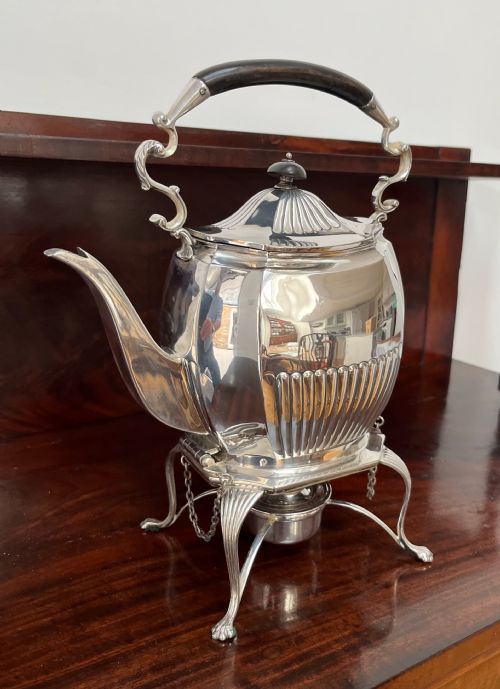
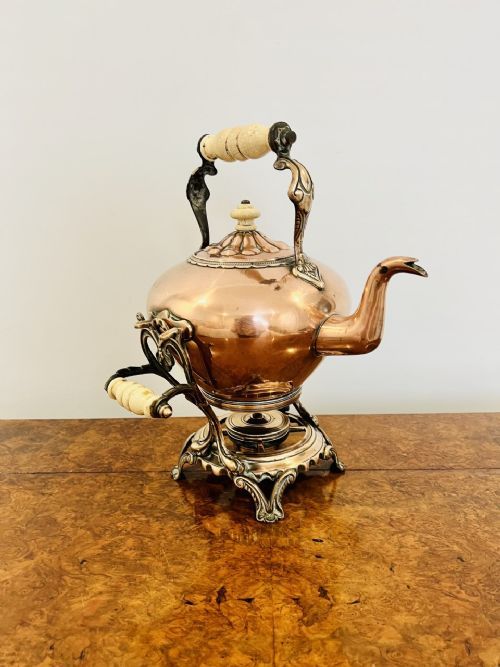
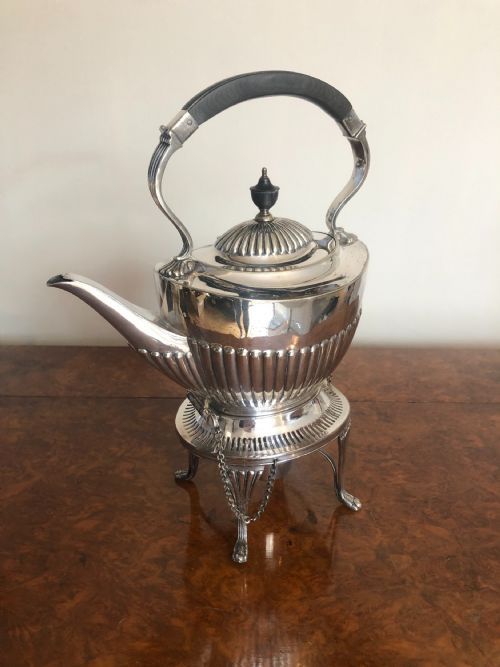
An edwardian spirit kettle burner comprises a kettle mounted upon a dedicated metal stand above a small fuel container designed to keep water hot during tea service. Most examples on this page date from the Edwardian period or sit close to it, taking the form of complete assemblies that unite the kettle, the supporting frame, and the burner itself.
The objects appear in several distinct material combinations and stylistic guises, ranging from polished silver plate to warmer tones of copper and brass. Alongside traditional Edwardian items, the selection includes Victorian pieces, Georgian Revival interpretations, and Arts and Crafts designs that emphasise hand-wrought character over factory standardisation.
Stand configurations vary from standard tripod frames to hanging arrangements and dresser-style setups intended for sideboard display. Each complete unit offers a self-contained method for boiling or maintaining the temperature of water without returning to the kitchen.
Materials and construction
Silver plate dominates the surface finish across the selection, providing a bright metallic sheen over a base metal, while copper and brass appear frequently in forms that highlight warmer, more tactile metallic hues. These metals are shaped through spinning, casting, or hammering depending on the stylistic requirements of the workshop.
Fittings and handles incorporate secondary materials such as ebony, ebonised wood, plain wood, and bone to provide insulation against the heat transferred from boiling water. Wrought iron also appears in structural elements like stands and hanging brackets, lending rigidity and weight to the overall assembly.
Listings span several decades around the turn of the twentieth century, uniting Edwardian, Victorian, and Arts and Crafts examples under the broader category of tea service equipment.
Markers of quality
Quality rests in the proportional harmony between the kettle and its supporting stand, as well as the substantive weight of the metals employed. A well-constructed piece maintains stability when the kettle is filled, with joints and mounts that fit securely without looseness.
The refinement of secondary materials like turned wooden insulators or carved bone spacers indicates the care taken during manufacture. Metalwork finish also dictates distinction, separating standard plated production from pieces featuring hand-hammered surfaces or crisply cast structural mounts.
Fenton Brothers
The Edwardian Spirit Kettle Burner Glossary
- Spirit kettle
- A tea kettle mounted on a stand above a small burner fueled by methylated spirit or alcohol. This setup kept water hot throughout a prolonged tea service.
- Silver plate
- A thin layer of silver fused or electroplated onto a base metal such as copper or brass. It offered the appearance of solid silver at a lower cost.
- Arts and Crafts
- A design movement valuing manual skill, visible construction methods, and simple forms over mass-produced ornamentation. It often utilised hammered copper and wrought iron.
- Georgian Revival
- A style looking back to eighteenth-century classical proportions and ornamentation. Pieces in this idiom adopt earlier decorative vocabulary while retaining Edwardian manufacturing techniques.
- Ebonised wood
- Timber treated with a dark stain or finish to imitate ebony. It was frequently used for kettle handles and insulators to resist heat transfer.
Edwardian Spirit Kettle Burner: Frequently Asked Questions
What is an edwardian spirit kettle burner used for?
These assemblies were designed to boil water or keep it heated at the tea table during formal gatherings. The integrated burner beneath the kettle allowed hosts to replenish teapots without leaving the room.
Today, they serve primarily as decorative objects for sideboards and dining rooms, reflecting historical domestic routines.
How do I distinguish Edwardian pieces from Victorian ones?
Edwardian examples often display lighter, more restrained ornamentation influenced by neoclassical revivals, whereas Victorian pieces frequently lean towards heavier, more robust forms and warmer copper tones. Examining the listed production dates helps clarify the stylistic shift.
Makers working around the turn of the century blended these design traits, making material choice and form key indicators of period.
Are these kettles safe to use for boiling water today?
While many units remain physically intact, silver-plated interiors and older solders may require professional assessment before food use. Most collectors treat them as decorative antiques rather than functional kitchen appliances.
The burners themselves use liquid fuel and demand careful handling if tested.
What materials are most common in these pieces?
Silver plate on base metals is the most frequent material combination on this page, followed closely by solid copper and brass. Wooden and bone insulators appear on the handles to prevent burning the hand during use.
Wrought iron and ebonised wood also contribute structural contrast in specific Arts and Crafts or Victorian designs.
Why do some stands feature hanging designs?
Hanging kettle stands utilise a pivoted frame that allows the vessel to tilt forward for pouring without lifting it entirely from the support. This mechanical arrangement reduces the risk of spills during tea service.
Such configurations are frequently encountered in Arts and Crafts copper pieces.