



Vintage Silver Kettle Stand
A vintage silver kettle stand brings together functional tea service and period metalwork, offering a stable base for heating water at the table.
Vintage Silver Kettle Stand
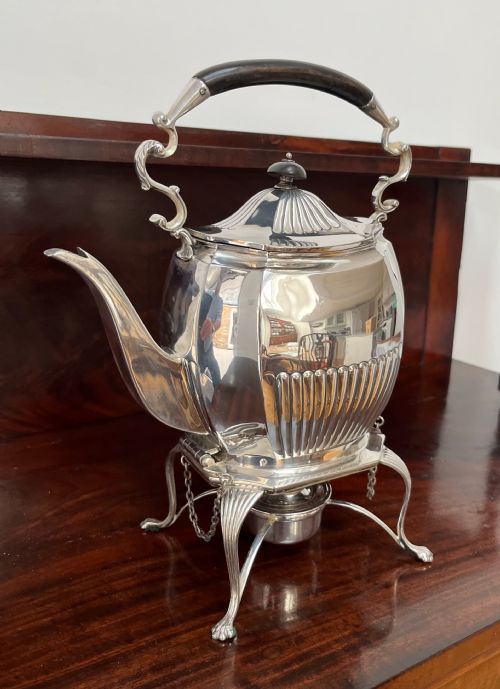
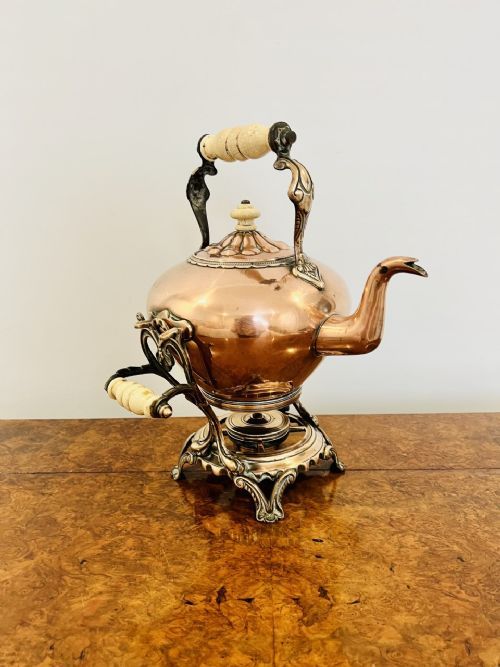
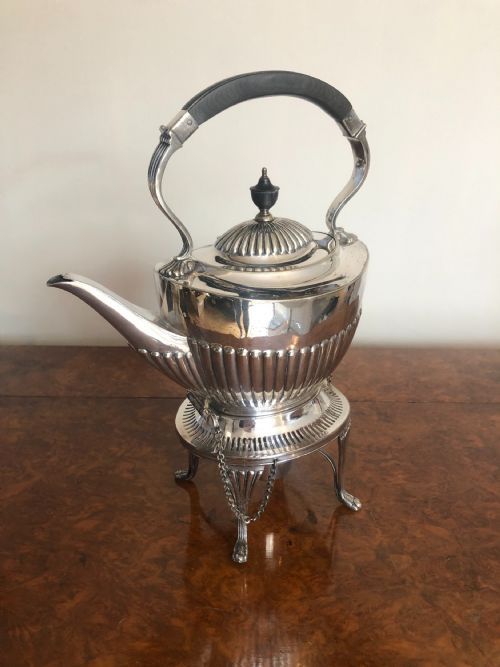
When you search for a vintage silver kettle stand, you encounter pieces designed to hold hot water vessels above a small heat source. These items combine a metal frame or stand with a matching kettle, often featuring a spirit burner beneath.
The selections here span the Victorian, Edwardian, and later periods, capturing designs from around eighteen-fifty through to nineteen-thirty. Most pieces on this page date from the Edwardian era and employ silver plate or EPNS over a metal base.
Forms include spirit kettles complete with stands, alongside broader tea services incorporating a kettle stand. Materials range from silver plate and copper to wooden accents in ebony and bone.
How they were made
Makers constructed these stands using silver plate, copper, and EPNS, often mounting them on sturdy frames of metal. Handles and insulating spacers frequently incorporate wood, ebonised wood, or bone to manage heat transfer during use.
Techniques combined traditional metalworking for the stands with specialised plating processes to achieve a uniform metallic finish. The associated kettles incorporate fitted burners and hinged lids assembled by hand from durable components.
Some burners still retain the tiny metal snuffer cap used to starve the tiny flame of oxygen when tea time ended.
What varies in quality
The distinction between standard and superior pieces rests on the crispness of the cast detailing in the stand and the integrity of the plating. Heavier gauge metals and refined Georgian revival styling elevate the physical presence of the object.
Attention to detail in auxiliary components, such as the construction of the burner mechanism and the selection of bone or ebonised wood insulators, marks out the superior examples from simpler mass-produced items.
The Vintage Silver Kettle Stand Glossary
- Silver Plate
- A thin layer of silver fused to a base metal such as copper or nickel brass. This method provided the appearance of solid silver at a lower production cost.
- Spirit Burner
- A small container holding methylated spirit or alcohol beneath the kettle. It was lit to keep the water warm at the table.
- EPNS
- Electroplated Nickel Silver. A common base metal composition used extensively for nineteenth and twentieth-century tableware before being coated in silver.
- Edwardian
- Pertaining to the reign of King Edward the Seventh from nineteen hundred to nineteen ten. Pieces from this period often display lighter, refined proportions compared to heavy Victorian designs.
- Georgian Revival
- A decorative style popular in the early twentieth century that harks back to eighteenth-century aesthetics. It is seen in the clean lines and classical ornamentation of certain stands.
Vintage Silver Kettle Stand: Frequently Asked Questions
What is a vintage silver kettle stand used for?
These stands were designed to hold a kettle securely above a burning spirit lamp during tea service. They allowed hosts to keep water hot at the table without returning to the kitchen.
Today, they serve primarily as decorative items of historical teaware, displayed on sideboards or dining tables.
How do I identify an Edwardian kettle stand?
Edwardian examples usually date from the first decade of the twentieth century and often feature silver plating over a base metal. They frequently incorporate stylistic elements influenced by earlier Georgian designs.
Look for hallmarks or manufacturer marks stamped on the base, alongside materials like ebonised wood or bone used on the handle insulators.
How do I clean a silver plated kettle stand?
Clean silver-plated surfaces gently using a specialised silver cloth or mild polish designed for plated items. Avoid abrasive materials that can wear through the thin silver layer to the base metal underneath.
For wooden or bone elements, wipe with a damp cloth and keep them dry to preserve the natural grain and prevent splitting.