





Vintage Spirit Kettle Burner
A vintage spirit kettle burner brings self-contained warmth to the tea table, combining period metalwork with a functional miniature stove.
Vintage Spirit Kettle Burner
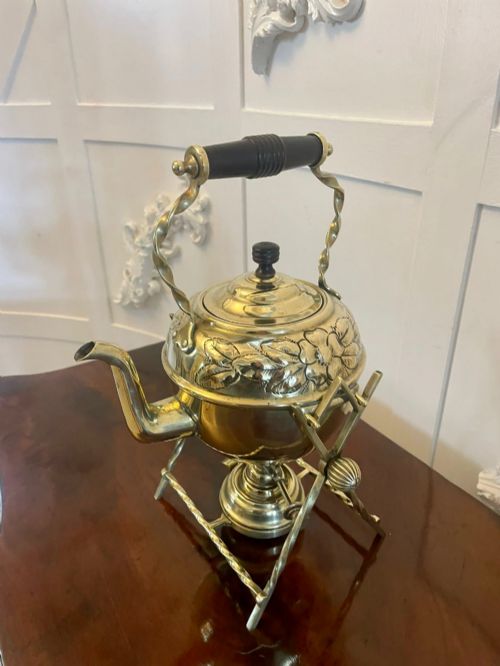
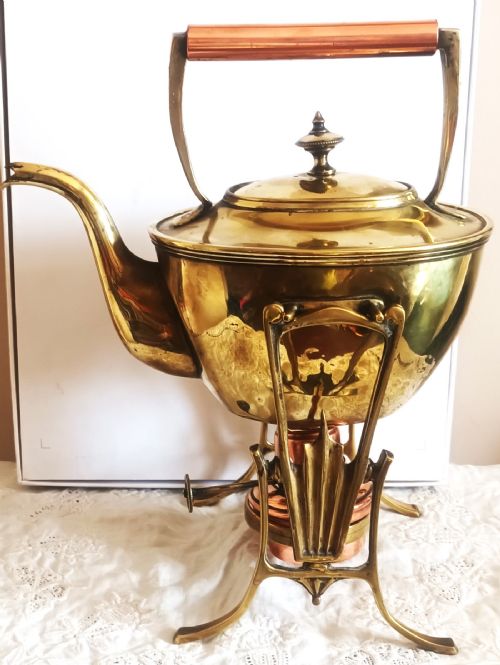
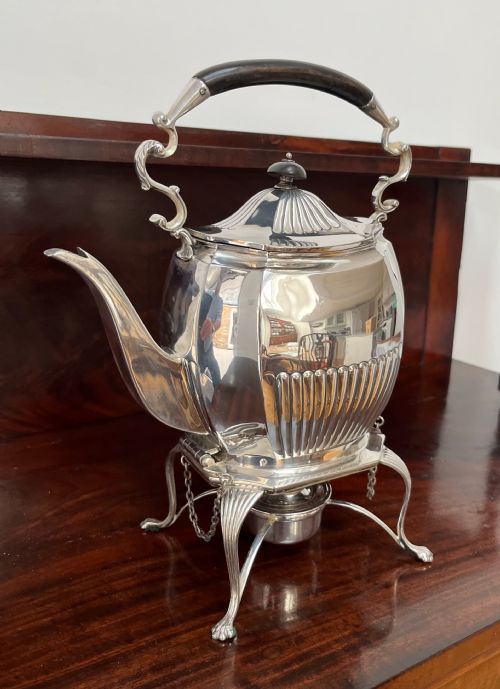
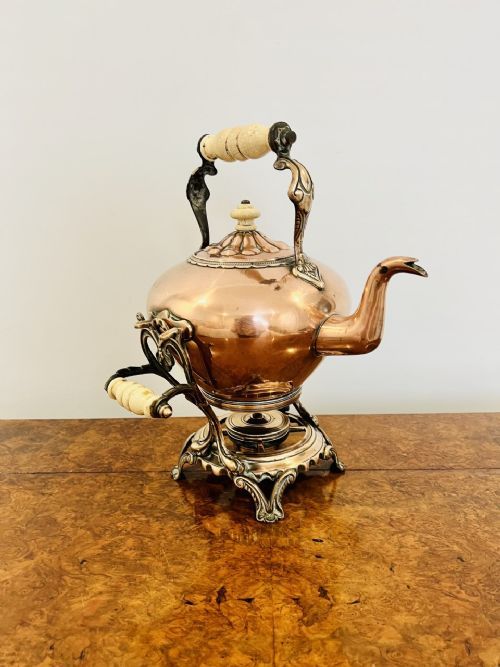
A vintage spirit kettle burner is a complete teaware assembly featuring a kettle suspended above a small flame-fueled heating lamp. These pieces span the nineteenth century through the early twentieth century, taking forms from standard table stands to hanging vessels.
Buyers frequently encounter Edwardian and Victorian examples on this page, most commonly fashioned from silver plate, brass, or copper. They typically rest upon dedicated metal stands complete with their original burners tucked underneath.
Materials and construction
Metal fabrication defines these pieces, utilising brass, copper, and silver plate shaped into vessels and stands. Many incorporate fitted wooden, ebony, or bone elements on the handles to insulate against heat.
The construction relies on sturdy metalwork designed to hold boiling water safely over an open flame. Stands often feature wrought iron or matching base metals to support the weight of the kettle securely.
Several kettles prefer hanging out entirely, swinging from dedicated copper frames instead of sitting on standard table stands.
Judging quality in metal teaware
Quality rests upon the heft of the metal and the integrity of the stand and burner assembly. Pieces bearing maker attributions or distinct stylistic movements such as Arts and Crafts demonstrate superior design thought.
The weight of the brass or copper and the completeness of the fitted components distinguish standard production items from finer workshop examples.
William Soutter And Sons
The Vintage Spirit Kettle Burner Glossary
- Spirit kettle
- A tea kettle mounted on a stand with an integrated fuel burner for heating water at the table. This setup kept tea hot during extended drawing room gatherings.
- Spirit burner
- The small removable lamp sitting beneath the kettle that burns liquid fuel. It typically includes a wick cap to extinguish the flame.
- Silver plate
- A base metal coated with a thin layer of silver to give the appearance of solid precious metal. This technique provided an accessible luxury for nineteenth-century households.
- Arts and Crafts
- A design movement prioritising visible craftsmanship and simple forms over ornate mass-produced decoration. Copper and brass pieces from this tradition show distinctive hand-finished surfaces.
Vintage Spirit Kettle Burner: Frequently Asked Questions
How do vintage spirit kettles work?
The kettle rests on a metal frame above a small reservoir filled with liquid fuel, usually methylated spirit. Lighting the wick heats the water directly at the tea table.
Most burners include an adjustable cap or snuffer to control the flame height and extinguish it safely once the water boils.
What periods do these kettles come from?
The pieces span the nineteenth and early twentieth centuries, encompassing Victorian, Edwardian, and Arts and Crafts eras. Production methods shifted from heavy hand-finished copper to plated wares.
Georgian Revival styles also appear, reflecting earlier eighteenth-century aesthetics executed in later manufacturing periods.
Are the burners usually complete with stands?
Many listings include both the kettle and the matching stand with its burner component. Complete sets preserve the intended mechanical relationship between the vessel and its heat source.
Some examples take unusual hanging forms rather than resting on conventional upright frames.
What metals were used for these teaware pieces?
Makers utilised silver plate, solid brass, and copper as the primary structural materials for the vessels and stands. Handles frequently incorporate insulating touches of ebony, bone, or wood.
Wrought iron occasionally appears in the support structures, particularly within Arts and Crafts designs.