




Tea Kettle on Stand
A tea kettle on stand brings the ritual of service to the table, uniting a vessel for hot water with its dedicated support.
Tea Kettle on Stand
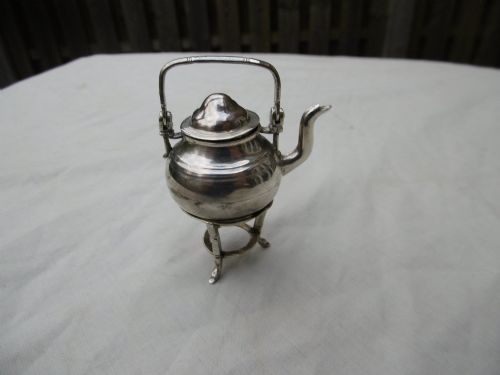
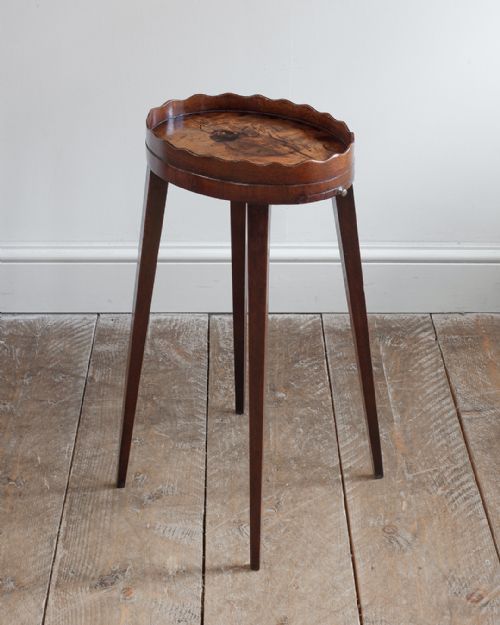
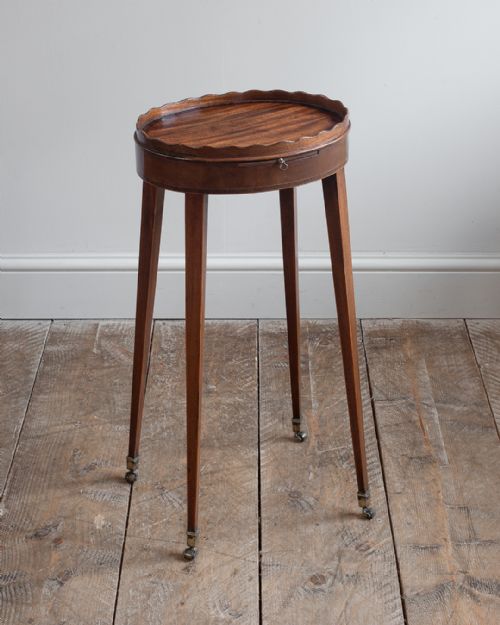
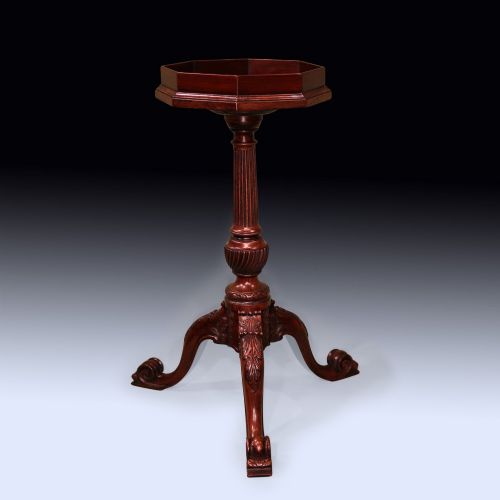
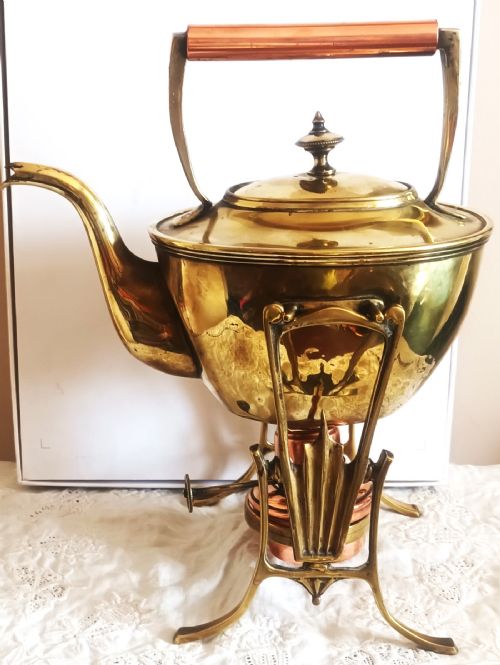
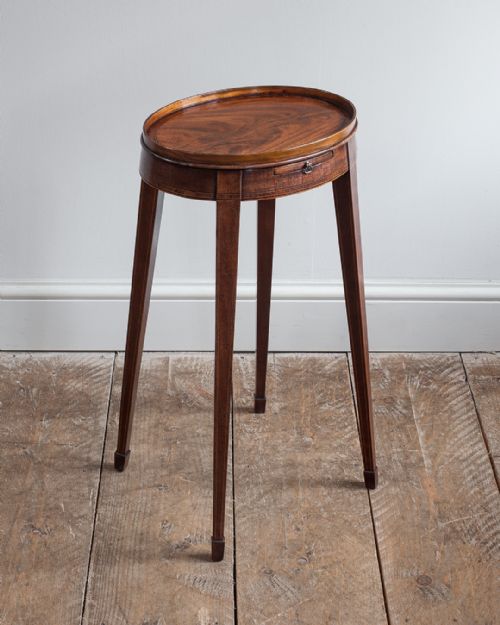
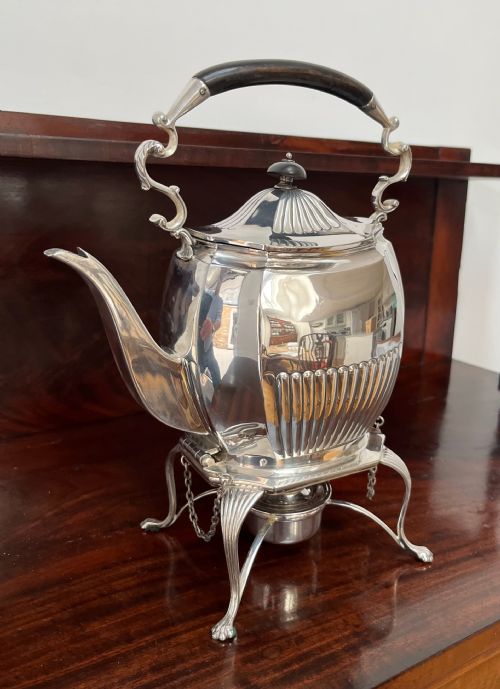
A tea kettle on stand combines a portable heating vessel with a secure frame, designed to keep water hot during extended service in the parlour or drawing room. These pieces separate into distinct types: timber stands built to hold delicate tea vessels, and metal spirit kettles equipped with integrated burners for heating water at the table.
The timber examples primarily originate in the eighteenth century, featuring compact mahogany or satinwood tables designed for urns or kettles. Metal spirit kettles emerge strongly in the Victorian and Edwardian periods, constructed in silver plate, brass, and copper with matching burners.
How They Were Made
Cabinetmakers constructed the wooden stands using dense timbers such as mahogany, satinwood, and yew, often incorporating carved details, tripod supports, and raised rims. Timber selection provided the stability required to support heavy water vessels safely.
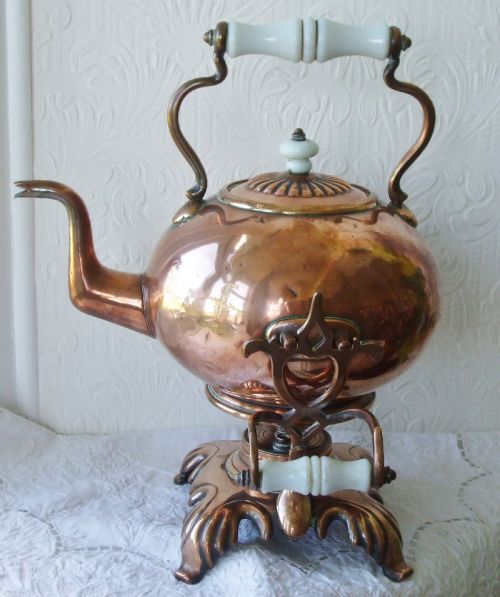
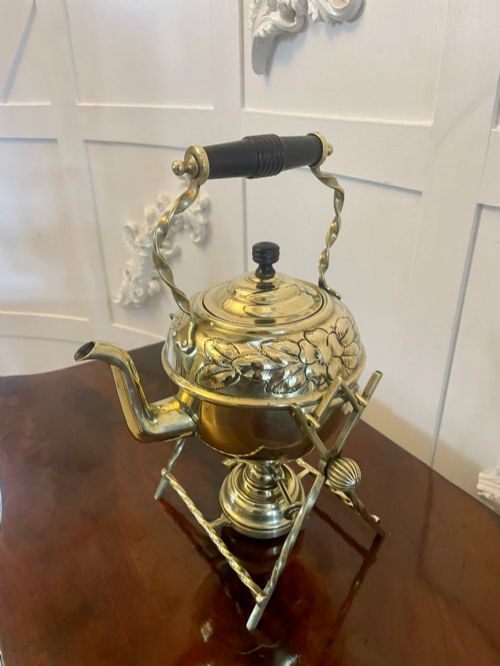
Metal versions relied on copper, brass, and silver plate, frequently paired with bone or ebony insulators on handles to prevent heat transfer. Burners were engineered to fit snugly within the metal frameworks beneath the kettle body.
Tea Kettle on Stand Retail Price Guide 2026
Typical asking prices for tea kettle on stand among the pieces listed under this phrase on Sellingantiques today, from the lower quarter to the upper quarter. They describe what is for sale here now, not the wider market.
Listings span from the 18th century through the Edwardian period, featuring timber occasional tables and metal spirit kettles in brass, copper, and silver plate.
What Varies in Quality
Construction fidelity separates standard production from superior examples, visible in the crispness of carved mahogany details on eighteenth-century frames and the robust soldering of metal mounts on spirit kettles. Original components, including matching burners and unblemished plating, define the integrity of later metal wares.
The selection of timber grain, such as figured mahogany or painted satinwood panels, dictates the visual distinction of wooden stands. Proportions and stability under weight remain key indicators of original maker intent.
William Soutter & Sons·Fenton Brothers·Frederik Ellis Tim & Co
The Tea Kettle on Stand Glossary
- Spirit Kettle
- A metal kettle fitted with a small fuel burner beneath the stand. This setup allowed water to remain heated directly at the tea table without returning to the kitchen.
- Kettle Stand
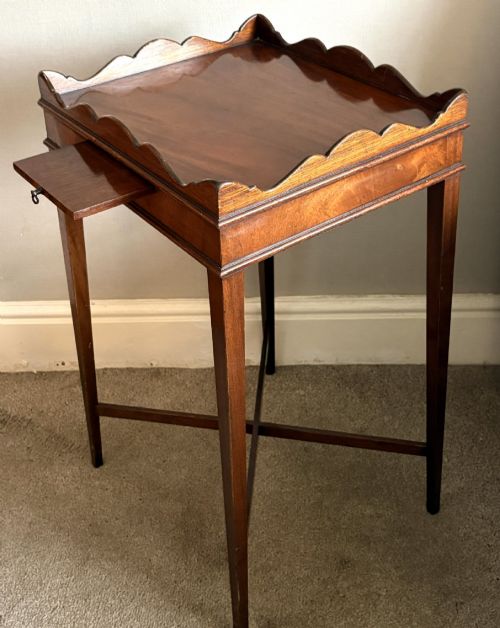
- A small occasional table designed specifically to hold a water vessel. These tables often feature raised oval, square, or octagonal tops to secure the base.
- Old Sheffield Plate
- A technique fusing a thin layer of silver to a thicker copper base. This method was widely used before electroplating became common.
- Urn Stand
- A compact wooden table built to elevate large vessels for service. They frequently appear in eighteenth-century mahogany designs with delicate pillar supports.
Tea Kettle on Stand: Frequently Asked Questions
How were tea kettles on stands used?
They were placed beside the tea table to maintain hot water throughout long social gatherings. The attached burner kept the contents at a simmer while hosts poured.
Servants prepared the water in the kitchen before transferring the filled kettle to its stand in the parlour for service.
What is the difference between wooden stands and metal kettles?
Wooden stands are small eighteenth-century tables designed to support independent ceramic or metal teaware. They emphasise cabinetmaking skills through carved mahogany or painted satinwood.
Metal spirit kettles are self-contained heating units made of copper, brass, or silver plate. They include their own stands and integral burners rather than relying on a separate table.
How do I date a brass spirit kettle?
Victorian examples from the late nineteenth century often feature heavy brass and copper construction with Aesthetic Movement or Arts and Crafts stylistic influences. Edwardian pieces from around 1900 frequently utilise silver plate and more standardised manufacturing.
Examine the construction methods of the handle mounts and burner fittings. Hand-finished joins point to earlier nineteenth-century production, while later Edwardian pieces show more uniform machine finishing.
Where should I place a kettle stand in a room?
These compact tables function well as occasional surfaces next to seating areas or in reception rooms. Their small footprint makes them suitable as lamp tables or display surfaces.
Keep wooden stands away from direct heat sources to protect the historic timber finishes. Metal spirit kettles display effectively on side tables or within traditional dining settings.