
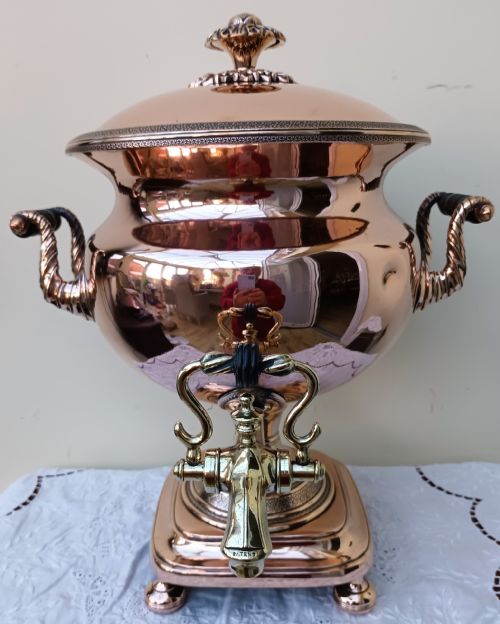
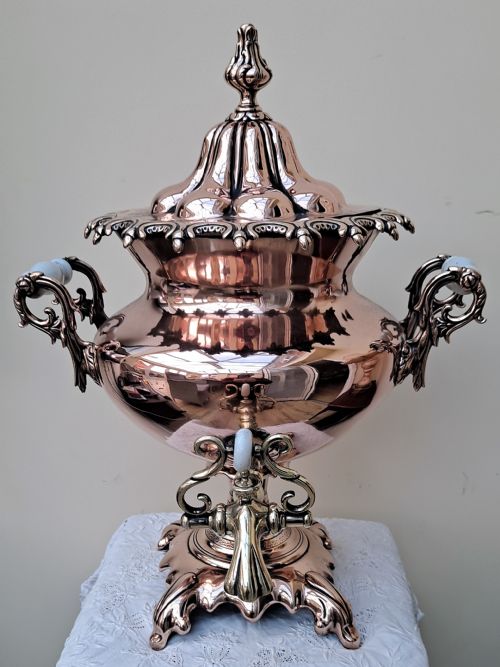
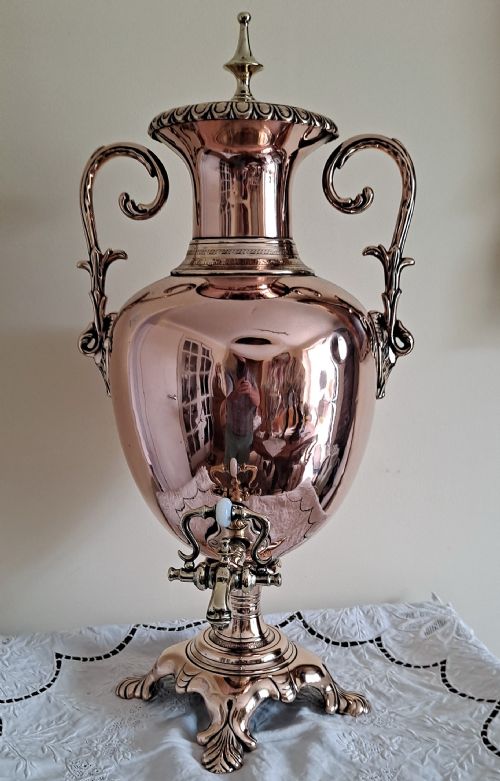


Polished Copper Samovar
A polished copper samovar brings warm metallic reflection and period proportion to a room, functioning as a substantial tea urn.
What They Are
When you search for a polished copper samovar, you encounter substantial tea urns originating from the Georgian and Victorian periods, with nineteenth century examples appearing most frequently on this page. These English pieces combine functional water heating vessels with decorative presence, often featuring both copper and brass components.
The forms range from classical Georgian tea urns to robust Victorian designs. Makers utilised bell metal and ebonised wood alongside copper, creating vessels intended for formal tea service.
How They Were Made
These urns are constructed primarily from sheet copper, shaped and joined to form the body of the vessel. Brass and bell metal provide contrasting detail for taps, handles, and mounts.
Makers incorporated materials such as bone and ebonised wood for insulation on handles and spigots. Original fittings remain integrated into the metalwork of the period pieces.
Listings span the nineteenth century, including specific dates such as eighteen sixty, alongside broader Georgian and Victorian period attributions.
What Varies in Quality
Quality rests upon the preservation of original fittings and the integrity of the metalwork. Pieces retaining their original brass taps, handles, and internal components stand apart from those with later replacements.
The combination of materials also dictates refinement, where secondary metals like bell metal and carefully turned ebonised wood elevate the construction beyond standard utilitarian items.
The Polished Copper Samovar Glossary
- Samovar
- A heated metal urn traditionally used to boil water for tea. These vessels feature a central internal tube or tap system.
- Bell Metal
- A hard alloy of copper and tin used historically for casting components that require resonance and strength. It frequently appears in taps and mounts on tea urns.
- Ebonised Wood
- Timber treated to resemble ebony, providing dark contrast for handles and knobs. This material offers both visual definition and thermal insulation.
- Tea Urn
- A large vessel designed for dispensing hot tea or water at gatherings. These objects form the broader category that includes samovars.
Frequently Asked Questions
What is a polished copper samovar?
A polished copper samovar is a traditional metal vessel used for heating and boiling water for tea. These pieces date from the Georgian and Victorian eras.
They combine practical function with decorative metalwork, often incorporating brass and bell metal elements.
How were samovars used?
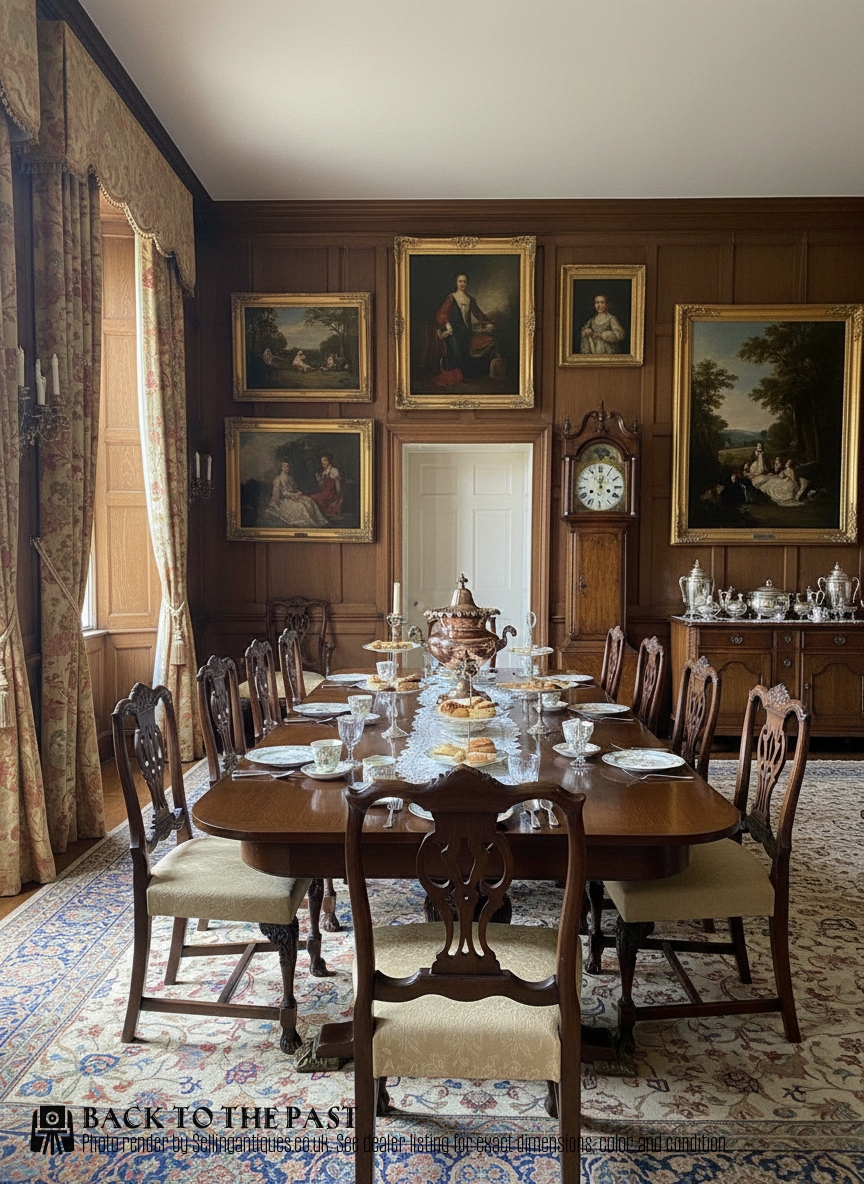
These vessels served to heat water and maintain its temperature for large gatherings and formal tea service. The integrated tap allowed easy dispensing.
They sat upon tables or sideboards as both serving implements and display pieces.
How do I date a copper samovar?
Dating relies on stylistic markers from the Georgian and Victorian periods. Form, construction techniques, and secondary materials indicate the era of manufacture.
Nineteenth-century examples show specific Victorian manufacturing traits distinct from earlier Georgian pieces.
Are original fittings important?
Original fittings such as brass taps, handles, and internal components contribute significantly to the authenticity of the piece. They reflect the period manufacturing standards.
Pieces retaining their complete original hardware demonstrate greater historical integrity.