


English Copper Tea Urn
An English copper tea urn brings heavy period metalwork to the table, offering practical warmth and stately domestic presence.
English Copper Tea Urn
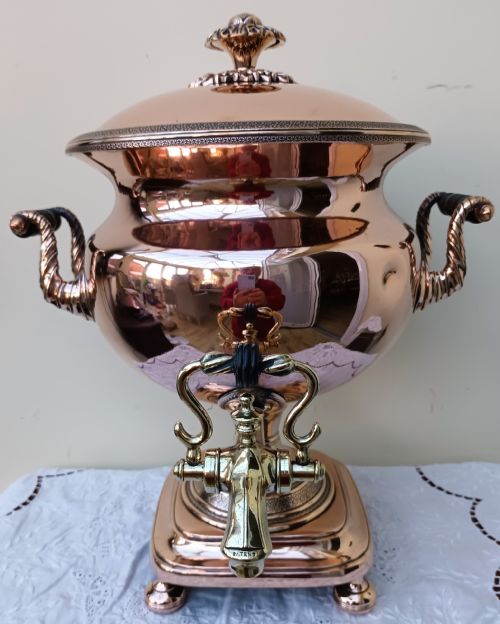
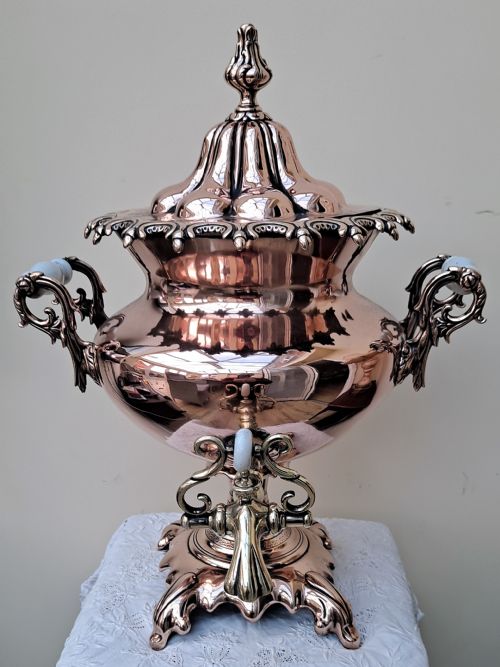
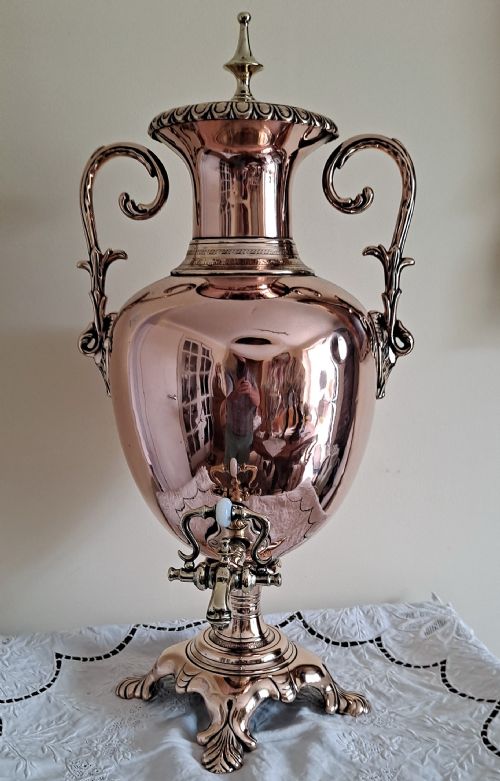
An English copper tea urn serves as a commanding vessel for hot water, appearing primarily in Georgian, Regency, and Victorian formats. These pieces often adopt the designation of samovars or spirit kettles, incorporating specialised forms for beverage preparation.
The selections on this page draw from nineteenth-century production alongside Georgian and Regency periods. Most examples take the shape of tea urns and samovars, occasionally accompanied by related kettles and spirit apparatus.
Materials and construction
Makers construct these pieces predominantly in copper, frequently combining it with contrasting brass components, bell metal, and ceramic elements. Additional material details include ebonised wood and bone fitted to handles and spigots.
The fabrication relies on traditional metalworking techniques suited to hollowware, resulting in durable vessels with original fittings. Artisans shape the sheet metal and cast accompanying mounts to withstand daily heating requirements.
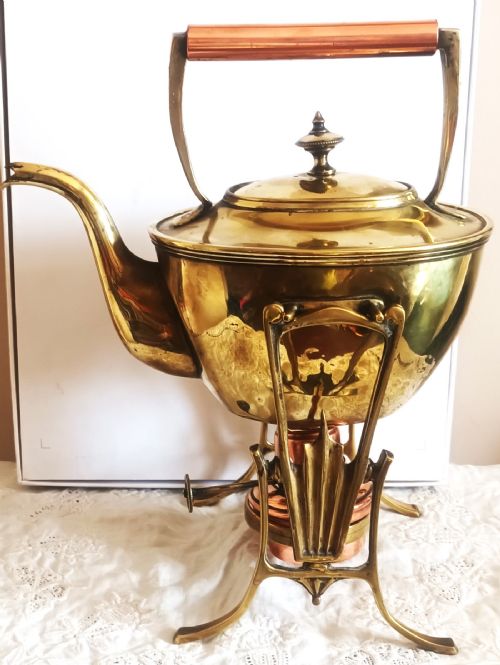
Several kettles arrive equipped with original spirit burners, ready for an impromptu Victorian tea party.
Factors of quality
Quality rests upon the presence of original fittings and the integrity of the combined metals, such as brass and bell metal accents. Finer examples retain their complete hardware without replacement parts.
The sophistication of period styling distinguishes individual pieces, moving from utilitarian Victorian kettles to refined Regency and Georgian samovars. The inclusion of decorative materials like bone and ebonised wood elevates the craftsmanship of the vessel.
William Soutter And Sons·Benham And Sons
The English Copper Tea Urn Glossary
- Tea Urn
- A large vessel designed to hold and heat water for tea service, featuring a spigot near the base for dispensing. These objects sit on fixed pedestals or bases.
- Samovar
- A heated metal container traditionally used to boil water, functionally similar to a tea urn and often sharing the same descriptive categorisation.
- Spirit Kettle
- A kettle mounted on a stand with an integrated spirit burner beneath, allowing the water to remain heated during tea service.
- Bell Metal
- A hard alloy used for casting bells and specific hardware components, noted for its resonant qualities and durability.
- Ebonised Wood
- Timber treated to resemble ebony, frequently utilised for handles and insulators on period metalwork to prevent heat transfer.
English Copper Tea Urn: Frequently Asked Questions
What is an English copper tea urn?
An English copper tea urn is a large metal vessel designed for heating and dispensing water, typically featuring a spigot and pedestal base.
These pieces date across Georgian, Regency, and Victorian periods, serving as both functional kitchenware and decorative table objects.
How were tea urns used?
Hosts utilised these vessels to supply hot water continuously throughout formal tea gatherings without returning to the kitchen.
Internal heating elements or heated cylinders kept the liquid warm for guests.
What materials make up these urns?
Constructed primarily from copper, these pieces frequently incorporate brass, bell metal, and ceramic components.
Handles and decorative elements often feature bone or ebonised wood to provide insulation against heat.
How do I identify a Georgian urn?
Georgian examples display specific neoclassical proportions and stylistic traits associated with eighteenth and early nineteenth-century design.
Comparing the form and mounts against dated pieces helps establish the correct period.