




Antique Metalware Tea Urn
An antique metalware tea urn brings grand historic hospitality to a room, offering warm presence and gleaming surfaces.
Antique Metalware Tea Urn
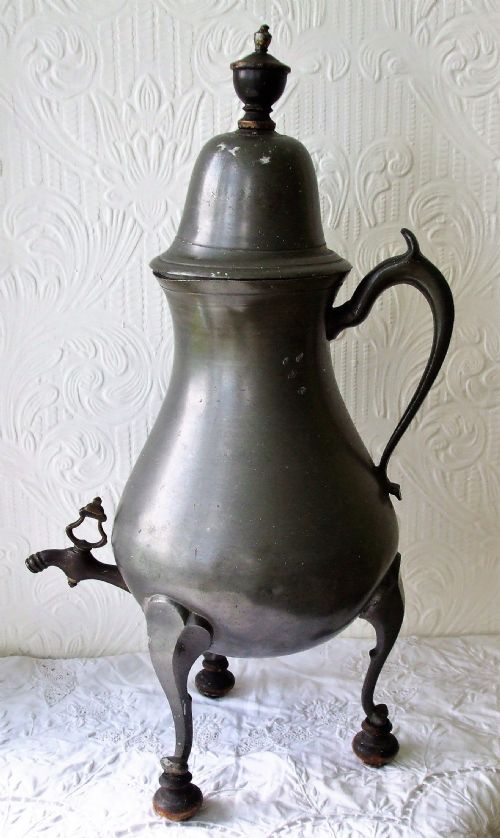
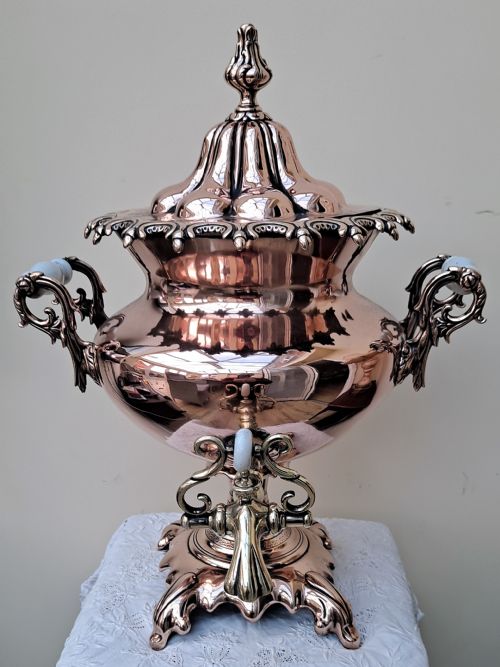
An antique metalware tea urn encompasses substantial vessels designed for heating and dispensing water, appearing in forms such as samovars, coffee urns, and spirit kettles. These substantial pieces served a central role in formal hospitality during Georgian and Victorian times.
The versions most commonly met on this page span the eighteenth and nineteenth centuries, including George III and Victorian eras. Makers utilised copper, brass, pewter, and japanned metal, often pairing the main vessel with stands, spirit burners, and original fittings.
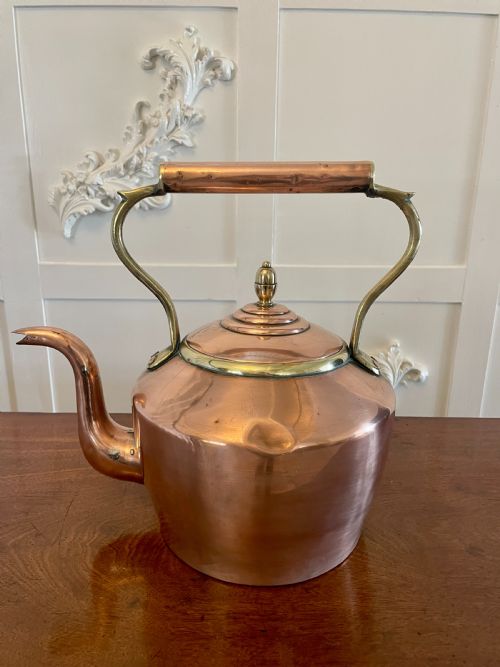
Forms range from simple tea kettles to ornate samovars influenced by the Aesthetic Movement. Each object reflects the social rituals of tea drinking and domestic entertainment characteristic of its period.
How they were made
Construction relies heavily on sheet metals such as copper and brass, shaped into bodies and combined with handles and spigots. Makers incorporated secondary materials like wood, bone, cane, and ebonised wood for insulating handles and lift knobs.
Finishes vary from polished metal surfaces to japanned metalware, exemplified by Pontypool Ware. Spirit kettles and samovars incorporate functional brass taps, stands, and original burners constructed to hold heat securely.
Listings feature copper, brass, pewter, and japanned metal across Georgian and Victorian periods.
What varies in quality
Quality rests in the heaviness of the metal gauge and the crispness of decorative chasing or mounts. Vessels featuring intact original fittings, such as burners, handles, and spigots, demonstrate superior integrity.
The presence of named makers or distinct regional styles, such as Pontypool japanning, elevates an example above standard production. Details like bone insulators and balanced proportions distinguish finer workshop output.
Benetfink And Co
The Antique Metalware Tea Urn Glossary
- Samovar
- A heated metal container traditionally used to boil water for tea. These vessels often feature an internal central tube for charcoal or a detached spirit burner.
- Japanned Metal
- Metalware finished with a hard, glossy black or coloured lacquer imitating Asian lacquerware. Pontypool Ware is a notable British manifestation of this technique.
- Bell Metal
- An alloy of copper and tin used for casting durable metalware vessels. It produces a resonant tone when struck and offers high corrosion resistance.
- Spirit Kettle
- A kettle mounted on a stand above a small spirit burner for maintaining water temperature. These pieces became popular for tea service during the Victorian period.
- Aesthetic Movement
- A late nineteenth century design style emphasising visual beauty over narrative content. Objects from this movement often incorporate simplified or Japoniste decorative motifs.
Antique Metalware Tea Urn: Frequently Asked Questions
How were tea urns used historically?
These vessels sat on sideboard tables or tea stations to provide a continuous supply of hot water for guests. Servants or hosts operated the spigot to fill teapots during social calls.
Many designs incorporated internal heating tubes or external spirit burners to keep the water warm throughout a lengthy tea service.
What metals are these urns made from?
Makers relied heavily on copper and brass for their thermal conductivity and malleability. Some examples also utilise pewter, bell metal, or japanned sheet iron.
Handles and lifting knobs frequently incorporate contrasting materials like wood, bone, cane, or ebonised wood to prevent heat transfer.
How do I date a tea urn?
Dating relies on stylistic clues, manufacturing techniques, and material choices associated with specific periods. Georgian examples often display neoclassical urn forms, while late nineteenth century pieces may show Aesthetic Movement influences.
Original fittings, maker stamps, and construction methods further help narrow down the decade of production.