
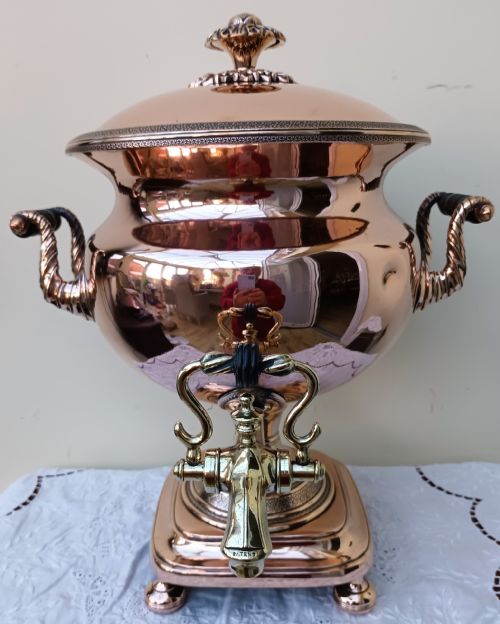


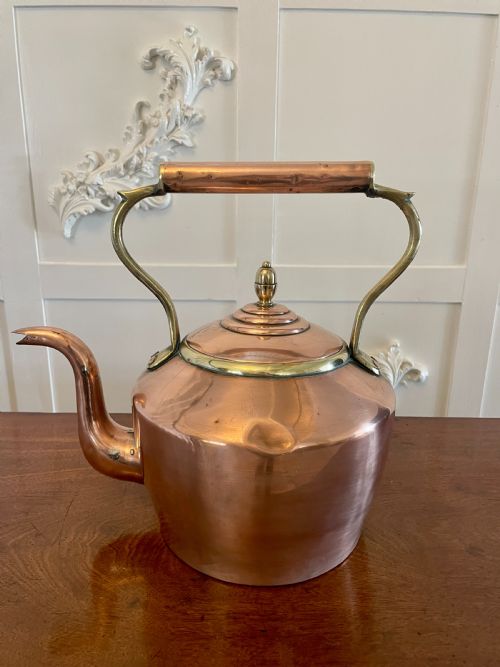


Georgian Copper Water Urn
These Georgian copper water urns are substantial vessels designed for hospitality, offering warmth and period character to any interior.
Georgian Copper Water Urn
A georgian copper water urn is a vessel designed to hold and heat water, often taking the form of a samovar or tea urn. These pieces date across the Georgian and Regency periods, spanning the late eighteenth century into the nineteenth century.
Buyers encounter forms ranging from large hanging water urns to smaller table samovars and related kettles. The listings show English origins with domestic and formal utility.
How they were made
Maker construction relies primarily upon sheet copper, often combined with brass, bell metal, and bronze elements. Fittings incorporate materials such as ebonised wood and bone for handles and insulation.
The technique balances utilitarian metalworking with decorative ornamentation, incorporating original fittings and bronzed copper finishes across George III and Regency examples.
What varies in quality
Quality separates through the presence of original fittings and the complexity of the metalwork, distinguishing simpler vessels from ornate George III and Regency examples. The choice of secondary metals, such as bell metal and bronze, alongside ebonised wood handles, indicates the standing of the piece.
The sophistication of the form, whether a large hanging water urn or a small complete samovar, defines the upper tier of the range.
The Georgian Copper Water Urn Glossary
- Samovar
- A heated metal container traditionally used to boil and heat water in Russia and throughout Europe. These examples function primarily as tea urns within English interiors.
- Bell metal
- An alloy of copper and tin utilised for casting components and fittings. This material provides durability and a distinct tonal quality.
- Regency
- A stylistic period spanning from 1795 to 1837. Pieces from this era often display specific classical influences and refined metal finishes.
- Bronzed copper
- Copper treated to simulate a bronze surface appearance. This finish enhances the visual depth of the vessel.
Georgian Copper Water Urn: Frequently Asked Questions
What is a georgian copper water urn used for?
These vessels were originally manufactured to heat and dispense water for tea within domestic and social settings.
Today, they serve as decorative antique focal points in period rooms and collections.
How do I date a copper water urn?
Dating relies on stylistic markers from the Georgian, George III, and Regency periods alongside construction techniques.
Evidence from the metal types, such as bell metal or bronzed copper, helps narrow the era.
What are original fittings?
Original fittings refer to the taps, handles, and knobs that came with the vessel when it was first made.
Their presence indicates that the piece retains its intended components without later replacements.
Are these urns made of solid copper?
The primary body is constructed from sheet copper, often paired with brass, bronze, or bell metal details.
Handles frequently incorporate ebonised wood or bone to prevent heat transfer.