


Antique Copper Water Dispenser
An antique copper water dispenser is a heavy metal vessel for heating and serving water, combining utility with distinct period craftsmanship.
Antique Copper Water Dispenser
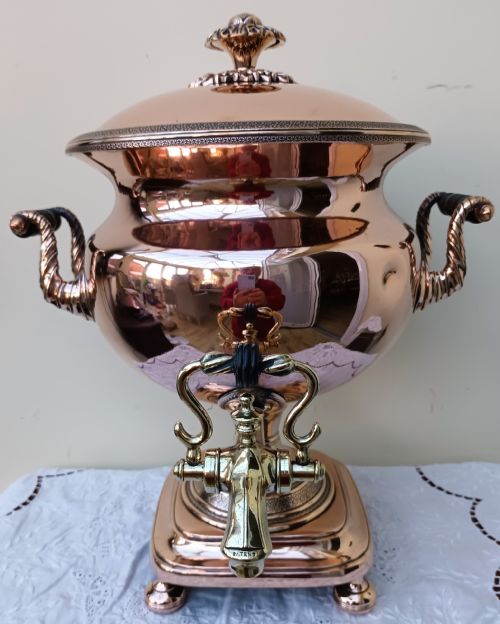
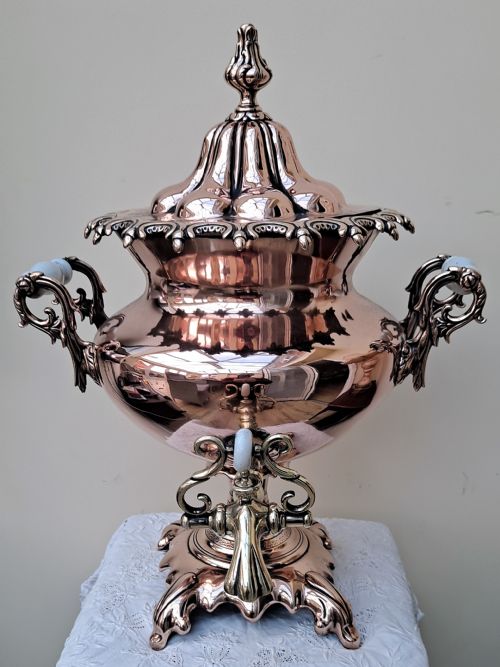
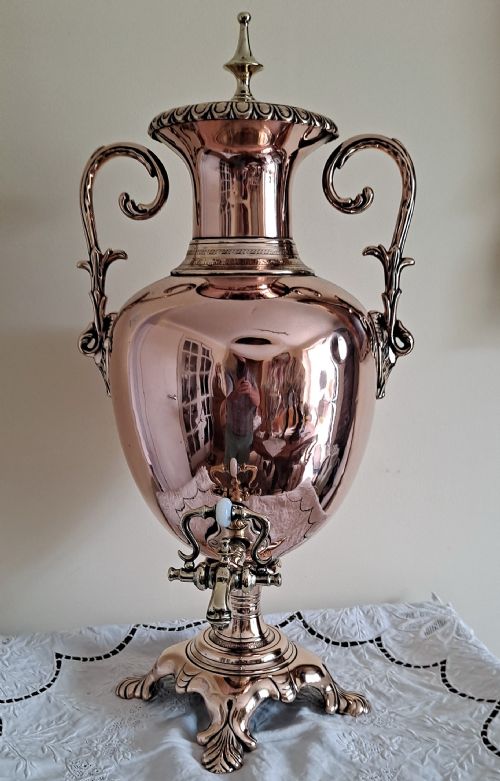
When you search for an antique copper water dispenser, you enter a field dominated by samovars and tea urns originating from Georgian, Regency, and Victorian periods. These pieces functioned as domestic water heaters, relying on internal heating mechanisms or hot metal cylinders.
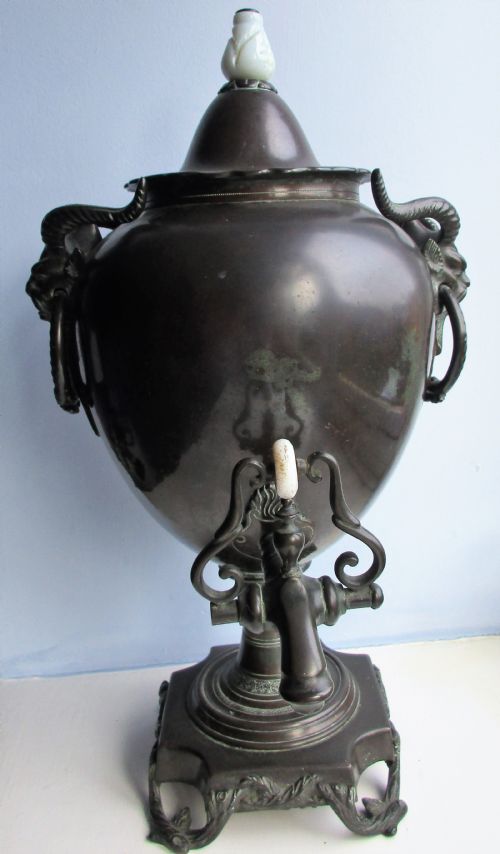
The most common examples you will encounter on this page are English vessels fashioned from copper, frequently paired with brass or bronze fittings, alongside occasional Japanese cloisonne enamel temple pieces. Forms range from large hanging water urns to table samovars with bone, ceramic, or iron elements.
Makers such as Benetfink and Co produced Pontypool Ware japanned tea urns, while other pieces remain unattributed English items from the nineteenth century. These vessels served formal tea tables and large households, reflecting the metalworking traditions of their eras.
How they were made
Makers constructed these vessels primarily from sheet copper, often combining them with brass for taps, handles, and feet, and occasionally incorporating bell metal or bronze. Surfaces received patination or japanned finishes, as seen in Pontypool Ware examples.
Detailing often included bone or ceramic insulators on handles to prevent heat transfer during use. Internal fittings and original taps required precise metal casting and soldering to ensure water retention.
Listings span the Georgian, Regency, and Victorian periods, showcasing materials from basic copper and brass to enamel and bell metal.
What varies in quality
The distinction between standard utility vessels and superior pieces lies in the integration of original fittings, such as taps, handles, and internal heating elements. Pieces retaining their complete original hardware command greater appreciation among collectors.
Materials and decorative complexity also dictate standing, ranging from plain patinated copper bodies to elaborately worked cloisonne enamel or japanned surfaces. The precision of the metalworking and the presence of identified retail signatures mark the upper tier of these items.
Benetfink and Co
The Antique Copper Water Dispenser Glossary
- Samovar
- A heated metal container traditionally used to heat and boil water in Russia and Britain. These vessels typically feature a central internal tube for charcoal or a heated metal block.
- Pontypool Ware
- A type of japanned metalware produced in Wales and England known for its glossy, painted finishes. Pieces carrying this attribution often display refined surface decoration.
- Japanned
- A European imitation of East Asian lacquerwork applied to metal objects. This finish provides a dark, glossy protective coating.
- Bell Metal
- An alloy of copper and tin traditionally used for bells and durable metal vessels. It offers a resonant quality and sturdy construction.
- Cloisonne
- An ancient technique for decorating metalwork objects with colour using vitreous enamel. Wire partitions hold the enamel paste before firing.
Antique Copper Water Dispenser: Frequently Asked Questions
What is a copper water dispenser?
A copper water dispenser is a metal vessel designed to hold and heat water for domestic use, predominantly taking the form of samovars and tea urns during the Georgian, Regency, and Victorian eras.
These pieces utilised internal heating methods or boiling water reservoirs to serve tea and hot water in formal settings.
How were samovars used?
Samovars served as the centerpiece for tea preparation in large households, maintaining hot water throughout social gatherings and meals.
Users operated the built-in taps to dispense water into teapots, relying on insulated handles made of bone or wood to protect their hands.
How do I date a copper urn?
Dating relies on stylistic markers associated with Georgian, Regency, and Victorian design periods, alongside manufacturing techniques and material choices. Early nineteenth-century pieces often display simpler neoclassical proportions, while later Victorian examples vary from plain copper to japanned finishes.
Retailer stamps and maker marks, when present, provide a direct link to specific firms and active dates.
Can I use an antique water dispenser?
Most antique dispensers function primarily as decorative objects or collection pieces rather than everyday kitchen appliances. Historic solders, internal wear, and original fittings mean they are best preserved for display.
Careful cleaning with appropriate metal polishes preserves the copper and patinated surfaces without damaging the historic structure.