


Brass and Copper Urn
A brass and copper urn brings warmth and historic utility into a room, combining rich metallic tones with practical historic design.
Brass and Copper Urn
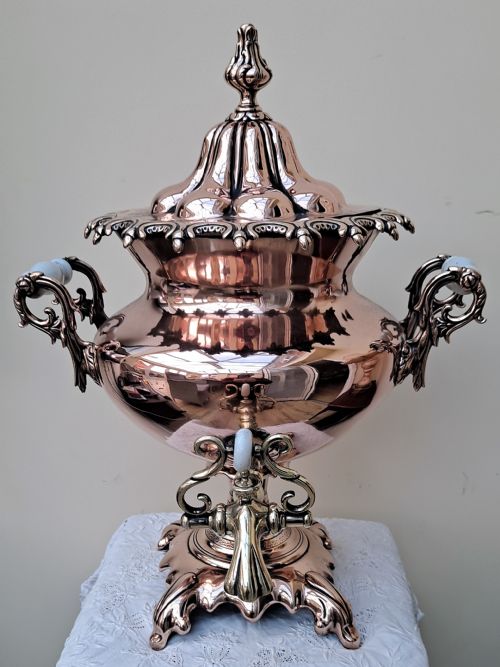
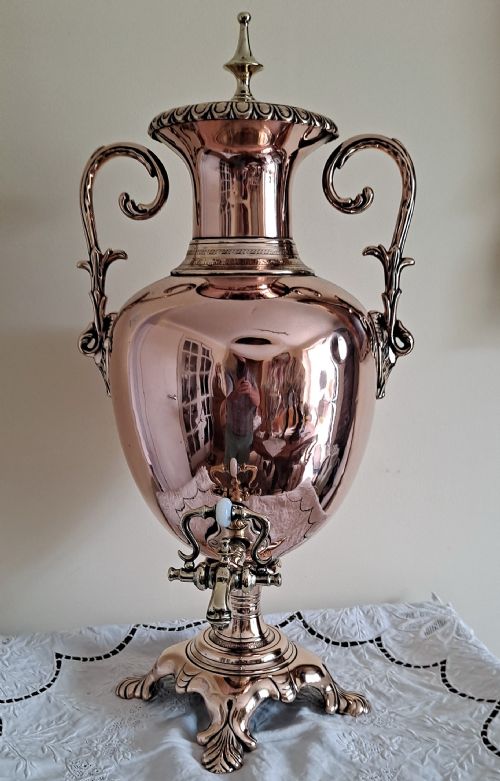
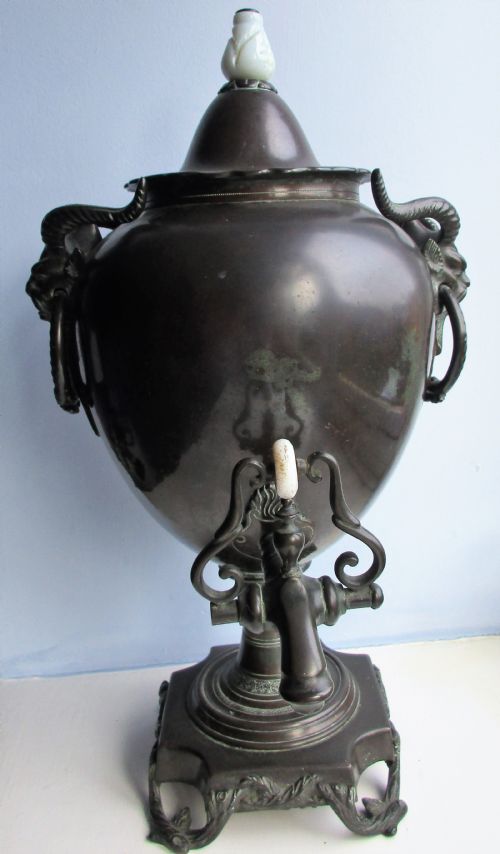
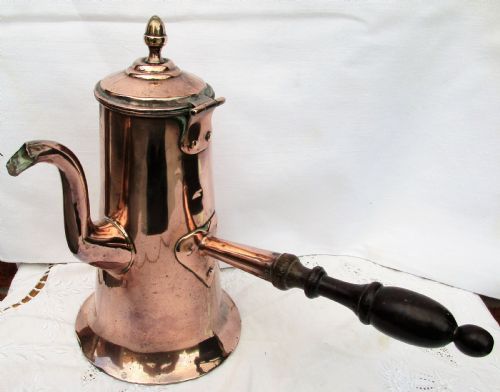
When you search for a brass and copper urn, you encounter vessels designed for heating water, brewing tea, or decorative display. These objects span periods from the Georgian and Regency eras through the Victorian age, reflecting centuries of metalwork traditions.
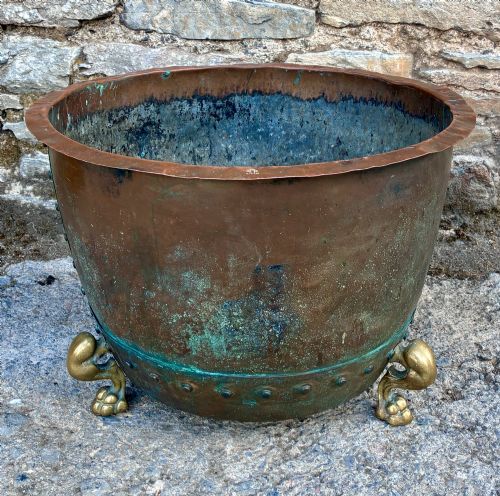
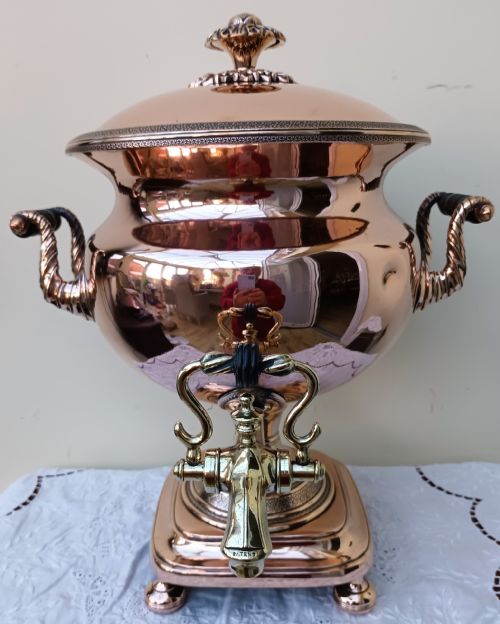
The most common form on this page is the traditional samovar or tea urn, often paired with spouts, handles, and spirit heaters. Alongside these, you find coal buckets, planters, and water barrels that utilise both brass and copper components.
Origins vary from English and French workshops to Swedish and Dutch domestic items, showing how diverse domestic metalworking was across Europe. Pieces range from utilitarian vessels to highly decorative reception room showpieces.
How they were made
Craftsmen built these vessels primarily from sheet copper and brass, joining seams through riveting or soldering to hold boiling water or heavy contents securely. Many pieces feature cast brass handles, taps, and feet fixed to the main copper body.
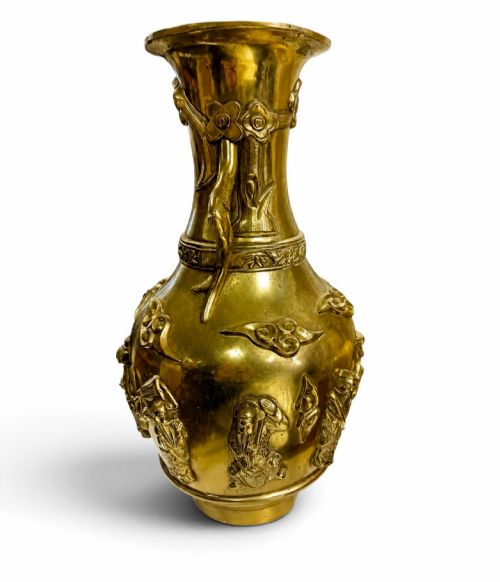
Decoration often involved hand-chasing, embossing, or engraving floral and geometric motifs directly into the metal surface. Ebonised wood, bone, and ceramic inserts frequently appear on handles and knobs to provide insulation against heat.
One listed water warmer doubles as a bedwarmer, proving that historic households took hot metal companions to bed.
What varies in quality
Quality shows in the weight of the metal and the precision of the construction, particularly where handles and spouts join the body. Heavier gauge copper and solid cast brass elements indicate a sturdier vessel built for long service rather than light display.
The crispness of chased decoration and the finish of turned wooden insulators distinguish standard utilitarian items from exhibition pieces. Superior examples retain well-proportioned silhouettes and balanced contrasts between the warm red of copper and the bright yellow of brass.
William Soutter And Sons·Benetfink And Co
The Brass and Copper Urn Glossary
- Spirit kettle
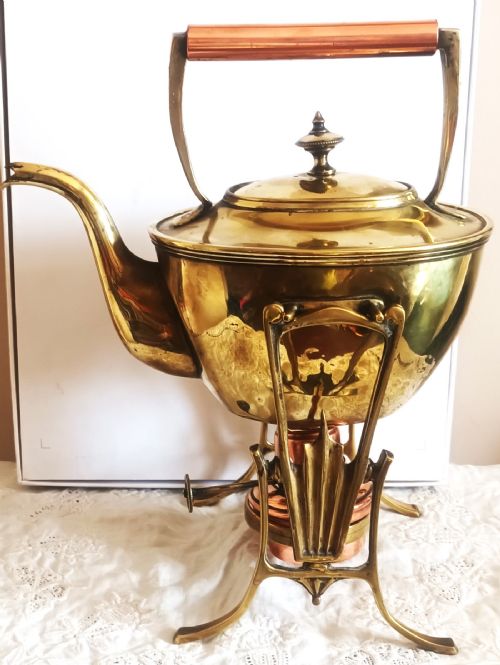
- A portable kettle mounted on a metal stand above a small spirit burner. These were used at tea tables to keep water hot.
- Dinanderie
- A term for various objects made of beaten or engraved brass, copper, or bronze. The word originates from the Belgian town of Dinant, a historic centre of brassware production.
- Pontypool ware
- A type of British japanned metalware produced in Wales. It is known for glossy surface coatings that mimic Asian lacquers.
- Helmet coal scuttle
- A coal bucket shaped like a classical helmet with a wide mouth and a carrying handle. They became popular fireside accessories during the Victorian period.
Brass and Copper Urn: Frequently Asked Questions
What is a brass and copper urn used for?
These vessels originally served practical domestic purposes such as boiling water for tea, carrying coal to the hearth, or holding water and plants. Many functioned as central pieces in formal dining and drawing rooms.
Today, they are collected as decorative antiques to display on sideboards, beside fireplaces, or as standalone statement pieces in traditional and contemporary interiors.
How can I tell the period of an urn?
Dating relies on observing construction methods, styles, and maker marks if present. Georgian and Regency pieces often feature neoclassical lines and fine hand-chased details.
Victorian examples frequently display heavier cast brass mounts and varied decorative influences ranging from rustic to highly ornate. Examining the joinery, such as hand-cut rivets versus machine-made screws, also helps determine age.
Are these urns still watertight?
While many historical samovars and kettles were built to hold liquids, internal seals and soldered joints can degrade over centuries. Using them for boiling water today is generally discouraged without professional restoration.
It is best to treat them as decorative objects or dry containers such as umbrella stands and planters rather than functional plumbing.