
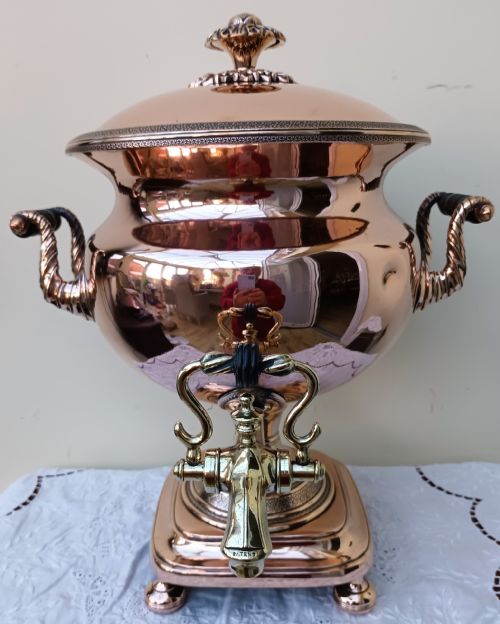


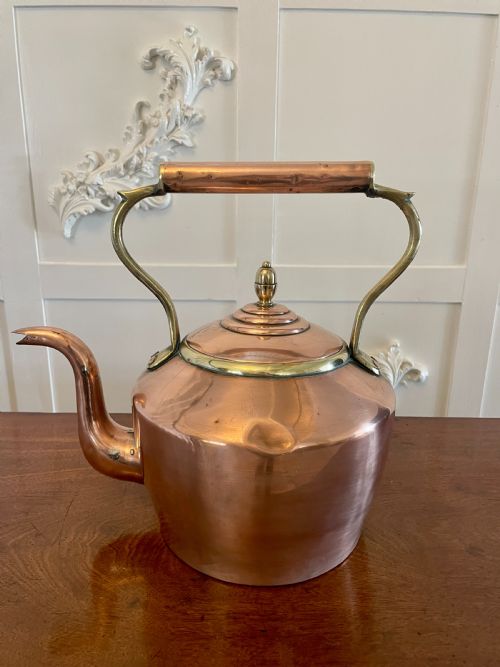


Georgian Copper Tea Urn
These georgian copper tea urn pieces are heavy metal vessels for heating water, prized for their glowing metal and grand domestic presence.
Georgian Copper Tea Urn
A georgian copper tea urn is a domestic vessel designed for heating and dispensing water, appearing in forms such as samovars, water urns, and kettles. These pieces belong to the Georgian and Regency periods, dating from around eighteen hundred through the nineteenth century.
The versions most commonly met on this page are samovars and tea urns, which combine a metal body with original fittings like taps and handles. Alongside traditional urns, the selection includes George III hanging water urns and freestanding copper kettles.
How they were made
Makers shaped the body from sheet copper, often incorporating brass, bronze, or bell metal for mounts, spouts, and handles. These metals were hammered and joined to create sturdy vessels intended for boiling water.
Details such as ebonised wood and bone appear on handles and insulators, adding contrast and preventing heat transfer. Surviving examples retain original fittings like brass taps and internal heating elements.
Listings on this site span the Georgian, Regency, and nineteenth century periods, utilising materials such as copper, brass, bell metal, and bone.
What varies in quality
Quality rests in the weight of the metal and the complexity of the form, distinguishing standard utilitarian vessels from ornate Regency and George III examples. Ornate casting on handles, spouts, and pedestals elevates the standing of a piece.
The survival of original fittings, such as taps, lids, and internal components, dictates the integrity of an urn. Pieces finished in bronzed copper or featuring bell metal details demonstrate higher ambition in design and execution.
The Georgian Copper Tea Urn Glossary
- Samovar
- A heated metal container traditionally used to boil and heat water in Russia and Britain. These vessels feature an internal central tube for hot coals or a heating element.
- Bell metal
- An alloy of copper and tin used for casting bells and durable vessel fittings. This material provides a resonant quality and a distinct golden hue.
- Bronzed copper
- Copper treated with a chemical finish to resemble bronze. This surface treatment gives the metal a darker, uniform patina.
- Ebonised wood
- Timber stained or treated to imitate ebony. It offers a deep black contrast against polished copper surfaces.
- George III
- The period of British history spanning the reign of George the Third from seventeen sixty to eighteen twenty. Pieces from this era often display classic proportions and restrained ornamentation.
Georgian Copper Tea Urn: Frequently Asked Questions
What is a georgian copper tea urn?
A georgian copper tea urn is a large metal vessel used in the eighteenth and nineteenth centuries to heat and dispense water for tea. These pieces were centrepieces for formal hospitality in wealthy homes.
They combine copper bodies with brass, bronze, and bell metal fittings. Many include internal components for heating and original taps for pouring.
How were samovars used?
Samovars were filled with water and kept hot during tea service so hosts could replenish teapots without leaving the room. The heated water sat ready in the main chamber.
Servants or hosts managed the heat source inside the central tube. Guests gathered around as water was dispensed directly from the front tap.
How do I identify a Regency urn?
Regency pieces date from the late eighteenth to the early nineteenth century and often feature distinct classical styling. Look for bronze or bronzed copper details and refined classical proportions.
These urns frequently incorporate decorative handles and feet inspired by ancient Greek and Roman designs. The overall silhouette tends to be cleaner and more architectural than earlier styles.
How should I clean copper urns?
Copper urns require gentle dusting and occasional cleaning with a specialist metal polish if you prefer a bright finish. Many collectors choose to preserve the darker, aged patina that develops over centuries.
Avoid harsh abrasive cleaners that can strip the original surface treatment. Keep the pieces dry and away from direct moisture to protect the internal fittings and ebonised wood parts.