
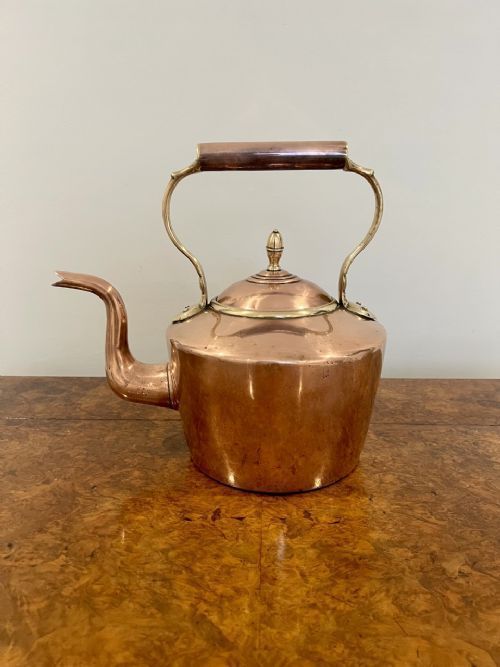
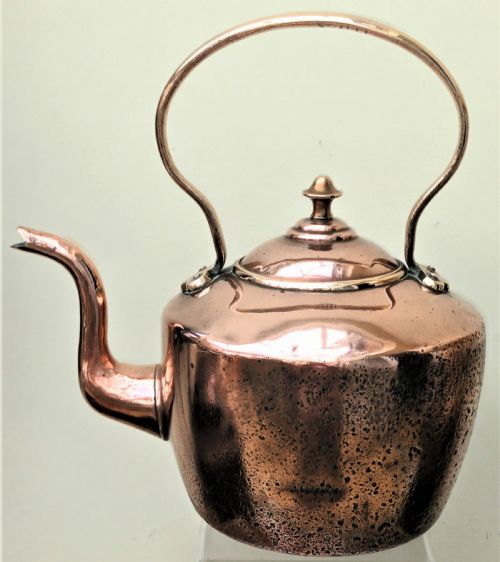
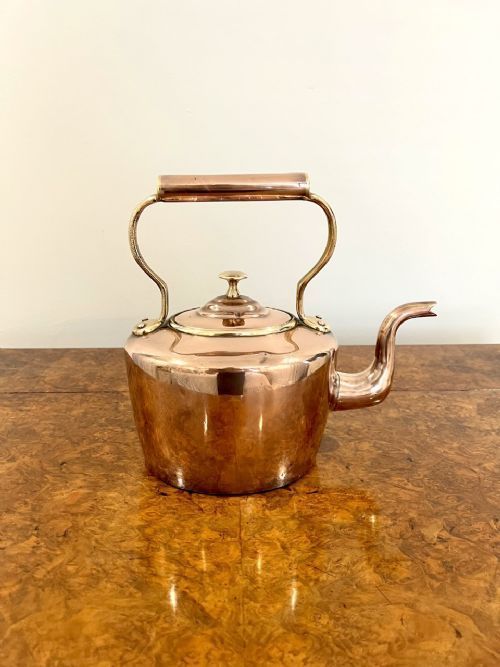


Traditional Copper Tea Kettle
A traditional copper tea kettle brings warmth and heritage to a room, offering both practical utility and enduring metalcraft from Georgian and Victorian centuries.

Traditional Copper Tea Kettle
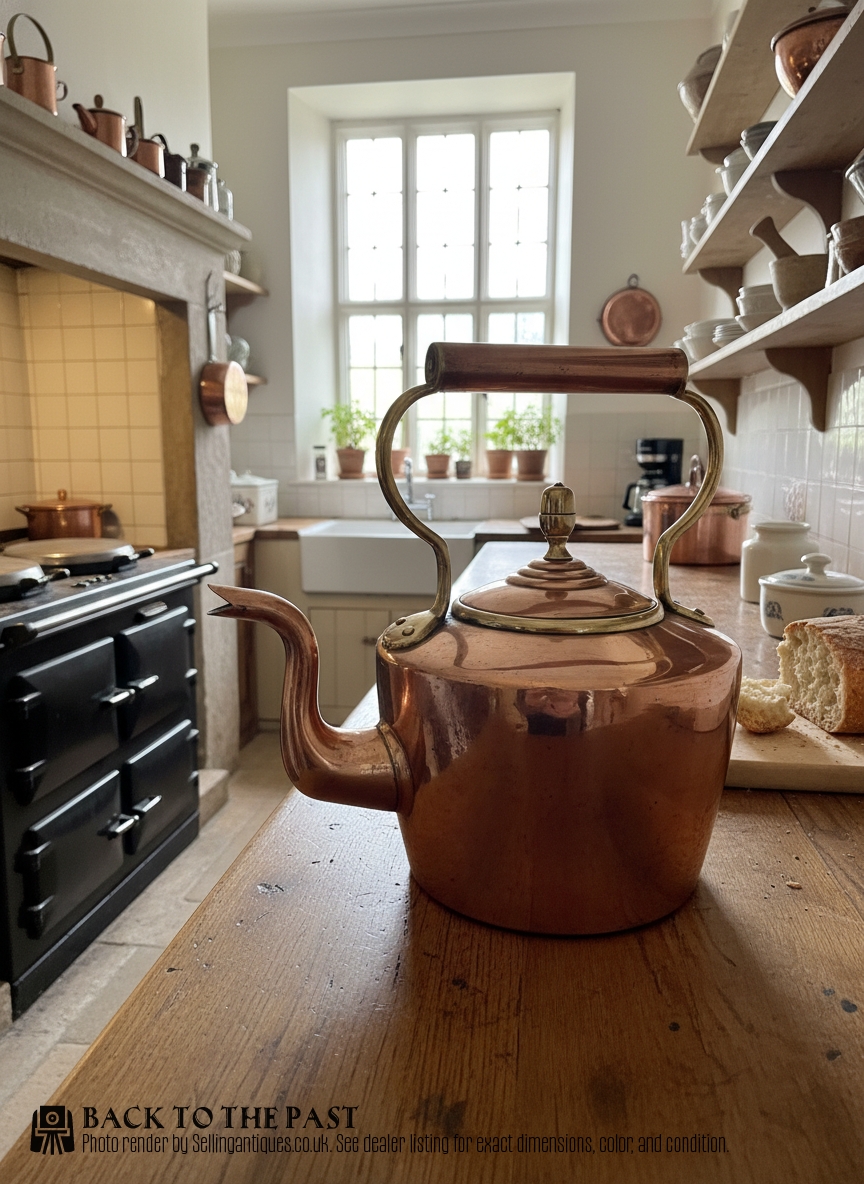
A traditional copper tea kettle represents centuries of domestic metalwork, primarily originating from the Georgian and Victorian periods. Buyers seeking these items encounter robust vessels designed originally for heating water over hearths or stoves.
The selections available span standard kettles alongside larger tea urns and samovars. Most examples date from the 1800s or the wider nineteenth century, showcasing distinct shapes such as traditional round bodies and unusual oval forms.
Makers fashioned these utilitarian objects in various sizes, ranging from small domestic vessels to large pieces suited for substantial households. English craftsmanship dominates the evidence, anchoring these antiques in traditional British domestic history.
Materials and construction methods
Artisans built each traditional copper tea kettle primarily from sheet copper, supplemented by brass fittings and handles. Many pieces incorporate wood or ebonised wood insulators on the handles to protect users from heat.
Metalsmiths hammered and joined the copper panels by hand, creating durable vessels capable of withstanding daily use. Brass components such as spigots, handles, and mounts provide functional contrast against the warm tone of the copper body.
Traditional Copper Tea Kettle Retail Price Guide 2026
Typical asking prices for traditional copper tea kettle among the pieces listed under this phrase on Sellingantiques today, from the lower quarter to the upper quarter. They describe what is for sale here now, not the wider market.
Listings span the Georgian and Victorian eras, utilising copper, brass, wood, and ebonised wood across various kettle and samovar forms.
Factors distinguishing quality
Superior examples of a traditional copper tea kettle often display finer hammering work and more balanced proportions. The integration of brass mounts and ebonised wood handles indicates greater attention to detail during manufacture.
Scale and form also differentiate the pieces, with unusual oval shapes or larger samovar configurations demonstrating more complex artisan skill. Condition and originality of the brass and copper components further distinguish the finer specimens.
The Traditional Copper Tea Kettle Glossary
- Copper
- A malleable reddish metal used extensively for forming the bodies of these vessels. It conducts heat efficiently and develops a rich patina over time.
- Brass
- A yellow alloy of copper and zinc utilised for taps, spigots, handles, and structural mountings on tea kettles and samovars.
- Samovar
- A heated metal urn traditionally used to boil water for tea. These large vessels often feature spigots and intricate brass elements.
- Ebonised wood
- Timber treated to imitate ebony, commonly used for the insulating grips on kettle handles to prevent heat transfer.
- Georgian
- Pertaining to the period of the British kings George, spanning the eighteenth and early nineteenth centuries. Pieces from this era often show distinct classical proportions.
Traditional Copper Tea Kettle: Frequently Asked Questions
How do I clean a traditional copper tea kettle?
Maintenance involves gentle cleaning with appropriate metal polishes to preserve the surface without removing historical character. Avoid abrasive pads that scratch the soft copper body.
Keeping the exterior dry and dusting it regularly helps maintain the warm metallic lustre built up over centuries.
Can I still use these kettles for boiling water?
Many antiques remain structurally sound, but historic joints and internal linings require careful inspection before daily use. Modern heating elements on induction hobs may not suit older uneven bases.
Most collectors choose to display these vessels as decorative pieces of domestic history rather than utilitarian kitchen tools.
What is the difference between a kettle and a samovar?
A standard kettle is designed for heating water on a heat source and pouring from the top. A samovar functions as a larger urn equipped with a central internal heating tube and a spigot near the base.
Samovars generally appeared in larger social settings for continuous tea service during the Victorian era.
How do I date a copper kettle?
Dating relies on observing manufacturing techniques, handle attachments, and stylistic cues associated with Georgian or Victorian periods. Shape variations, such as oval bodies versus round forms, offer additional clues.
Comparing construction details with documented examples from the nineteenth century helps narrow down the decade of production.