
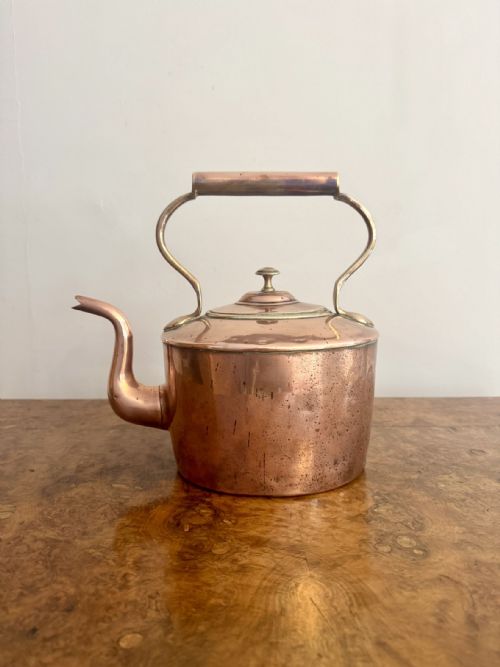
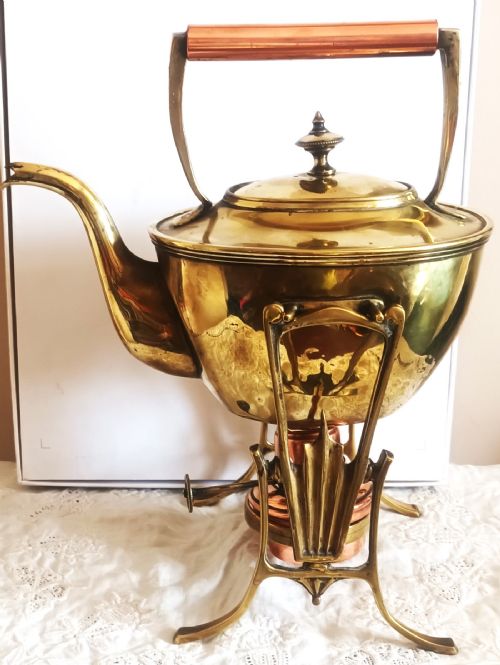
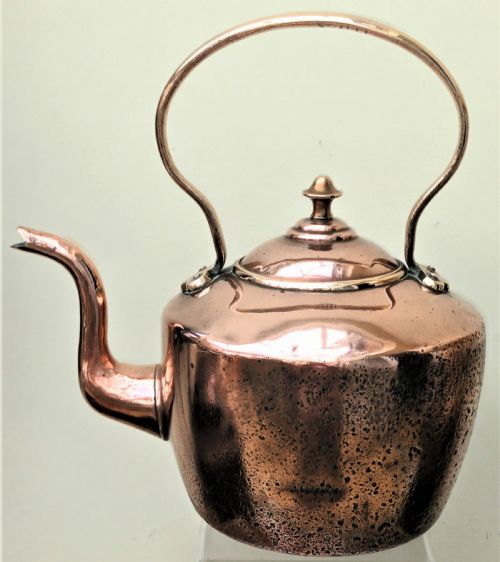
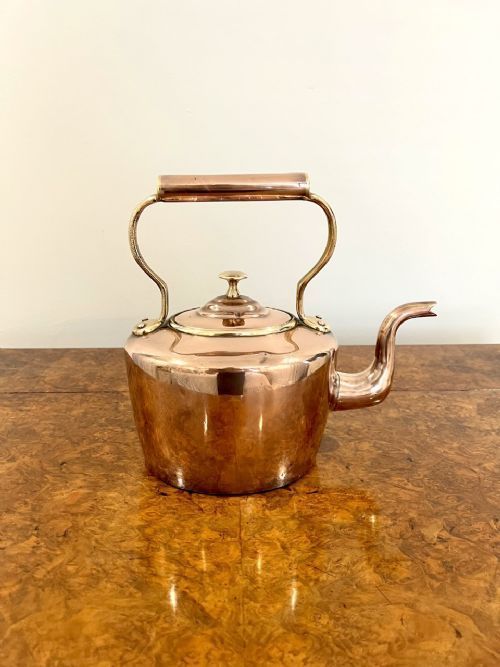


Vintage Copper Water Kettle
These vintage copper water kettle pieces offer robust metalwork and period charm, drawing collectors who appreciate historic kitchenalia and fireside warmth.

Vintage Copper Water Kettle
When you search for a vintage copper water kettle, you encounter pieces spanning the Georgian, Regency, and Victorian eras. These items range from standard kettles to spirit kettles and samovars.
The most common examples on this page date from the nineteenth century, including numerous George III designs. You will also find regional variations such as Middle Eastern coffee pots and Arts and Crafts hanging forms.
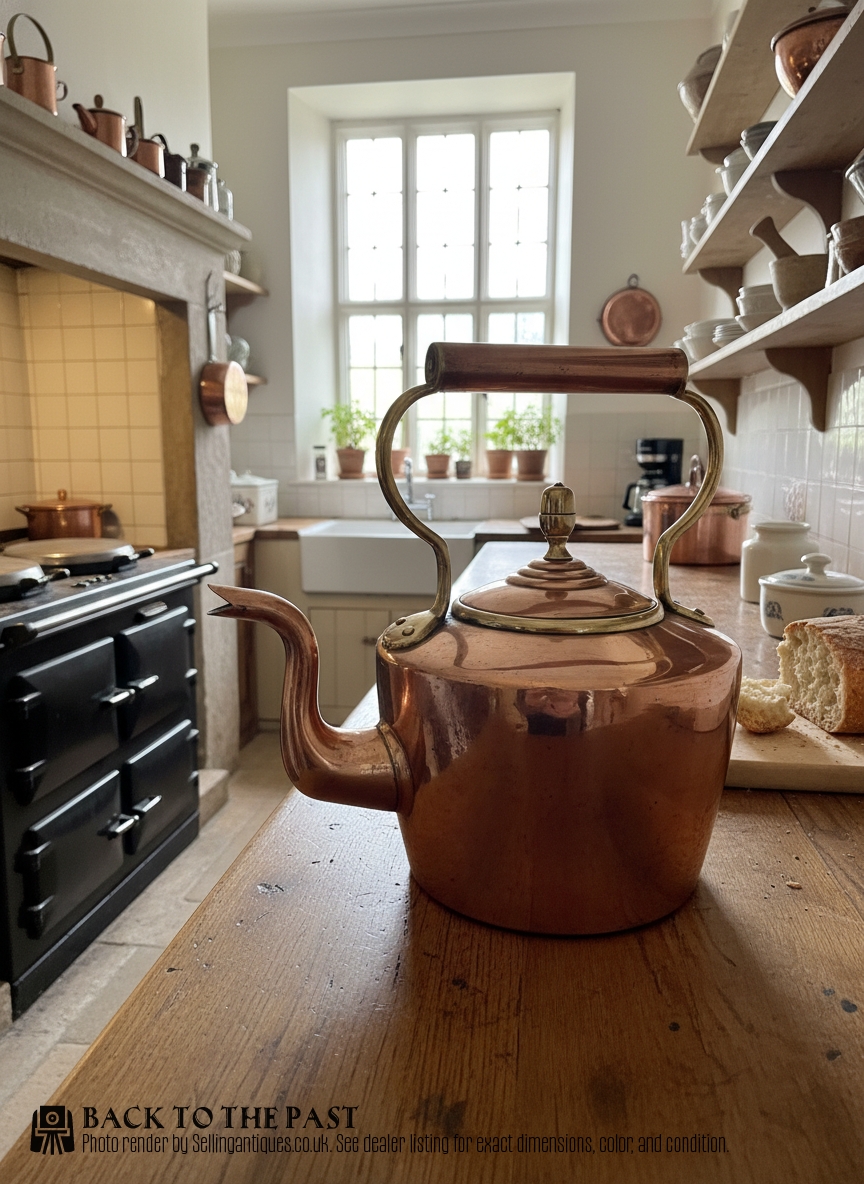
Materials and construction
Makers utilised heavy sheet copper combined with brass fittings, wrought iron handles, and occasionally bronze or ebonised wood details. These metals provided the thermal conductivity needed for boiling water efficiently.
Construction involved skilled hand-beating and dovetailing or soldering of seams, often finished with polished surfaces that showcase the rich metallic tone.
Vintage Copper Water Kettle Retail Price Guide 2026
Typical asking prices for vintage copper water kettle among the pieces listed under this phrase on Sellingantiques today, from the lower quarter to the upper quarter. They describe what is for sale here now, not the wider market.
Object types range from standard water kettles to spirit kettles, samovars, and Middle Eastern coffee pots.
Evaluating quality and finish
The distinction between standard utility vessels and finer pieces lies in the weight of the metal and the refinement of the handle attachments and spouts. Superior examples often incorporate brass mounts and balanced proportions.
Makers' marks and complete hardware, such as original stands for spirit kettles, elevate the standing of a piece far above utilitarian kitchenware.
William Soutter & Sons
The Vintage Copper Water Kettle Glossary
- Spirit kettle
- A water vessel mounted on a stand above a small burner for maintaining heat. These were often used in formal entertaining.
- Samovar
- A large heated urn traditionally used to boil water for tea. They frequently feature intricate taps and internal heating tubes.
- Ebonised wood
- Timber treated to resemble ebony, commonly utilised for insulating handles on metal kettles. This material prevents burns while pouring.
- Arts and Crafts
- A design movement focusing on traditional craftsmanship and simple forms. Pieces from this style often display visible hand-working.
Vintage Copper Water Kettle: Frequently Asked Questions
How do I clean a copper kettle?
Maintain the exterior finish using traditional metal polishes suited for copper. Avoid harsh abrasives that might scratch the historic surface.
Keep the interior unpolished if you intend to boil water, as modern chemical cleaners can leave residues harmful to health.
Can I still boil water in these kettles?
Many of these vessels remain structurally sound enough for heating water on a modern hob. Check the integrity of the seams and interior lining before use.
Spirit kettles require their original burners and stands if you plan to operate them in their intended historic manner.
What is the difference between a kettle and a samovar?
A standard kettle is designed for lifting and pouring water directly into teapots. They usually feature a swinging top handle.
A samovar is a much larger vessel fitted with a spigot tap at the base for dispensing hot water without lifting the container.
How do I date a Georgian copper kettle?
Examine the construction methods, such as hand-dovetailed seams and heavy cast brass mounts. George III pieces often display simpler, robust utilitarian shapes.
Compare the handle fixings and overall patina with known examples from the late eighteenth and early nineteenth centuries.