
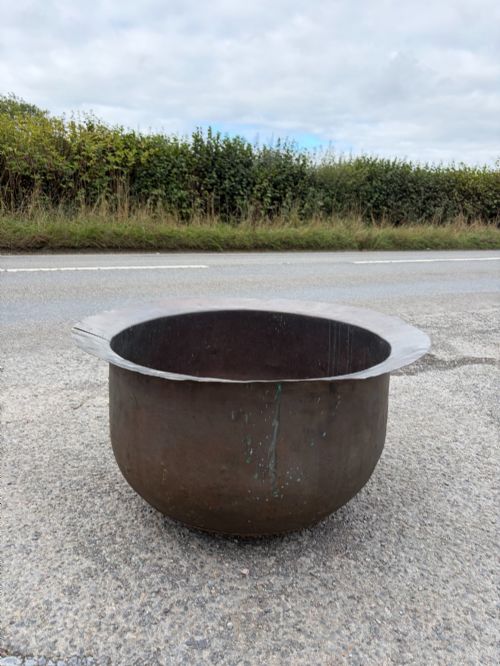
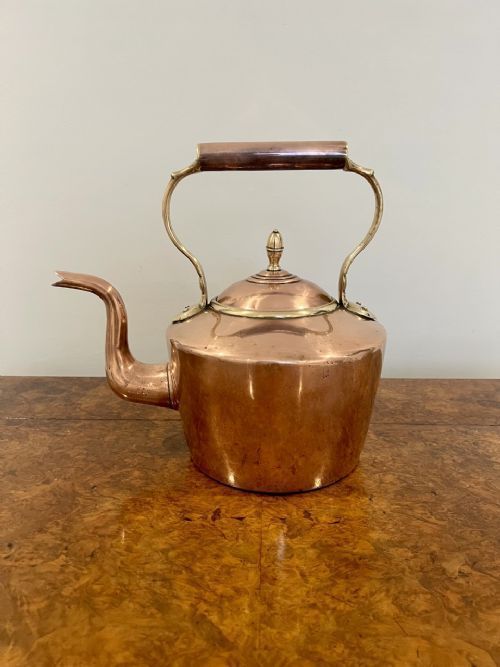
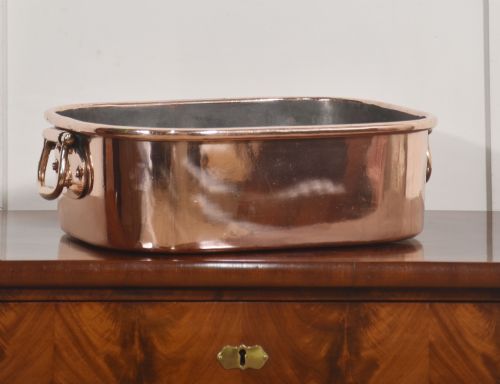


Large Copper Kettle
These large copper kettle examples bring heavyweight hearth presence into a room, offering genuine Georgian period utility.
What a large copper kettle is
A large copper kettle sits at the heart of historic domestic life, designed for heavy daily use over an open fire or hearth. Most pieces met on this page belong to the Georgian and George III periods around eighteen hundred, alongside nineteenth century examples.
The form typically presents an oval shape or traditional body designed to hold substantial volumes of water. Surviving pieces demonstrate the robust build quality required of active kitchen equipment from these eras.
How they were made
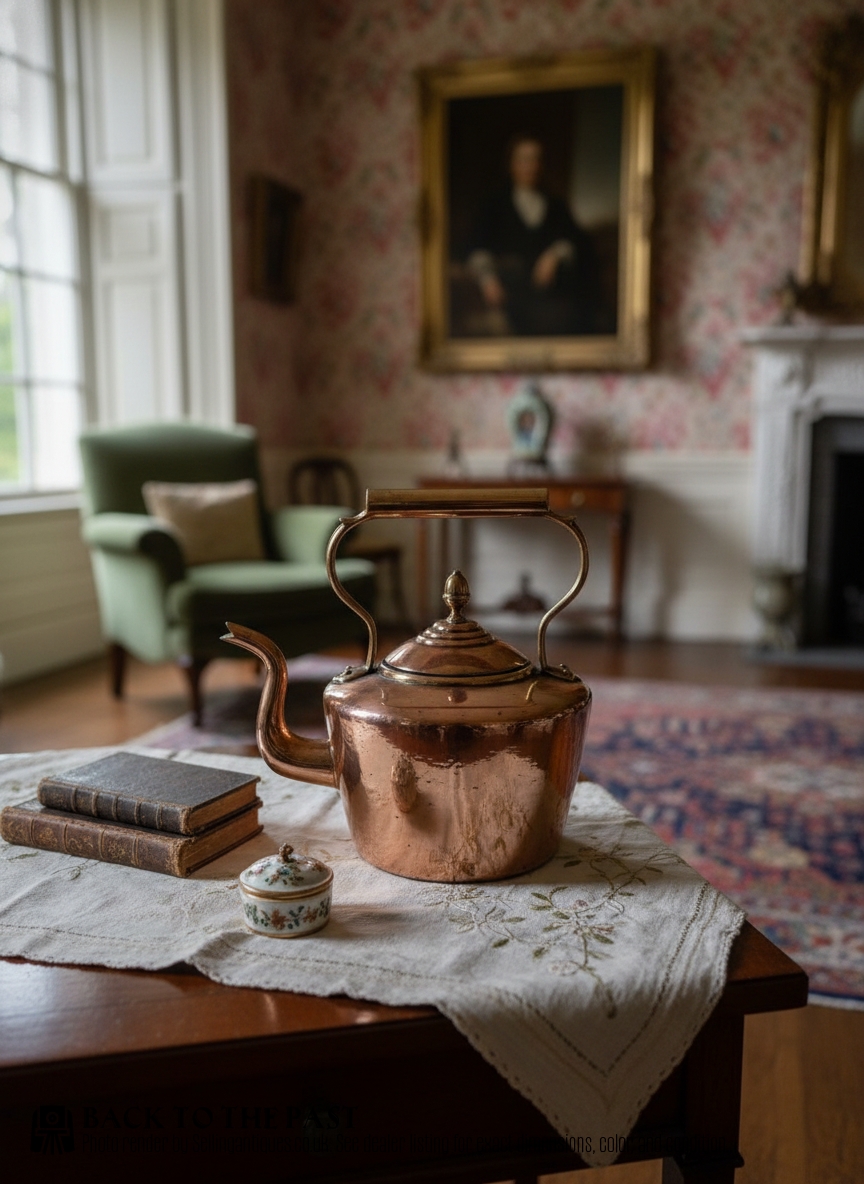
Metalworkers constructed each large copper kettle primarily from sheet copper, often incorporating brass fittings and occasionally wooden elements or acorn finials. Seamed construction methods allowed makers to form the bulbous bodies and secure handles firmly to the vessel.
Makers finished many surfaces with a polished sheen, though the underlying metalwork reflects traditional hand-beating and joining techniques typical of nineteenth century and Georgian workshops.
Listings feature copper, brass, and wood materials across Georgian and nineteenth century periods.
What varies in quality
Quality in a large copper kettle is defined by the integrity of the metal construction and the refinement of its shape. Superior examples display balanced oval proportions and careful attention to brass and wooden handle attachments.
The distinction between standard kitchenware and higher grade pieces rests on the crispness of the period details, such as finials and handle mounts, rather than mere size alone.
E V Wilkes
The Large Copper Kettle Glossary
- George III
- The period spanning seventeen sixty to eighteen twenty, characterised by classical restraint and robust proportions in domestic metalwork. Pieces from this era often bear specific stylistic markers associated with the reign.
- Finial
- A decorative knob or ornament attached to the lid of the kettle, frequently cast in brass or shaped like an acorn. This detail provides a secure grip for lifting the heavy lid.
- Seamed
- A method of joining sheets of copper together using folded edges and rivets or solder to create a watertight vessel. Visible seams indicate traditional hand manufacturing techniques.
- Oval
- A curved geometric form frequently utilised for the body of these vessels to optimise heat distribution on the hearth. This shape distinguishes many Georgian examples from later circular designs.
Frequently Asked Questions
What is a large copper kettle?
A large copper kettle is a heavy domestic vessel produced during the Georgian and nineteenth century periods for heating water on an open hearth.
These pieces combine copper bodies with brass handles and fittings, designed to withstand daily use in historic kitchens.
How were these kettles used?
These vessels served to boil large volumes of water over coal or wood fires in traditional fireplace settings.
The sturdy construction and generous capacity made them central fixtures for daily household water heating before modern plumbing.
How do I date a copper kettle?
Dating relies on stylistic clues such as the Georgian form, oval body shapes, and specific handle or finial designs.
Comparative examples from the eighteenth and nineteenth centuries help place individual pieces within their correct historical manufacturing periods.
How do I live with antique copper?
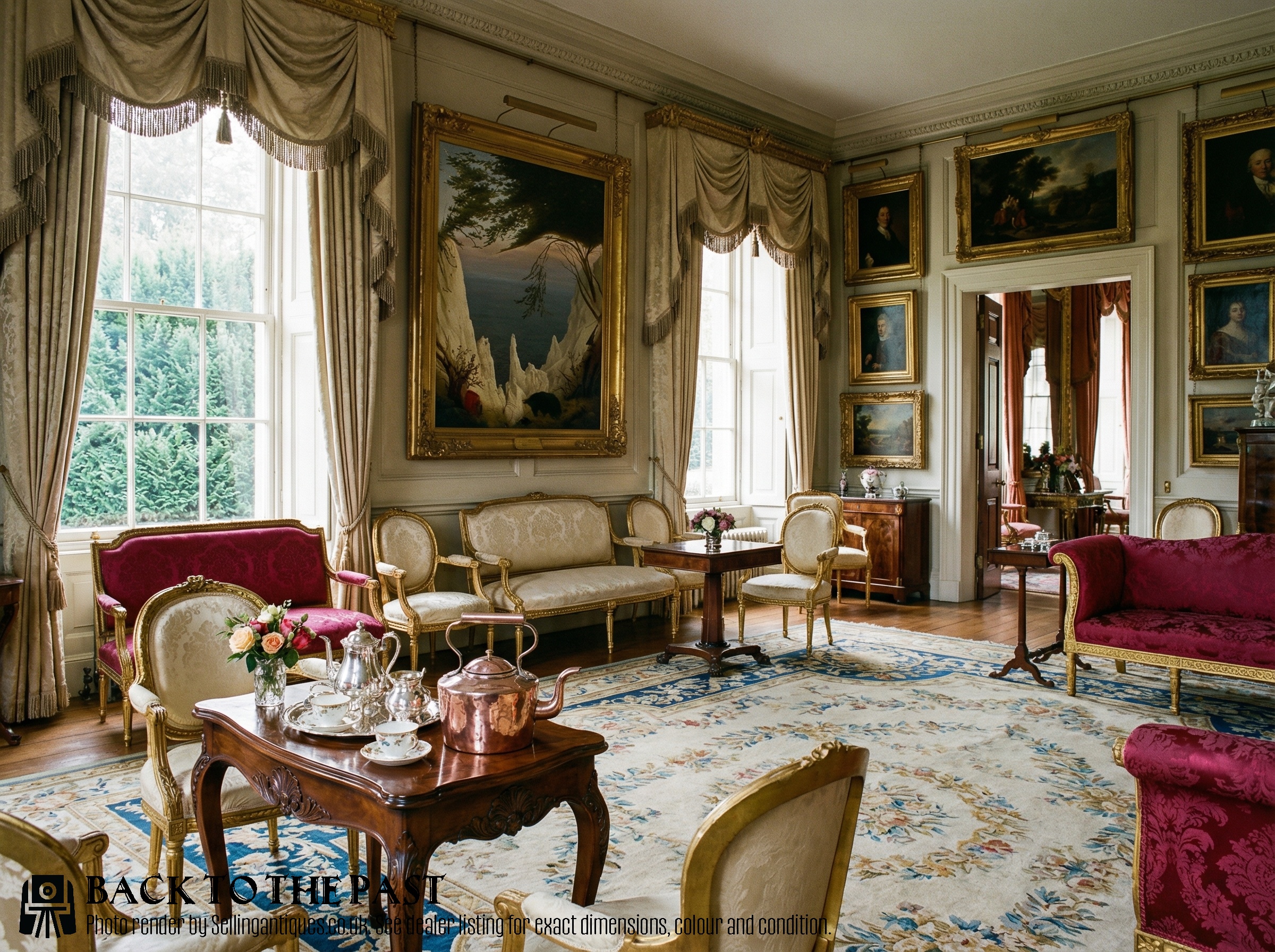
Living with these pieces involves placing them in domestic spaces as decorative objects that reflect historic metalworking traditions.
Their polished copper surfaces and brass details add warmth and period character to modern interiors without requiring active kitchen service.