
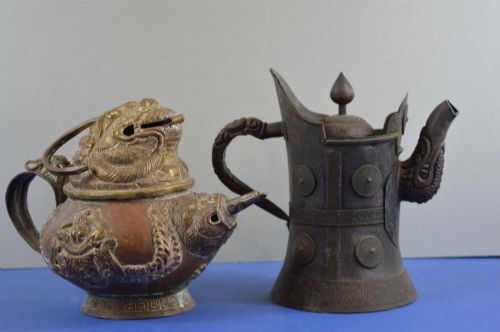
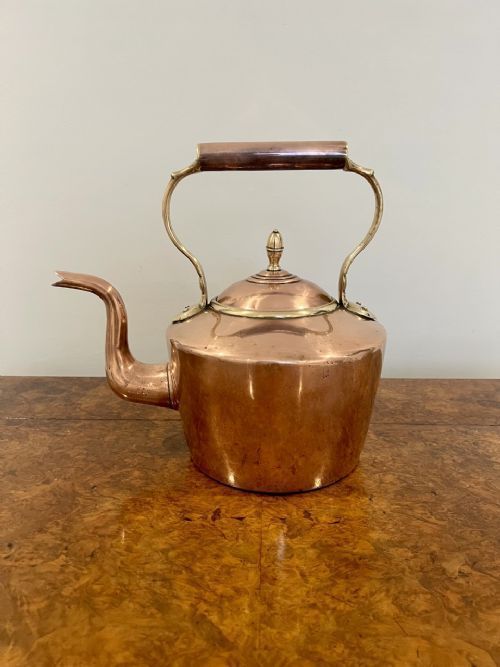
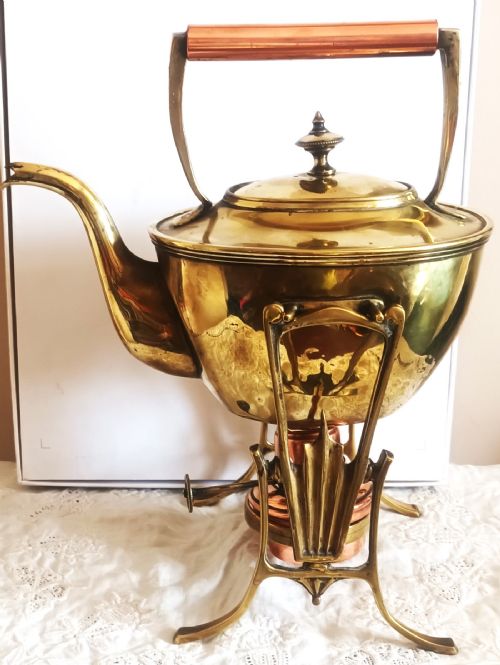
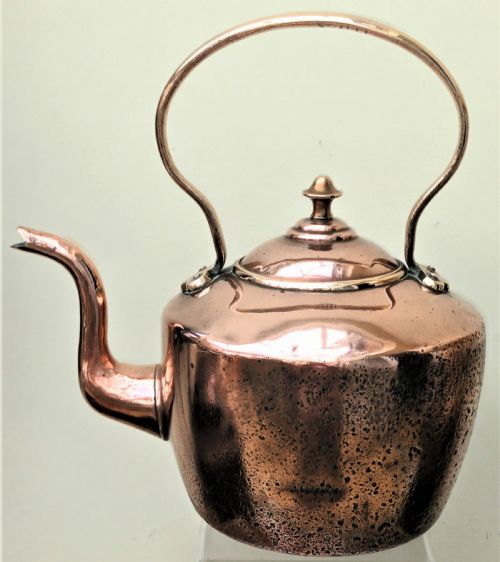


Copper Tea Vessel
These copper tea vessel examples combine Georgian style with practical warmth, offering a durable centrepiece for the historic tea table.
What a copper tea vessel is
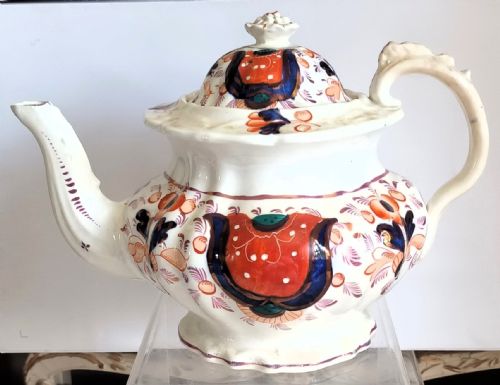
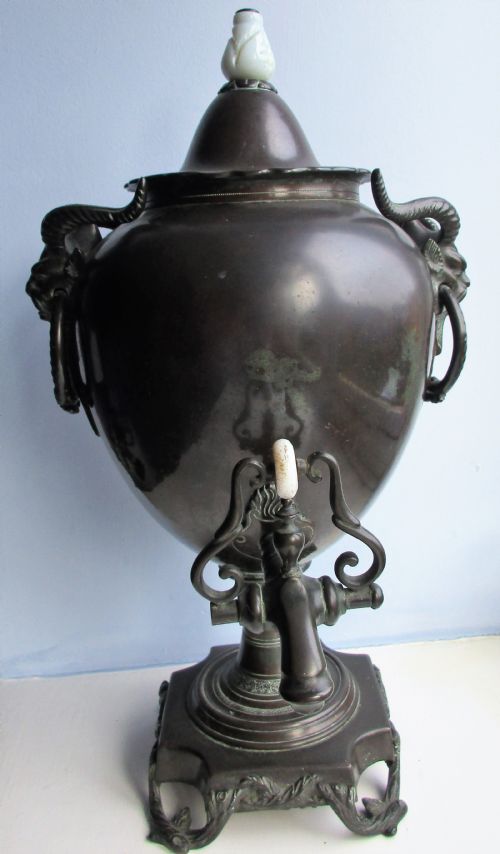
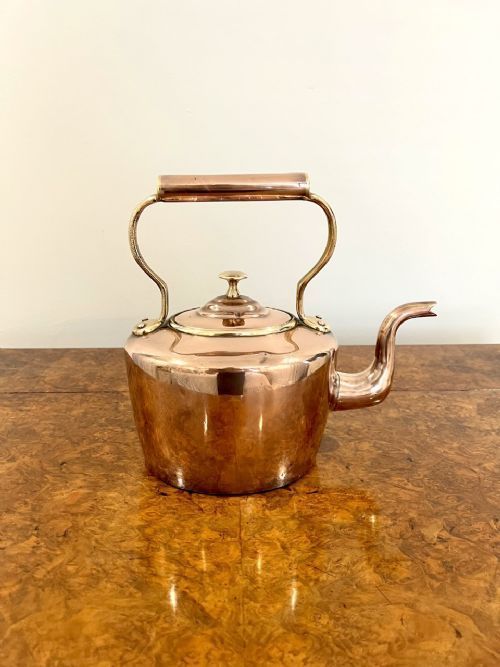
A copper tea vessel brings utilitarian Georgian style into the home through traditional kettles and samovars. These pieces represent the standard forms developed during the nineteenth century and around eighteen hundred for heating water efficiently.
The buyer meets George III era kettles and nineteenth century samovars most frequently on this page. These objects show the classic shapes utilised in domestic settings before modern appliances took over the task.

Materials and construction
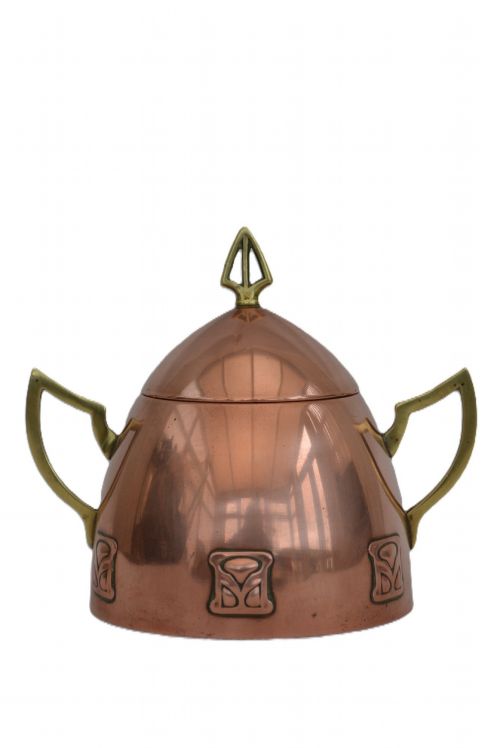
Makers utilised heavy copper sheets to form the main bodies of these vessels, sometimes combining the metal with brass mounts and handles. Wood and ebonised wood often appear on the fittings to provide insulation against the heat.
Craftsmen shaped the metal through hand-beating and joining techniques typical of the period. Polished surfaces highlight the natural lustre of the copper alongside contrasting brass elements.
Retail Price Guide 2026
Typical UK retail prices for copper tea vessel, calculated from the Sellingantiques database of over a million retail prices indexed since 2003. This retail price guide relies exclusively on Sellingantiques data; no external sources or auction records are used, so the figures do not describe the wider market.
Early tea makers relied on ebonised wooden handles to save their fingers from conducting the fierce heat of a boiling Georgian fire.
Judging quality
Quality rests in the heaviness of the copper gauge and the integrity of the joints. Finer examples display careful handling of the metal and well-balanced proportions across the body and spout.
The refinement of the brass fittings and the retention of original wooden handles distinguish superior pieces. Lesser examples show simpler construction and heavier wear to the primary metal surfaces.
The Copper Tea Vessel Glossary
- Samovar
- A large heated metal vessel used to boil and heat water for tea. These pieces often feature spigots and brass details.
- Georgian
- The period covering the reigns of the four British monarchs named George, spanning from seventeen fourteen to eighteen thirty. This style period defines the classic lines of these kettles.
- Ebonised wood
- Timber treated to resemble ebony, frequently utilised for handles and insulators on metal tea vessels. This material provides a dark contrast to polished copper.
- Brass
- An alloy of copper and zinc utilised for mounts, taps, and handles on tea vessels. It adds a secondary metallic tone to the primary copper body.
Frequently Asked Questions
What is a copper tea vessel?
A copper tea vessel is a historic metal container designed for boiling water, taking the form of a kettle or a samovar.
These pieces date from the nineteenth century and the George III period, showing the domestic utility of the era.
How do I date a copper tea vessel?
Dating relies on the stylistic markers of the Georgian period and the construction methods visible in the metalwork.
Objects from around eighteen hundred display specific handle designs and material combinations characteristic of that time.
How were samovars used?
Samovars served as large heated containers to provide a constant supply of hot water for tea service.
The incorporated spigot allowed easy pouring without lifting the heavy vessel.
Can I use an antique kettle?
These historical vessels are primarily collected as decorative antiques and display pieces rather than daily kitchen tools.
Careful consideration of the interior surface and historical joins is necessary before any practical use.