

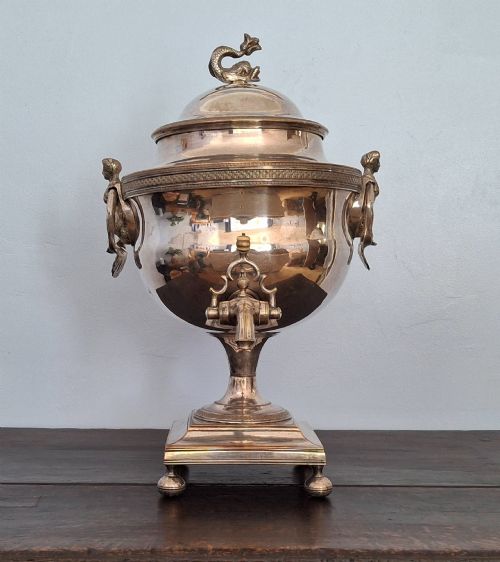
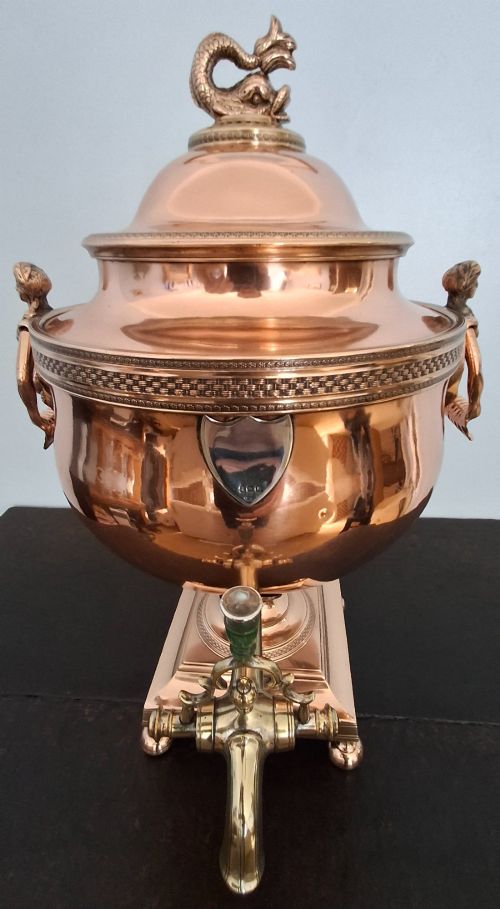
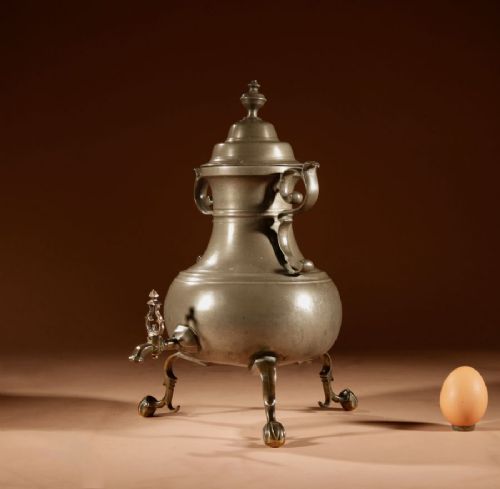
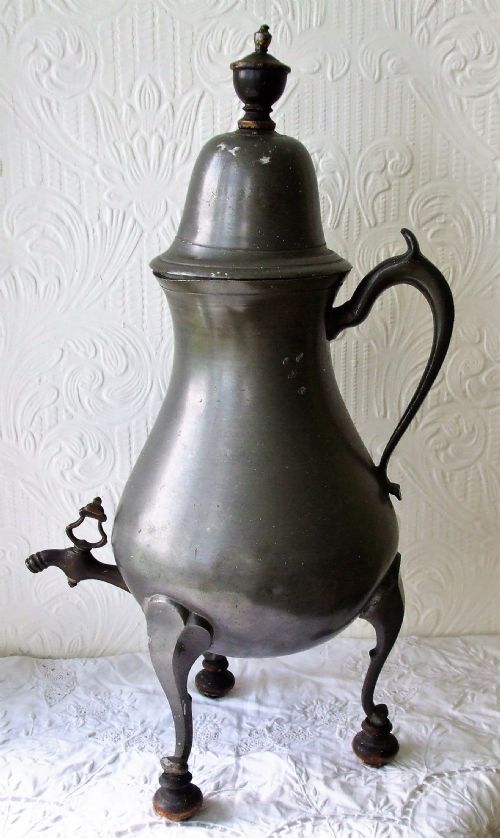
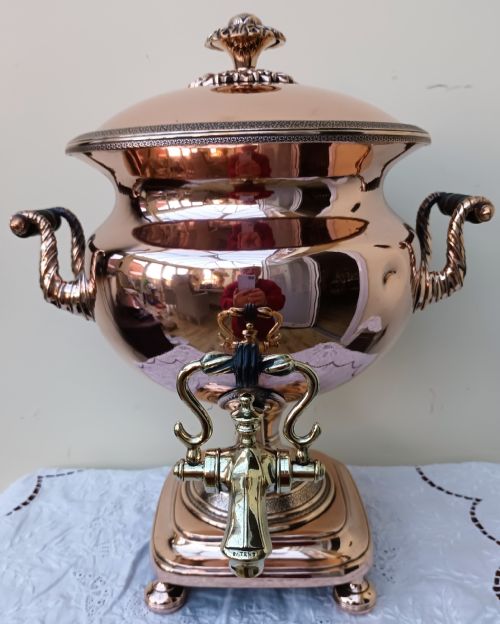


Georgian Tea Samovar
A georgian tea samovar stands as a commanding vessel of hospitality, designed to heat water for the table and anchor historic tea service.
Georgian Tea Samovar
A georgian tea samovar represents a primary vessel for heating water during formal tea service, appearing across periods from the eighteenth century through the regency era and into later revival pieces. Buyers exploring this category encounter varied vessel forms functioning as tea urns, coffee urns, water urns, and spirit kettles designed for domestic hospitality.
The dominant examples on this page are metal vessels fashioned in copper, brass, and pewter, often incorporating bronze fittings, bell metal, or silver plate. These objects span English workshops and Dutch origins, manifesting stylistic influences from neoclassical design to regional European forms.
Forms range from substantial George III copper bodies to smaller regency samovars and Dutch kraantjeskan examples dating back to seventeen fifty. Each piece reflects the functional requirements of historic tea and coffee preparation, combining utilitarian spouts and handles with decorative metalwork.
Assessing Quality and Execution
The distinction between tiers rests upon the sophistication of the metalwork, the weight of the materials utilised, and the survival of original components. Heavier gauge copper and substantial bronze or bell metal castings denote superior manufacturing standards.
Quality also manifests in the architectural proportions of the vessel, the refinement of neoclassical or regional stylistic details, and the integrity of original spouts, handles, and internal fittings rather than later replacements.
Georgian Tea Samovar Retail Price Guide 2026
Typical asking prices for georgian tea samovar among the pieces listed under this phrase on Sellingantiques today, from the lower quarter to the upper quarter. They describe what is for sale here now, not the wider market.
Some Dutch examples arrived with the delightfully descriptive name kraantjeskan, meaning little tap pot.
The Georgian Tea Samovar Glossary
- Samovar
- A heated metal urn traditionally utilised to boil and dispense water for tea. These vessels typically feature an internal central tube for charcoal or a heated metal cylinder.
- Kraantjeskan
- A Dutch type of water or coffee urn featuring a tap, often supported on a stand with a heater. This form appears in eighteenth-century Dutch metalwork.
- Sheffield Plate
- A composite material formed by fusing a thin sheet of silver to a thicker copper base. This technique preceded modern electroplating and defines quality Georgian silver-plated wares.
- Bell Metal
- A hard alloy comprising copper and tin utilised for cast components and fittings. Its resonant properties and durability made it suitable for taps and handles.
Georgian Tea Samovar: Frequently Asked Questions
What is a georgian tea samovar used for?
These vessels were employed to heat and dispense water for tea or coffee during formal domestic gatherings. The central chamber held heated metal or charcoal to maintain water temperature at the table.
Over time, their role shifted from active service pieces to decorative dining room and drawing room appointments.
How do you date a copper samovar?
Dating relies on stylistic indicators such as neoclassical urn shapes, pad feet, handles, and the construction methods visible in the seams and tap design. Eighteenth-century pieces often display hand-beated copper construction and distinct regional Dutch or English forms.
Later nineteenth-century revival pieces incorporate different manufacturing tolerances and standardised fittings that distinguish them from earlier examples.
What materials were used to make them?
Makers constructed these urns primarily in copper, brass, pewter, and silver plate, frequently combining metals for structural and decorative effect. Bronze, bell metal, and wood appear on handles, spouts, and insulating spacer components.
Silver-plated versions utilise a base metal such as copper beneath a fused silver layer.
How do you display a samovar at home?
These vessels suit placement on sideboards, serving tables, or dedicated display surfaces where their metallic surfaces and sculptural forms remain visible. They function well as standalone decorative objects that reflect historic dining traditions.
Placing them away from direct moisture helps preserve the original patination of the copper, brass, or silver-plated surfaces.