


Brass and Copper Samovar
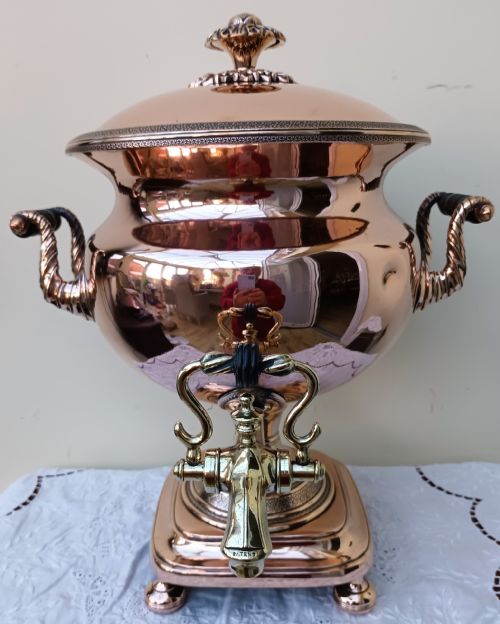
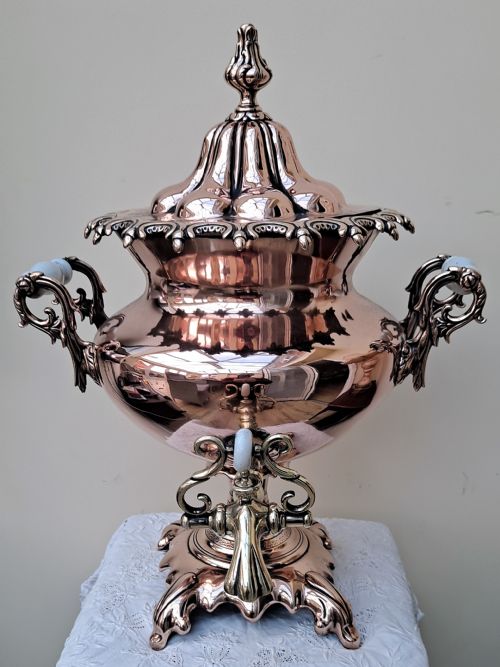
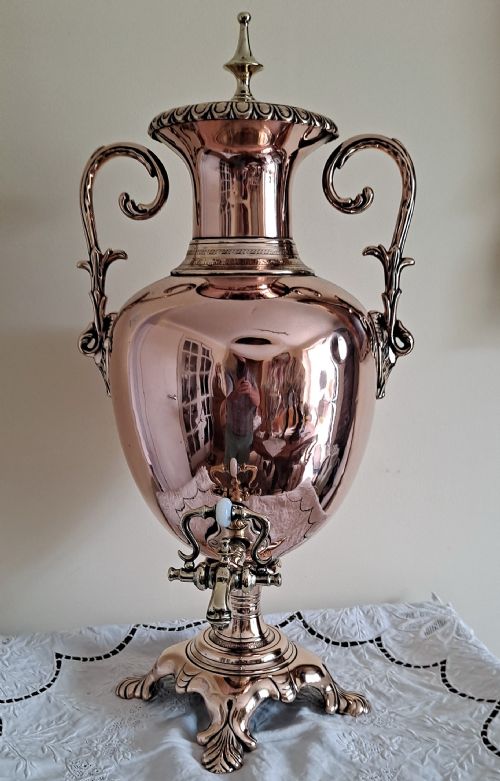
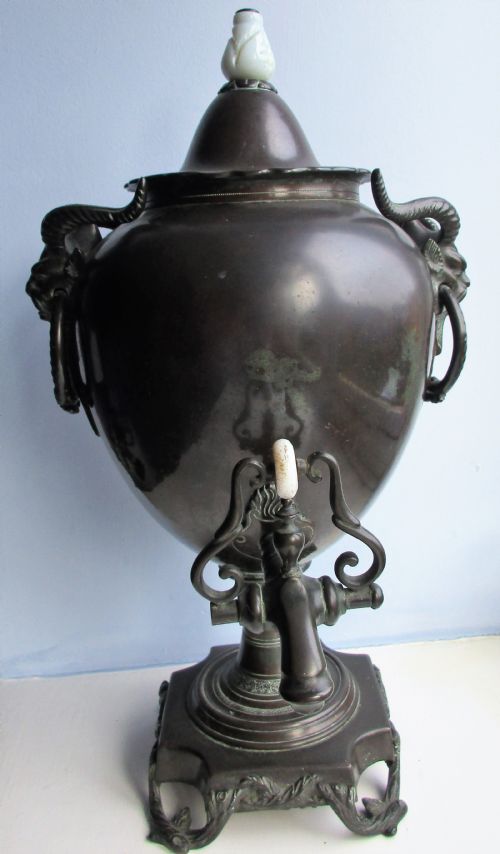
These brass and copper samovar examples are large heated vessels for water, prized for their striking mixed metals and period presence.
Brass and Copper Samovar
A brass and copper samovar is a tea urn or water urn designed for heating water, appearing frequently in Victorian, Regency, and Georgian forms. Buyers search for these pieces to secure a decorative centrepiece with historic utility.
The inventory on this page consists predominantly of nineteenth-century vessels, including specific pieces from the Victorian, Regency, and George III eras. These objects manifest as tea urns and water urns fashioned primarily from copper and brass.
How They Were Made
Artisans constructed these vessels chiefly from copper and brass, often combining both metals to create tonal contrast on the body and taps. Additional materials such as bone, ceramic, wood, ebonised wood, patinated metal, and iron appear on handles, finials, and fittings.
Makers utilised sheet metal techniques to shape the large bodies of the tea urns, integrating original metal fittings and tap mechanisms. Surface treatments range from polished finishes to patinated metal surfaces.
Some tea urns include bone handle fittings to stop your fingers getting scorched while pouring tea.
What Varies in Quality
Quality rests upon the preservation of original fittings, such as taps, handles, and internal components, which distinguish intact examples from altered ones. Ornate detailing and substantial scale also elevate certain items above standard utility pieces.
The choice of secondary materials, including bone or ebonised wood on handles, indicates the level of care applied to the manufacture. Pieces retaining a harmonious balance of brass and copper components demonstrate superior craftsmanship.
Benetfink & Co
The Brass and Copper Samovar Glossary
- Samovar
- A heated metal vessel used to boil and heat water for tea, traditionally featuring an internal central tube.
- Tea Urn
- A large vessel designed for holding and dispensing brewed tea or hot water at formal gatherings.
- Bell Metal
- An alloy of copper and tin used historically for durable metalwork and fittings on domestic vessels.
- Pontypool Ware
- Japanned metalware produced in Wales, known for glossy enamelled finishes on items like tea urns.
- Ebonised Wood
- Timber treated to resemble ebony, frequently utilised for handles and insulators on period metalware.
Brass and Copper Samovar: Frequently Asked Questions
What is a brass and copper samovar?
A brass and copper samovar is a large metal vessel historically utilised for boiling water to make tea in domestic settings.
These pieces combine functional water storage with decorative mixed-metal construction, often featuring taps and handles.
How were samovars used?
They were used to heat water for social gatherings, remaining a central feature in tea service traditions.
Water sat inside the main body, heated either by an internal tube or external fire, and was dispensed via a small tap near the base.
How do I date a samovar?
Dating relies on stylistic markers from periods like the Georgian, Regency, and Victorian eras.
Form, shape, and secondary materials such as bone or ebonised wood provide clues to the manufacturing decade.
How do I live with a samovar?
These large vessels function primarily as decorative objects or statement centrepieces in reception rooms and kitchens.
Their polished copper and brass surfaces reflect light and add historic character to a room without requiring active daily use.