






George III Tea Urn
A george iii tea urn brings the grand ritual of Georgian hospitality straight to a formal dining room or drawing room table.

George III Tea Urn
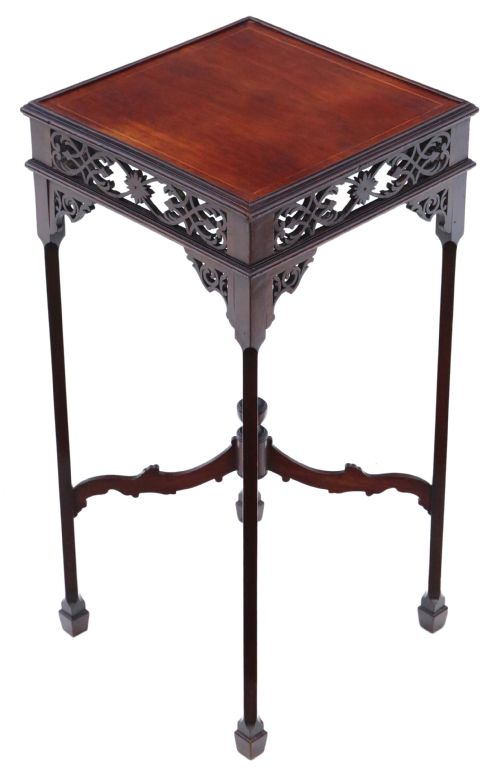
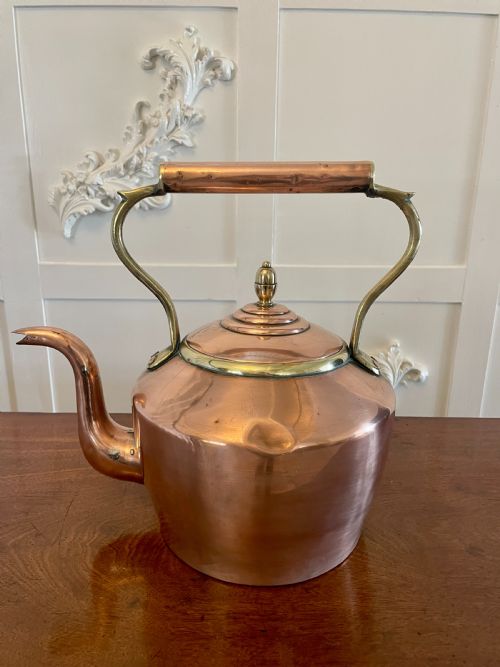
When you search for a george iii tea urn, you encounter heavy copper vessels, brass fittings, and sterling silver caddies designed to heat water or hold tea leaves for the household. The selection also yields mahogany and satinwood urn stands, kettle stands, and side tables that were built specifically to support these weighty vessels during service.
Most pieces seen here belong to the Georgian and 18th Century periods, alongside later Edwardian and 1920s revivals in mahogany and burr wood. Alongside standard copper samovars and tea urns, the inventory encompasses coffee pots, tea caddies, and occasional tables designed for entertaining.
Materials and construction
The metal vessels rely on heavy copper, brass, and bell metal, often featuring original spigots, handles, and fittings that demonstrate the metalworker's skill in joining sheet metal and casting spouts. Sterling silver pieces display crisp hallmarks and fine hand-beating.
Wooden stands and storage pieces utilise solid mahogany, figured mahogany, satinwood, and burr wood. Cabinetmakers employed precise joinery to create square tops, serpentine shapes, and turnover actions suitable for holding heavy boiling water containers.
Some kettle stands feature clever concertina actions designed so a table can double its surface area instantly for thirsty guests.
Quality variations in the range
Quality rests upon the crispness of the timber figuring in the stands and the intact survival of original brass taps and handles on the copper urns. Pieces with intact original fittings and well-figured mahogany or satinwood sit comfortably above heavily restored examples.
The distinction between a standard utility vessel and a top-tier creation shows in the weight of the metal and the refinement of decorative carving on the supporting table frames.
Paul Storr
The George III Tea Urn Glossary
- Samovar
- A heated metal urn traditionally used to boil and heat water for tea, often featuring an internal vertical metal tube that held burning charcoal. These large vessels formed the centrepiece of Georgian tea service.
- Kettle stand
- A small, tall occasional table designed specifically to hold a heavy tea kettle or urn close to the tea table. They often feature pull-out slides or raised edges.
- Bell metal
- An alloy of copper and tin traditionally used for casting bells, known for its resonant sound and durability. It was frequently utilised for sturdy taps and fittings on tea urns.
- Biggin
- A tall coffee pot fitted with a cylindrical wire or perforated metal container for holding coffee grounds during brewing. Paul Storr examples represent the height of this silversmith's output.
- Concertina action
- An expanding wooden frame mechanism used in turnover top tables to support the folded leaf when opened. This clever joinery provides a sturdy square surface without blocking legroom.
George III Tea Urn: Frequently Asked Questions
What is a tea urn?
A tea urn is a large metal vessel used in the eighteenth century to hold and heat water for large gatherings.
They were typically placed on side tables or dedicated stands so servants could easily fill teapots during formal social occasions.
Why use an urn stand?
Urn stands and kettle stands were built with sturdy mahogany or satinwood frames to support the immense weight of boiling water containers safely.
Their compact heights kept the heavy vessels stable and within easy reach of the host pouring tea.
How do I date a piece?
Dating relies on examining the timber species, construction joints, metal casting techniques, and any visible silver hallmarks.
Eighteenth-century examples display hand-cut joinery and heavy gauge copper, while later revivals often utilise twentieth-century hardware.
How do I clean copper?
Copper and bell metal vessels should be dusted gently and kept dry to preserve their aged appearance and historic patina.
Avoid harsh abrasive cleaners that strip away centuries of character from the surface.