
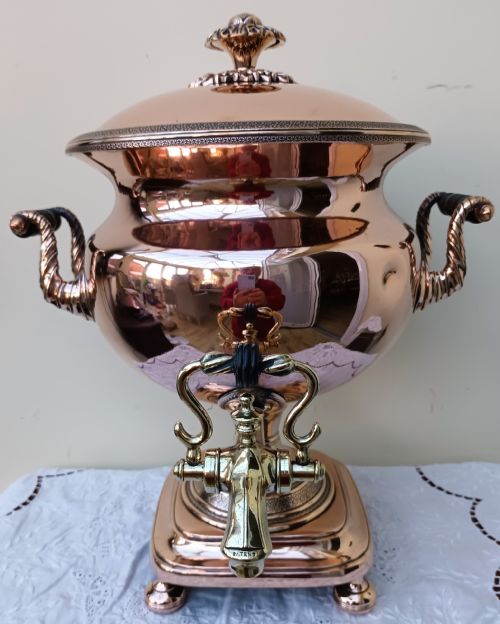
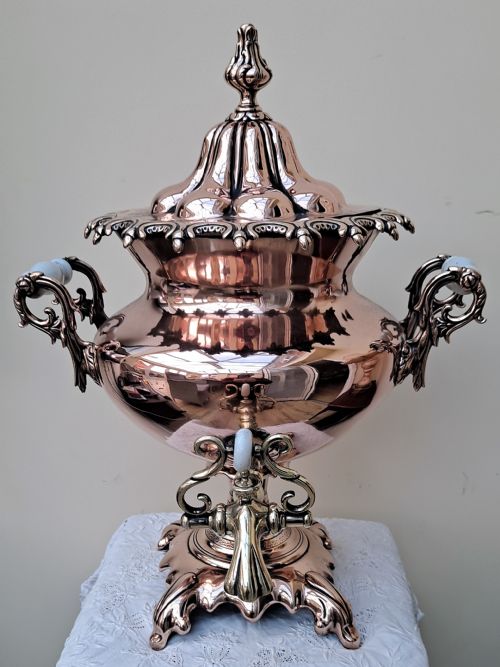
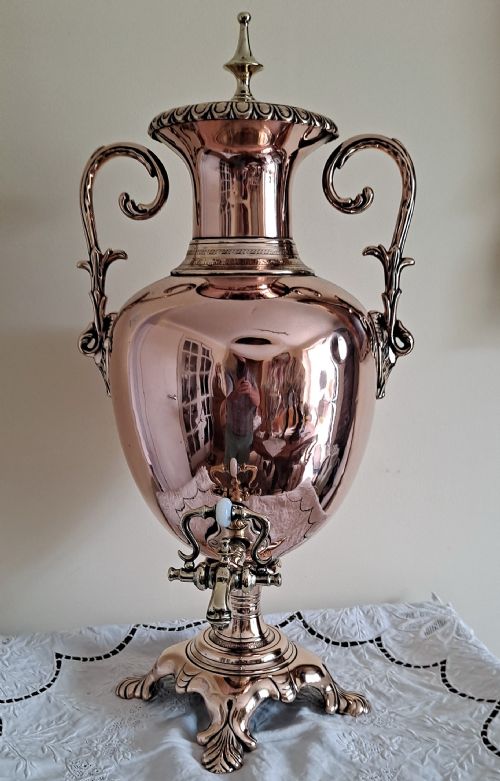


Polished Copper Urn
A polished copper urn brings warmth and rich metallic tone to a room, functioning as a historic centrepiece for water heating or fuel storage.

Identifying polished copper urn pieces
When you search for a polished copper urn, you encounter vessels designed for boiling water at the tea table or containing fuel beside the hearth. These objects span the George III and Victorian periods, showcasing domestic metalwork from the eighteenth and nineteenth centuries.
The forms on this page include tea urns, samovars, and coal buckets. Victorian and George III examples dominate the selection, reflecting the functional needs of period households.
Materials and construction
These items utilise copper as the primary body material, frequently paired with brass for handles, spigots, and mounts. Ebonised wood occasionally appears on handles or finials to provide contrast and insulation.
The fabrication relies on traditional metalworking techniques, shaping sheet copper into bulbous or pedestal forms and securing joints with rivets or brazing before achieving a high polish.
Retail Price Guide 2026
Typical UK retail prices for polished copper urn, calculated from the Sellingantiques database of over a million retail prices indexed since 2003. This retail price guide relies exclusively on Sellingantiques data; no external sources or auction records are used, so the figures do not describe the wider market.
Current listings span the Victorian and George III periods, featuring copper, brass, and ebonised wood across samovars and coal buckets.
Assessing quality and craftsmanship
Quality reveals itself in the weight of the metal and the crispness of applied ornamentation such as cast brass handles and detailed spigots. Finer George III and Victorian pieces display superior proportion and hand-finished joins.
The presence of identified makers, such as William Soutter & Sons on coal buckets, elevates a piece through documented workshop heritage and refined execution.
William Soutter & Sons
The Polished Copper Urn Glossary
- Samovar
- A heated metal container traditionally used to boil water for tea, featuring an internal central tube for fuel or charcoal.
- Spigot
- A tap or faucet fitted near the base of a tea urn to dispense hot water.
- Ebonised wood
- Timber treated to resemble ebony, providing a dark, smooth finish often used for insulating handles.
- George III
- The stylistic and historical period spanning the reign of George III, known for refined classical proportions.
Frequently Asked Questions
What is a polished copper urn?
A polished copper urn is a historic vessel originally used for heating water for tea or holding coal by the hearth.
These pieces showcase metalworking from the George III and Victorian eras, combining utility with decorative presence.
How do I date a copper samovar?
Dating relies on stylistic markers, shape, and construction methods characteristic of periods like the Victorian era or George III.
Maker marks and specific handle designs also help establish the approximate decade of manufacture.
Were these urns used for tea?
Tea urns and samovars played a central role in nineteenth-century hospitality by keeping water hot throughout lengthy gatherings.
Water was dispensed directly from the spigot into teapots as needed.
How do I maintain polished copper?
Maintaining the finish involves gentle dusting and occasional use of appropriate metal cleaners designed for copper surfaces.
Avoiding abrasive materials preserves the historical surface and metallic sheen.