



Vintage Copper Water Urn
A vintage copper water urn brings warmth and historic weight to a room, serving as a striking focal point with centuries of practical heritage behind it.
Vintage Copper Water Urn
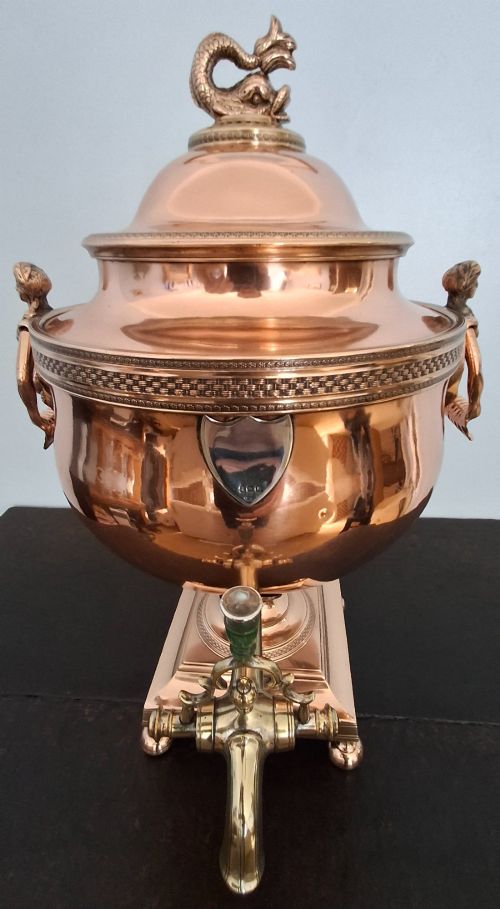
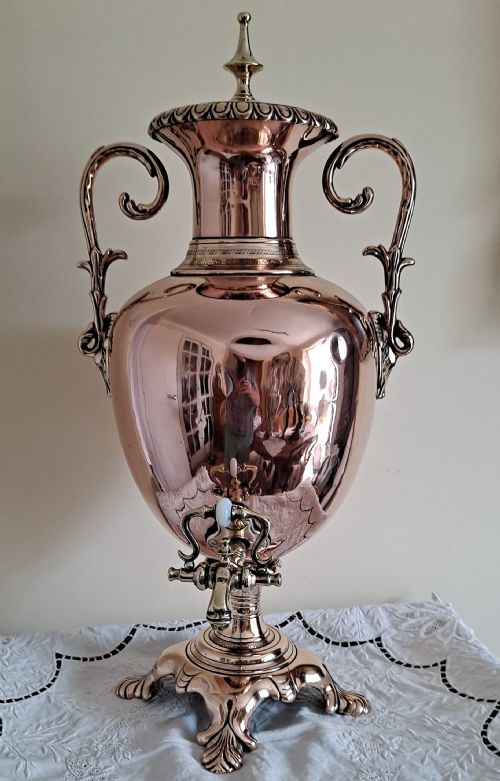
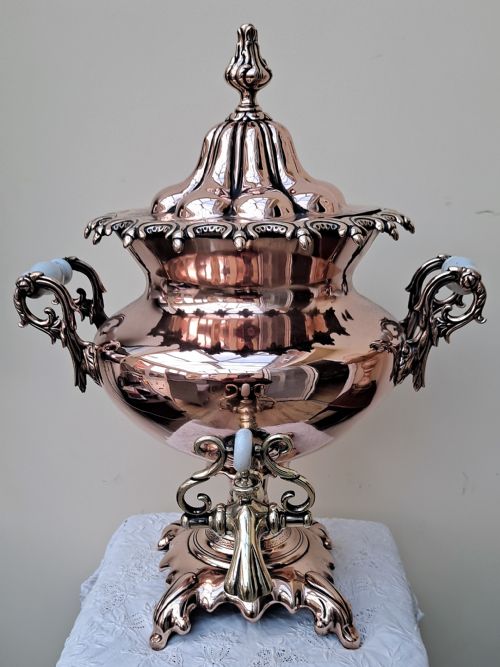
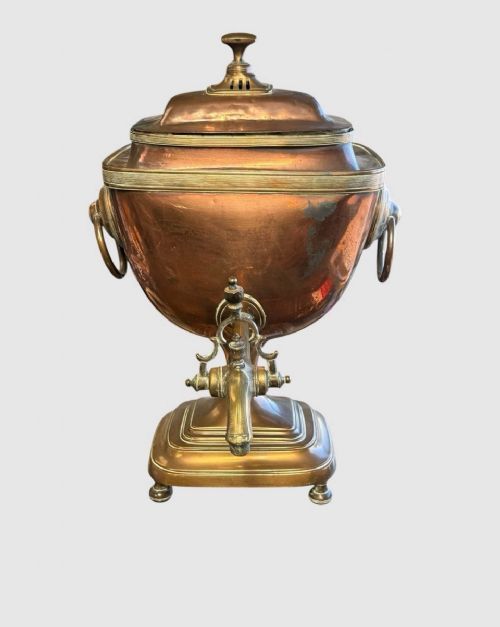
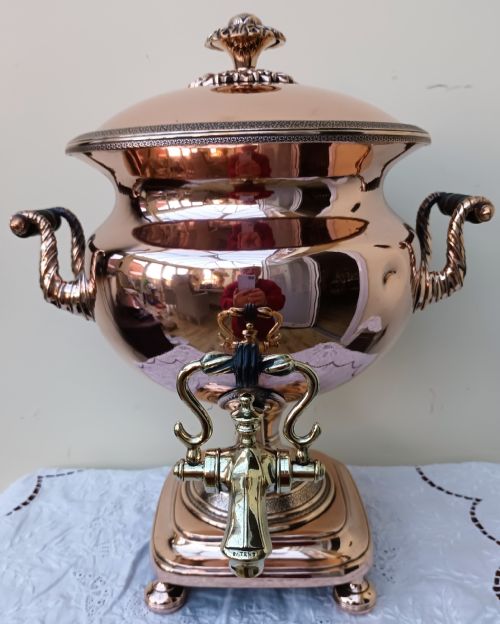
When you search for vintage copper water urn, you are looking at substantial metal vessels designed to hold and heat water for tea and domestic use. The pieces gathered here span the Georgian, Regency, and Victorian eras, alongside specific Arts and Crafts examples.
The version you are most likely to meet on this page is the Victorian copper samovar or tea urn. These objects typically feature generous proportions, often paired with brass handles, taps, and stands.
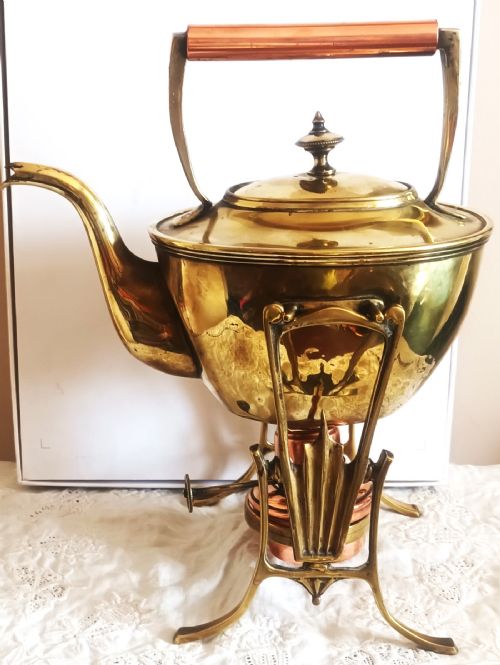
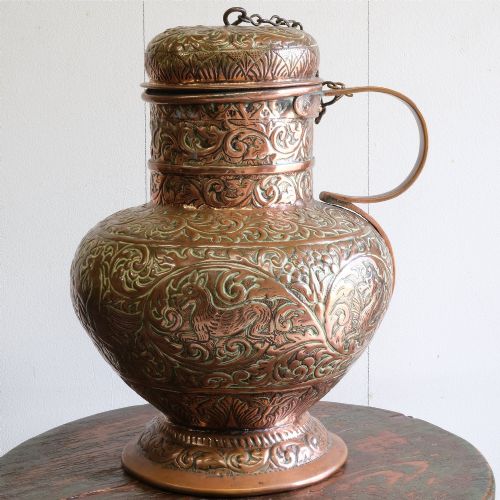
Beyond traditional samovars, the selection includes spirit kettles, hanging kettles, water barrels, and jugs. Origins stretch from English workshops to Indo-Persian designs, reflecting diverse domestic and decorative functions.
How they were made
The primary material is hand-beaten copper, valued for its malleability and thermal conductivity. Metalworkers shaped sheets of copper into bulbous or cylindrical bodies, joining seams with meticulous riveting or soldering.
Contrasting metals such as brass and bronze provide structural strength and decorative accents for taps, handles, and spouts. In addition, makers integrated small details of ebonised wood, bone, and ceramic to insulate handles against heat.
Surface treatments range from polished finishes to bronzed patination, while wrought iron appears on specific hanging kettle stands for durability.
Vintage Copper Water Urn Retail Price Guide 2026
Typical asking prices for vintage copper water urn among the pieces listed under this phrase on Sellingantiques today, from the lower quarter to the upper quarter. They describe what is for sale here now, not the wider market.
Listings feature copper alongside brass, ebonised wood, bone, and ceramic across the nineteenth century.
What varies in quality
Quality rests in the weight of the metal and the ambition of the form. Heavy-gauge copper retains its structural integrity and resists denting far better than thinner metal.
Ornamentation also dictates distinction, moving from plain utilitarian vessels to ornate George III and Regency pieces with chased detailing, cast brass mounts, and complete burner stands.
The survival of original components, such as internal heating tubes, lids, and matching taps, separates standard vessels from complete collectors' examples.
William Soutter and Sons
The Vintage Copper Water Urn Glossary
- Samovar
- A heated metal container traditionally used to boil water for tea. These large vessels typically sit on a base and feature an internal vertical tube for heating.
- Spirit kettle
- A portable kettle mounted on a metal stand above a small spirit burner. They were used to keep water hot at the table.
- Water barrel
- A cylindrical vessel designed for storing and dispensing liquids. In copper, these items often display heavy riveted construction.
- Bronzed copper
- Copper treated with a chemical finish to simulate the appearance of bronze. This technique was popular during the Regency period for decorative effect.
- Ebonised wood
- Timber treated to resemble ebony, providing dark, hard-wearing contrasts for handles and knobs. It was commonly used on nineteenth-century tea urns.
Vintage Copper Water Urn: Frequently Asked Questions
What is a vintage copper water urn?
A vintage copper water urn is a large metal vessel historically used for heating and dispensing water, particularly for tea service.
These pieces range from Georgian and Regency samovars to Victorian kettles and water barrels, constructed primarily from copper with brass and wood fittings.
How were samovars used?
Samovars served as central water-heating apparatuses in homes, holding boiling water ready throughout the day.
Water inside the vessel was heated either by an internal charcoal pipe or an under-mounted burner, then dispensed via a small tap at the base.
How do I style a copper urn at home?
These large vessels work well as sculptural statement pieces on sideboards, side tables, or in traditional kitchens.
Their warm metallic tones complement wooden furniture and earthenware ceramics, making them ideal focal points for rustic or historic interiors.
How do I tell Georgian pieces from Victorian ones?
Georgian and Regency pieces often exhibit refined neoclassical proportions, urn shapes, and bronzed finishes dating from around 1795 to 1837.
Victorian examples from the mid-nineteenth century onwards tend to be heavier, featuring more robust brass mounts, varied handles, and diverse forms like water barrels and spirit kettles.