




Victorian Hot Water Dispenser
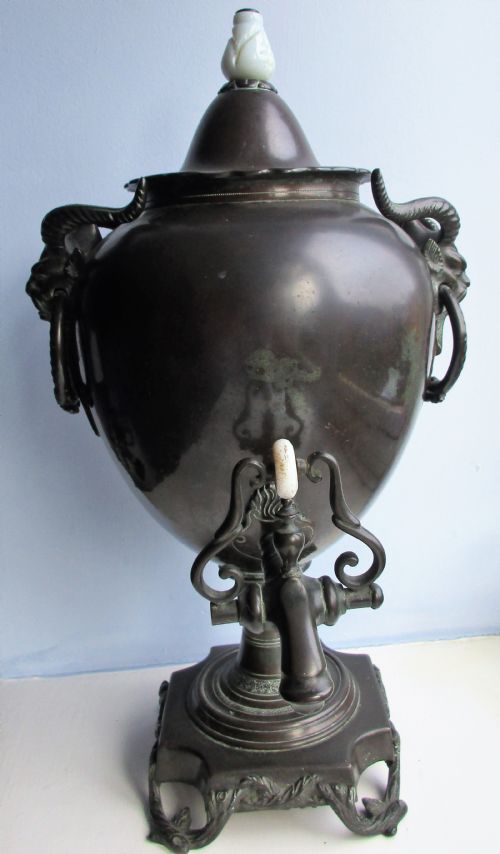
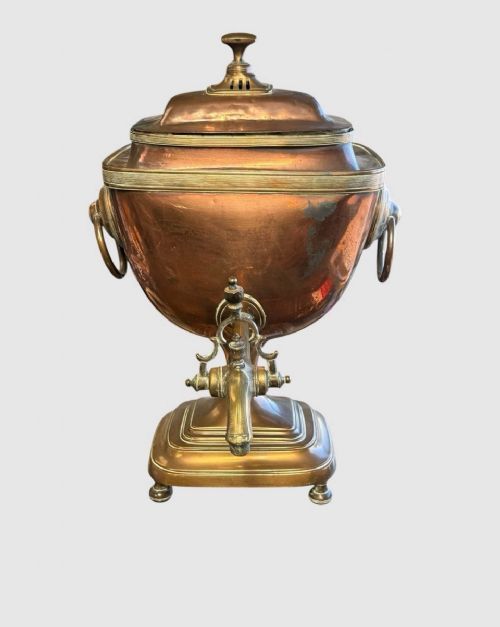
These Victorian hot water dispenser pieces are solid metal vessels built to heat and pour water at the table.
Victorian Hot Water Dispenser
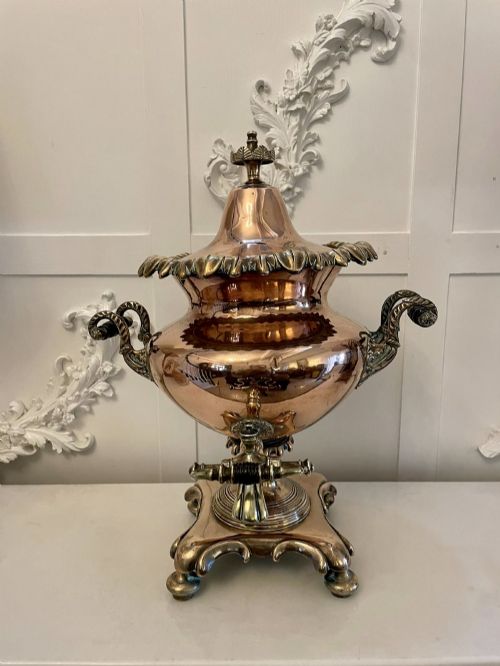
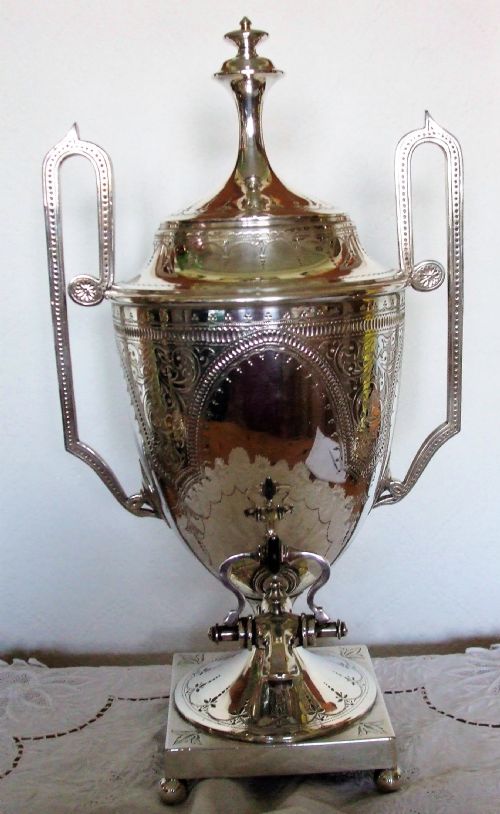
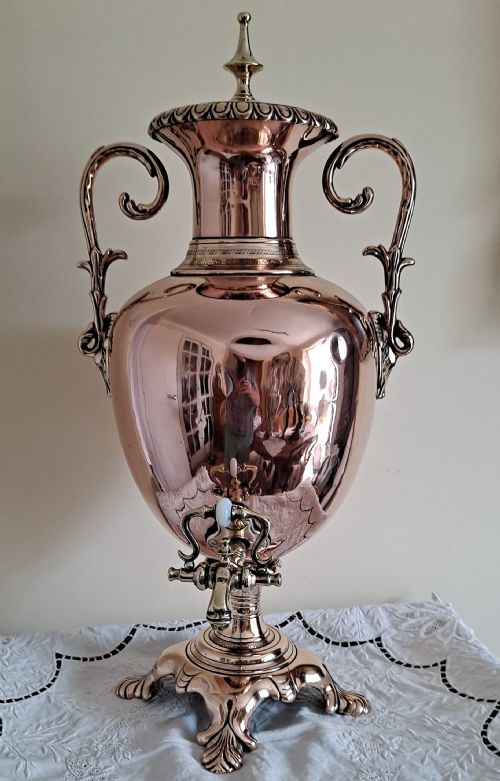
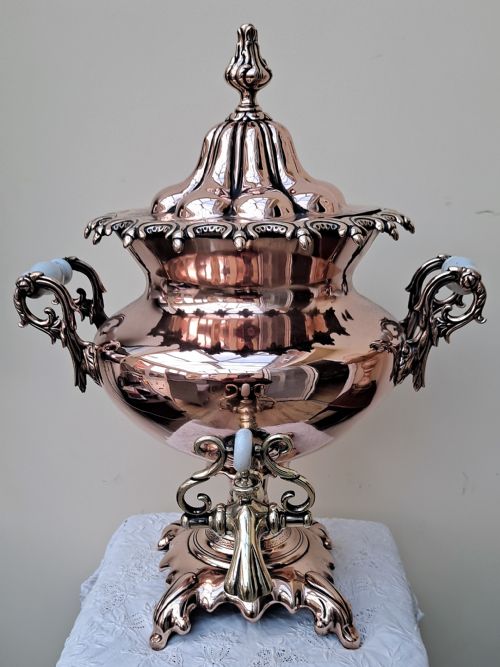
A victorian hot water dispenser takes the form of a tea urn or samovar, designed for keeping water hot during large gatherings. Most examples found here date from the nineteenth century, with Victorian pieces dominating alongside a few Georgian and Edwardian specimens.
The primary object types are tea urns and samovars, which function as heavy metal vessels equipped with a working tap at the base. Buyers encounter these pieces in copper, brass, and silver plate, often featuring contrasting metal handles and components.
How they were made
Maker workshops utilised copper, brass, and silver plate over metal foundations, frequently combining copper bodies with brass mounts and taps. Certain items incorporate bone elements for insulation on the handles, alongside ceramic internal fittings.
Surface finishes include patinated metal and japanned coatings, as seen in Pontypool Ware examples produced in London. Construction methods involved heavy metal shaping to produce large urns capable of holding boiling water securely.
Victorian Hot Water Dispenser Retail Price Guide 2026
Typical asking prices for victorian hot water dispenser among the pieces listed under this phrase on Sellingantiques today, from the lower quarter to the upper quarter. They describe what is for sale here now, not the wider market.
Listings feature nineteenth-century pieces alongside Georgian and Edwardian examples, constructed primarily from copper, brass, and silver plate.
What varies in quality
Quality separates standard production items from substantial vessels carrying maker attributions such as Walker & Hall or Benetfink & Co. The thickness of the metal body and the finish of the silver plating dictate the overall grade of the piece.
Detailing on the tap mechanisms, handles, and base supports indicates the level of craftsmanship invested in the construction. Pieces displaying named London retailing origins or distinct japanned decoration command closer attention from discerning collectors.
Walker & Hall·Benetfink & Co
The Victorian Hot Water Dispenser Glossary
- Samovar
- A heated metal urn traditionally used to boil and heat water for tea. These large vessels sit on footed bases and include a spigot for dispensing.
- Tea urn
- A large covered container utilised for storing and serving hot water or tea at social gatherings. They appear in silver plate, copper, and brass.
- Silver plate
- A thin layer of silver applied to a base metal foundation such as copper or nickel silver. This technique provided the appearance of solid silver at a lower cost.
- Pontypool ware
- Japanned metalware originating from Pontypool, known for its distinctive varnished and lacquered surface finish. London retailers often sold these decorated decorative items.
- Japanned
- A style of European decorative finishing that emulates Japanese lacquer work using dark varnished coatings. It appears on specific metal tea urns.
Victorian Hot Water Dispenser: Frequently Asked Questions
How do I use a Victorian hot water dispenser?
These historical vessels were originally designed to heat water using internal heating tubes or hot irons dropped into the central core. Today, collectors typically display them as decorative centrepieces rather than connecting them to modern water supplies.
If you choose to utilise the tap, ensure the internal chamber is clean and dry thoroughly after any exposure to moisture to protect the metal surfaces.
What is the difference between a samovar and a tea urn?
A samovar generally incorporates a central vertical tube designed for heating water, whereas a tea urn functions primarily as a large container for hot water storage. Both terms appear interchangeably across nineteenth-century listings.
Examining the internal structure reveals whether the vessel was built for direct heating or simply for serving pre-boiled water at the table.
How do I clean copper and brass parts?
Copper and brass require gentle cleaning using specialised non-abrasive metal cleaners to preserve the natural patina. Avoid harsh scrubbing that can strip away the historical finish or damage the underlying metal.
Silver-plated examples need even more careful handling with soft cloths to prevent wearing through the thin silver layer down to the base metal.
How do I date a Victorian hot water dispenser?
Dating relies on stylistic markers such as Georgian neoclassical lines, Victorian proportions, or Edwardian manufacturing marks stamped on the base. Maker stamps from firms like Walker & Hall provide reliable reference points for production periods.
Materials also offer clues, as heavy copper construction points toward the mid-nineteenth century, while silver-plated versions often span into the later decades and Edwardian eras.