
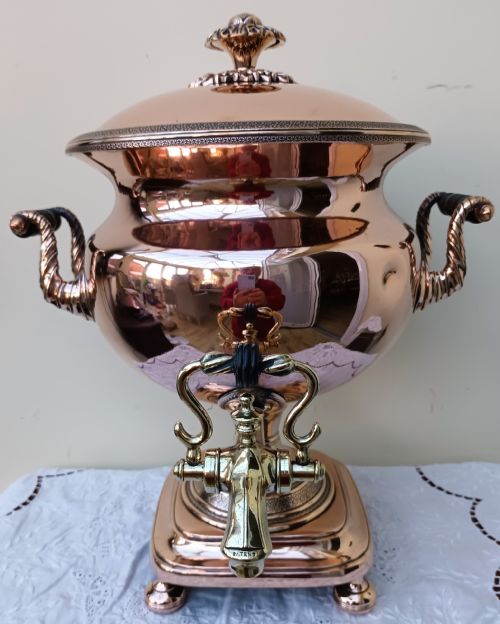


Regency Tea Urn
A regency tea urn is a masterclass in domestic theatre, bringing copper, brass and silver plate together to command the formal table with hot water.
Regency Tea Urn
The versions most commonly met on this page combine functional metal bodies with classical silhouettes, drawing on Georgian neoclassical design principles. Alongside traditional tea urns and samovars, the selection extends to related mahogany and satinwood serving furniture such as tea tables and peat buckets.
Origins span English workshops of the early nineteenth century, capturing the transition from ornate Georgian excess to the cleaner lines of the Regency period. Collectors find that these vessels reflect the changing social habits of elite households, where boiling water was heated internally with hot metal cylinders or heated bases.
Materials and construction
Makers utilised heavy sheet copper, brass, and bronze, hammering and soldering the metal to create watertight vessels capable of holding boiling water. Surfaces often received finishes of Old Sheffield silver plating or bronzing to mimic more expensive sterling silver equivalents.
Cabinetmakers worked with timbers including mahogany, satinwood, rosewood, and plum pudding mahogany for the accompanying tea tables and stands. Inlays and turned elements demonstrate the joinery techniques typical of high-status furniture production from the early eighteen hundreds.
Listings feature nineteen-century pieces spanning the Georgian and Regency periods, utilising brass, copper, silver plate, and mahogany.
Distinctions in quality
The division between standard domestic items and superior examples lies in the integrity of the original metalwork and the crispness of classical cast mounts. Heavier gauge copper and substantial bronze elements indicate a higher grade of manufacture intended for affluent drawing rooms.
For wooden pieces, the choice of figured veneers such as plum pudding mahogany and the precision of the turn-over leaf mechanisms dictate the upper tier of the range. Complete sets retaining original spigots, internal heating cylinders, and matching stands command greater attention than modified vessels.
Paul Storr
The Regency Tea Urn Glossary
- Samovar
- A heated metal container traditionally used to boil and heat water in Russia and adopted across Britain for tea service. These vessels feature an internal vertical tube containing burning charcoal or a heated metal cylinder.
- Old Sheffield Plate
- A composite material formed by fusing a thin sheet of sterling silver to a thicker base of copper. This technique produced luxury tableware before the invention of electroplating.
- Peat Bucket
- A deep wooden container with a metal liner, used in grand houses to hold fuel for hearths or warming stoves. They frequently share the same decorative vocabulary as tea urns.
- Biggin
- A tall coffee pot or percolator equipped with an internal wire basket or bag to hold coffee grounds. They often appear on dedicated stands with spirit lamps.
Regency Tea Urn: Frequently Asked Questions
What is a regency tea urn used for?
These vessels were designed to heat and dispense hot water during formal tea service in the drawing room. Servants filled the internal chamber to maintain the water temperature throughout the afternoon.
Guests would use the hot water to dilute freshly brewed tea from a separate pot to the desired strength. The spigot at the base allowed for precise pouring without moving the heavy metal body.
How do I tell Georgian from Regency pieces?
Georgian metalwork tends to feature heavier neoclassical ornamentation, including swags, lion paw feet, and elaborate handles influenced by Robert Adam designs. The proportions are often more robust and architectural.
Regency examples generally lean toward leaner, cleaner lines inspired by Greek and Roman antiquities. The decorative focus shifts to patinated bronze finishes and simpler geometric forms.
How do I care for antique metal urns?
Keep copper and brass pieces in a stable indoor environment away from direct moisture and humidity to prevent active corrosion. Dust them gently with a dry, soft cloth.
Avoid aggressive metal polishes that remove the historic patination and thin the silver plating on plated examples. Preserve the existing surface finish by accepting natural oxidation over time.
Can these urns still hold hot water?
Most antique metal urns and samovars are now treated as decorative objects rather than functional kitchenware. Old solder joints and historic repairs may no longer withstand thermal shock or boiling temperatures.
Displaying them dry ensures the internal components and original finishes remain stable. Use them to anchor a room's aesthetic rather than for active tea preparation.