


Antique Tea Urn Tap
These antique tea urn taps control the flow from period vessels, bringing period character and historic utility directly to your interior.
Antique Tea Urn Tap
An antique tea urn tap is the functional valve fitted to period hot water and tea vessels, designed to dispense water for hospitality. When you search for antique tea urn tap, you find components and fitted spouts belonging to copper, brass, and silver-plated vessels.
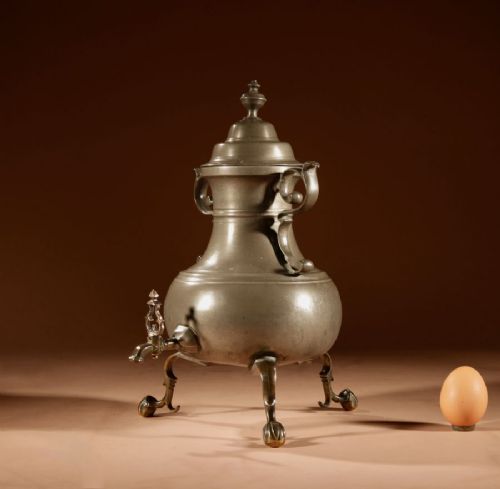
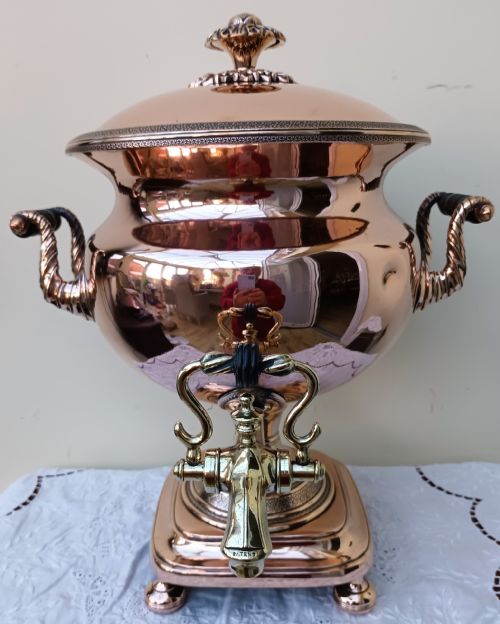
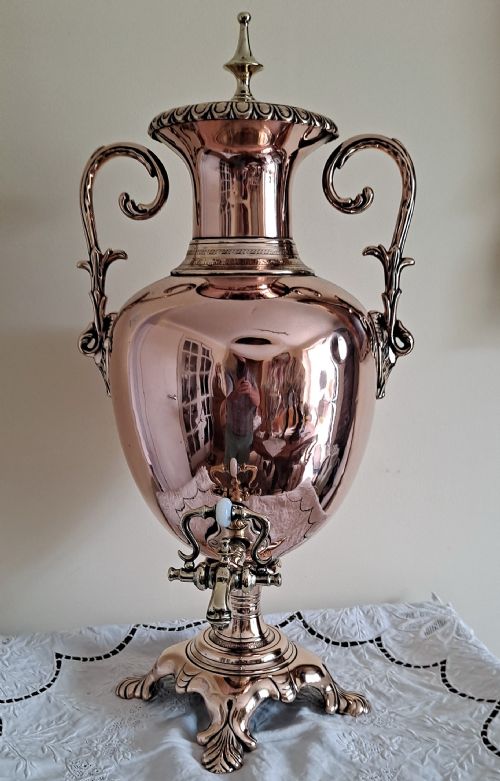
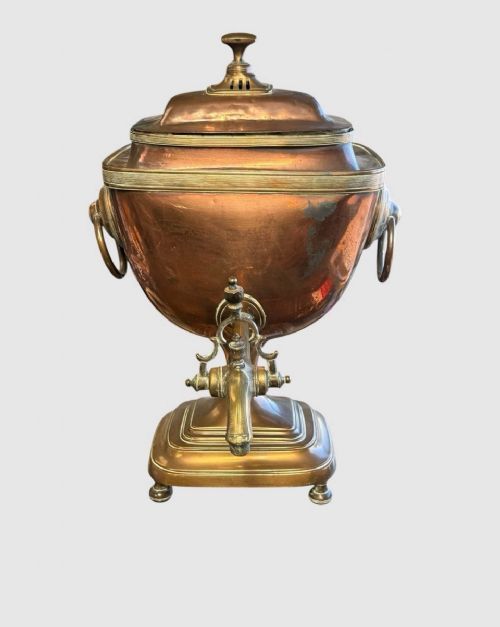
The pieces on this page span the Georgian, Regency, and Victorian eras, alongside 18th century Dutch examples. Most items you meet here are British copper and brass samovars or water urns dating through the nineteenth century.
Forms range from hanging water urns to table samovars and coffee urns. They reflect the formal beverage service of domestic interiors from the seventeen-fifties onwards.
Materials and construction
Makers fashioned these components primarily from copper, brass, and bronze, often pairing copper bodies with contrasting brass handles and spouts. Silver-plated examples on a copper base also appear, alongside specialised pieces featuring ebonised wood and ceramic elements.
Metals were beaten, cast, and turned to create both the vessel bodies and the tight-fitting taps that regulated the liquid. Structural joining relied on historic soldering and riveting techniques suited to containing hot water safely.
Some Dutch vessels were called kraantjeskan, translating simply to little-tap-pot.
Distinctions in quality
Quality rests in the crispness of casting for the spouts and handles, and the integration of the tap mechanism with the vessel body. Better examples display careful hand-bevelling, substantial metal gauge, and harmonious proportions between the tap and the main body.
Secondary details such as cast bronze feet, turned wooden insulators, and secure mounting plates distinguish standard utilitarian vessels from finer parlour pieces made for prominent display.
Walker & Hall
The Antique Tea Urn Tap Glossary
- Samovar
- A heated metal urn used to boil and dispense water for tea, traditionally featuring an internal heating tube or a central container for hot charcoal.
- Georgian
- Design style spanning the reigns of the first four Georges, known for neoclassical proportions and balanced ornamentation on metalwork.
- Regency
- Period of design marked by classical restraint and influences from ancient Greece and Rome, prevalent in the early nineteenth century.
- Silver Plate
- A thin layer of silver fused or electroplated onto a base metal such as copper, providing the appearance of solid silver at a lower cost.
Antique Tea Urn Tap: Frequently Asked Questions
What is an antique tea urn tap made of?
These spouts and valve components are typically cast from brass or bronze, sometimes accompanying copper, silver-plated, or pewter vessels.
Matching metals were chosen for thermal performance and durability during daily domestic service.
How were tea urns used historically?
They sat on sideboards or tea tables to maintain hot water for brewing tea and coffee during large gatherings.
Guests or hosts operated the tap directly to fill individual pots without returning to the kitchen.
How do I date an antique urn?
Dating relies on stylistic markers from the Georgian, Regency, and Victorian periods, combined with manufacturing methods like hand-beating or plating.
Comparing the shape of the tap and handles to documented period examples helps narrow the decade of production.
Are these taps removable?
Most period taps were threaded or soldered directly into the body of the urn to maintain a watertight seal.
They formed an integrated functional part of the beverage vessel rather than a modular interchangeable fitting.