
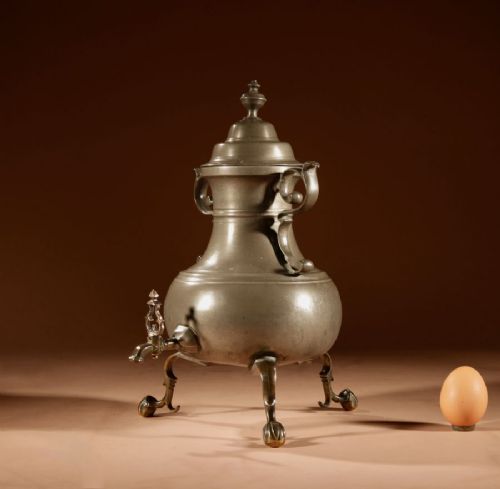
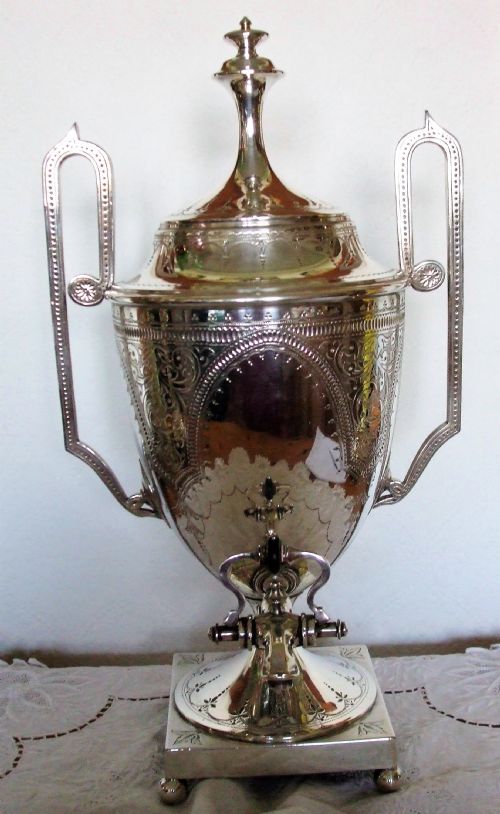
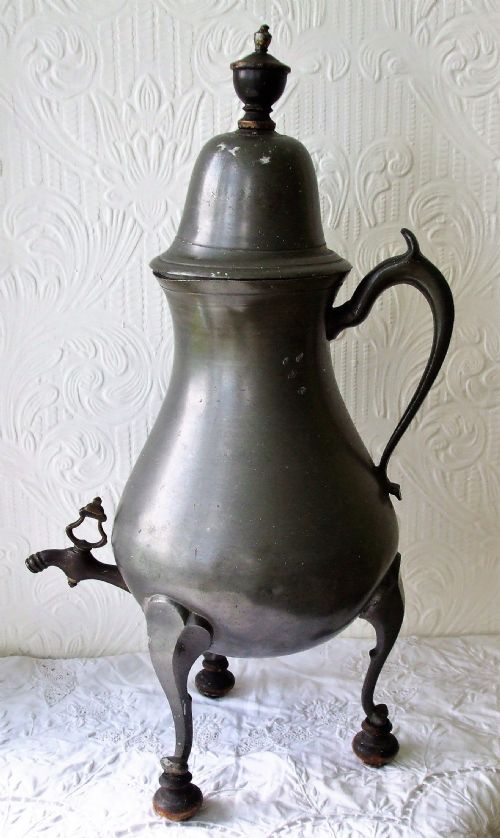
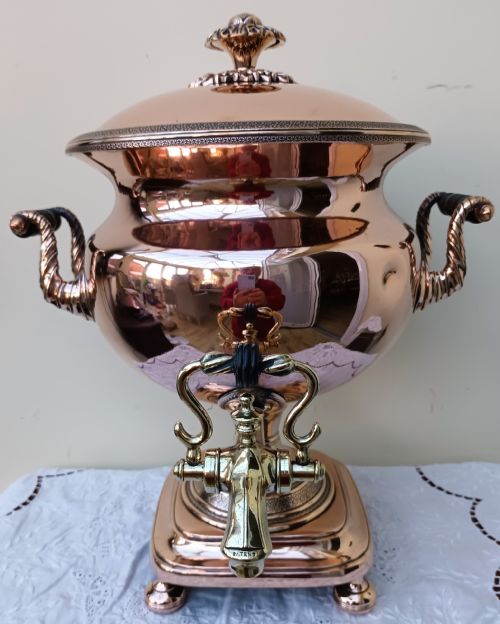


Antique Tea Samovar
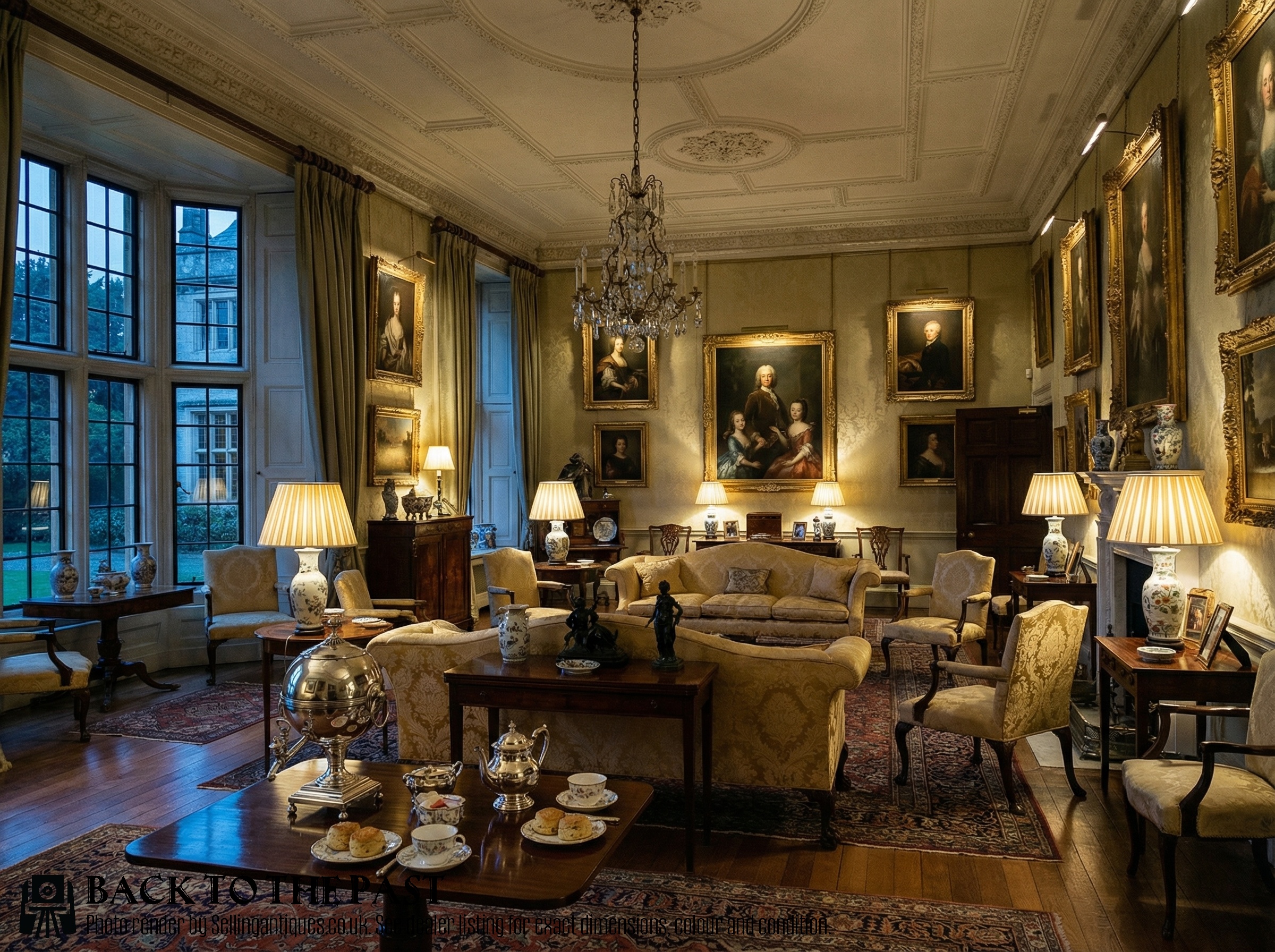
An antique tea samovar is a commanding vessel for heating water, designed to anchor a table and command attention.
Antique Tea Samovar
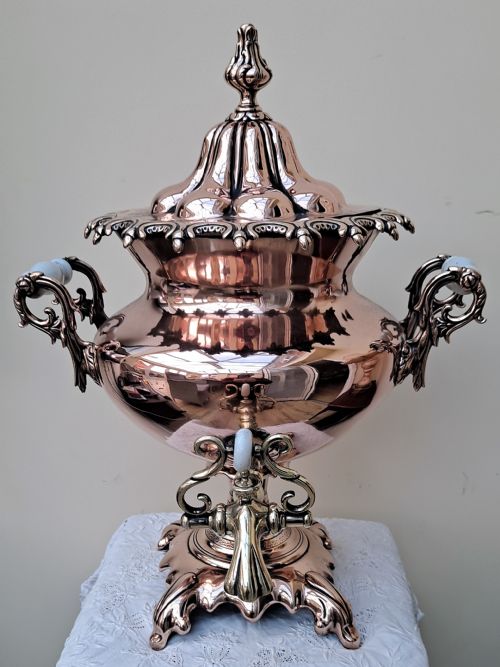
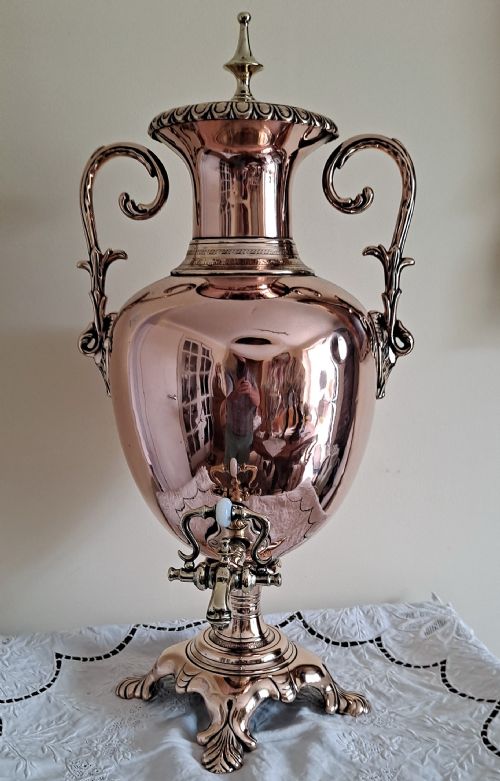
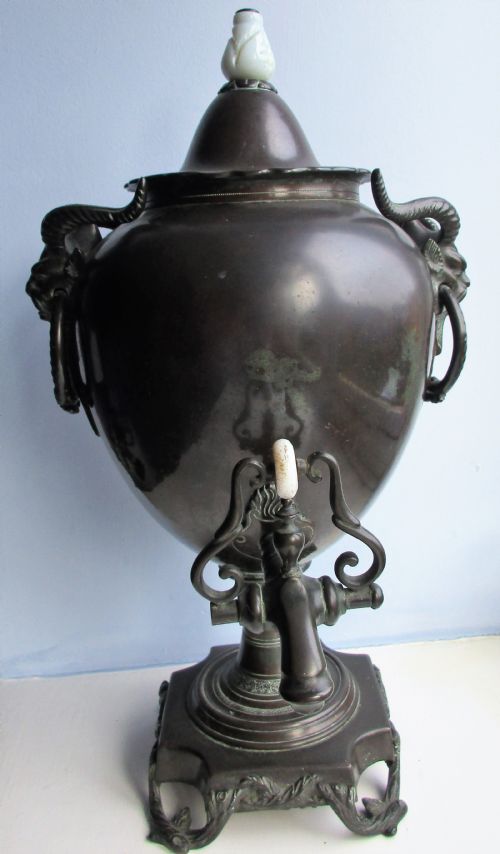
An antique tea samovar is a metal vessel originally used for heating and boiling water to serve tea, often taking the form of large urns, coffee urns, or kettles on stands.
Buyers encounter numerous examples from the Georgian, Regency, and Victorian periods, alongside Edwardian designs and earlier Dutch pieces.
The selection ranges from tall copper and brass water urns to refined silver plated tea urns and Japanned Pontypool ware.
Materials and construction methods
Makers utilised heavy metals such as copper, brass, pewter, and bell metal, frequently combining them with bronze fittings and wooden or bone handles.
Silver plating on copper or Sheffield plate became prominent during the Georgian and Victorian eras, alongside Japanned tinware decorated in the Pontypool style.
Construction involved beating sheet metal, casting spouts and handles, and integrating internal heating tubes or spirit burners.
Listings feature extensive examples in copper, brass, and silver plate, alongside rarer pewter and Japanned tin pieces spanning three centuries.
Distinctions in quality
Quality depends upon the heaviness of the gauge of copper or brass and the structural integrity of the original internal fittings and taps.
Superior pieces display crisp chasing, balanced proportions, and maker marks from established firms, distinguishing them from simpler utilitarian vessels.
Walker and Hall·Benetfink and Co·Risler and Carré Paris·John Round and Sons·Benham and Sons·John S Pyrke and Sons
The Antique Tea Samovar Glossary
- Samovar
- A metal urn used to boil water for tea, traditionally featuring an internal heating pipe or a spigot at the base.
- Pontypool Ware
- Japanned metalware produced in Wales, known for its glossy lacquered finish and often applied to tea urns.
- Sheffield Plate
- A composite material made by fusing a thin sheet of silver to a thicker copper base, common in Georgian and Regency pieces.
- Spirit Kettle
- A portable water kettle mounted on a stand above a small spirit burner to keep water hot.
Antique Tea Samovar: Frequently Asked Questions
How do I use an antique tea samovar?
These historical vessels are typically collected as decorative display items rather than for daily beverage preparation. Many retain delicate internal pipes or vintage taps that suit ornamental placement rather than modern use.
For those wishing to display them, placing a samovar on a sideboard or table highlights the craftsmanship of the period without risking damage to historic fittings.
What is the difference between an urn and a samovar?
While both terms describe large vessels for holding hot water, a samovar specifically incorporates a central heating tube or spirit system. Urns serve a similar function of dispensing hot water for tea and coffee but vary in internal architecture.
Both forms share the characteristic spigot at the base for easy pouring into cups.
How do I identify a Georgian samovar?
Georgian and Regency examples often exhibit neoclassical styling, crisp proportions, and heavier cast brass or bronzed copper construction. They lean toward architectural shapes with pedestal bases and classical handles.
Later Victorian versions tend to be larger, incorporating mixed metals like copper and brass together or utilising extensive silver plating.
Are spirit kettles different from samovars?
Spirit kettles are smaller vessels suspended on a stand above a burner, designed to keep water hot at the tea table. Samovars are generally larger, standalone urns that hold greater volumes of water.
Both categories utilise similar metals, including copper, brass, and silver plate.